Animal Cures
We want you to have a greater ability to learn about some of the unpleasant animal issues in our world.
Folk-Medicine
William G. Black
CHAPTER X.
ANIMAL CURES.
The consideration of what appears at first to be simply animal cures is rendered somewhat difficult by the fact that those animal cures do not in most cases depend simply upon the animal association. There are other associations not easy to distinguish or to trace. Paths diverge in many directions, but I have thought it on the whole better to group cures connected with animals as far as possible together, for, apart from other considerations, a comparative light is more likely to be directed to a collection than to notes scattered piecemeal. To enter into the history in detail of the beliefs and superstitions regarding the curative powers or properties of animals which have come to us, often altered and distorted, is foreign to my purpose, and beyond the limits to which it is purposed to confine this chapter.
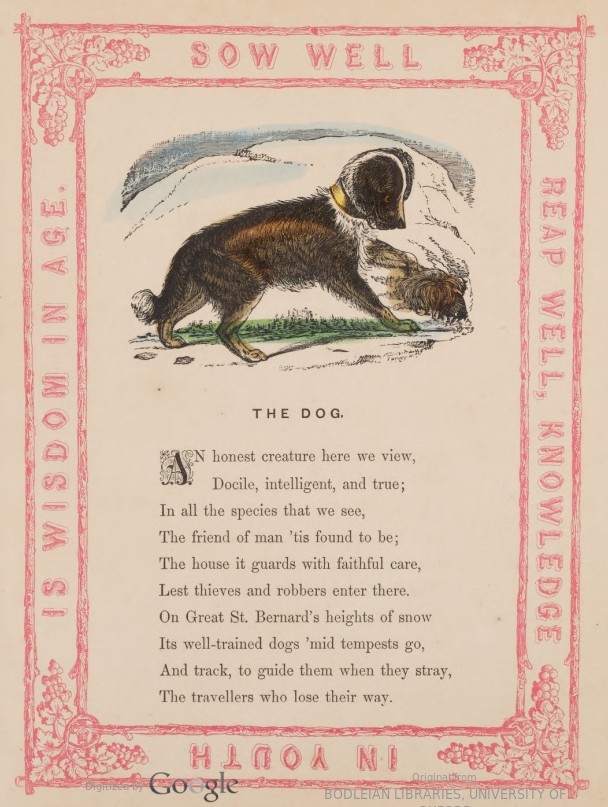
The dog does not bulk so largely in folk-medicine as might have been expected. A cake of the ” thost” of a white hound baked with meal was recommended against the attack of dwarves (convulsions). In Scotland much more recently a dog licking a wound or a running sore was thought to effect a cure. For a fever the right foot shank of a dead black dog hung on the arm is said to be a good remedy, — “it shaketh off the fever.” The head of a mad dog pounded and mingled with wine was reputed to cure jaundice; if burned and the ashes put on a cancer the cancer would be healed; and if the ashes of a dog be given to a man torn by a mad dog it “casteth out all the venom and the foulness, and healeth the maddening bites.” Floyer says that “mad dog’s liver is given against madness.” This is on the principle of taking a hair of the dog that bit you, which has been referred to above; but of the modem literal observance we have an instance in a passage in Miss Lonsdale’s Life of Sister Dora. In the out-patients’ ward one day she came upon a dog-bite upon which a mass of hairs had been plastered, and though it is not recorded whether the hairs were those of the animal which had caused the wound or of some other dog, the presumption is they were the hairs of the dog supposed to be mad.
A negro superstition at Kingston used to be that certain large, black, hairless, india-rubber-looking dogs that were common on the beach would neutralize a fever if stretched on the body of a patient. Those “fever dogs,” as they were called, were none the worse for the contact, the fever was not transferred but neutralized. The tongues of dogs were said in France as in Scotland to cure ulcers, but whether by licking or medical application I have no means of knowing. In China it is believed that the blood of a dog will reveal a person who has made himself invisible, and Mr. Giles gives a tale of a magician who was discovered by this means. It also seems to have been given as a kind of Lethe draught to what in England are called changlings. (“Now I understand,” cried the girl, in tears; ” I recollect my mother saying that when I was born I was able to speak; and thinking it an inauspicious manifestation they gave me dog’s blood to drink, so that I should forget all about my previous state of existence.”)
It is to this association of something “uncanny” about a dog that we owe the dislike to its howlng. The dog can see more than can be seen by men. In Rabbi Bechai’s Exposition of the Five Books of Moses a passage tells how “our rabbins of blessed memory have said when the dogs howl then cometh the angel of death into the city;” and to the same effect in Rabbi Menachem von Rekenat’s exposition on the same books we have, “Our rabbins of blessed memory have said when the angel of death enters into a city the dogs do howl; and I have seen it written by one of the disciples of Rabbi Jehudo the Just that upon a time a dog did howl, and clapt his tail between his legs, and went aside for fear of the angel of death, and somebody coming and kicking the dog to the place from which he had fled the dog presently died.” In the Odyssey it will be remembered none knew of Athene’s presence save Odysseus and the dogs. Telemachus saw her not, but with Odysseus —
“The dogs did see
And would not bark, but, whining lovingly,
Fled to the stalls’ far side.”
Pausonius speaks of the dogs howling before the destruction of the Messenians, and Virgil says: —
“Obscoeniqne canes, importunaeque Yolucres
Signa dabant.”1
“Bemerkenswerth scheint,” Grimm says, “dass hundegeistersichtig sind und den nahenden gott, wenn er noeh menschlichen auge verborgen bleibt, erkennen. Ala Grimnir bei Geirrodr eintrat, war ‘eingi hundr sva olmr, at a hann mundi hlaupa,’ der konig Hess den schwarzemantellen fangen, ‘er eigi vildo hundar arada.’ Aueh wenn Hel umgeht, merken sie die hunde.” Grimm says above that although “nur hausthiere waren offerbar, obgleich nicht alle, namentlieh der hund nicht, der sich sonst oft zu dem herrn wie das pferd verhalt; er ist treu und klug, daneben aber liegt etwas unedles, unreines in ihm, weshalb mit seinem namen gescholten wird.”2
Some English peasants lay stress on the dog continuing to bark for three nights, and some German[s] on the way in which the dog looks when he barks, for if he looks upward a recovery wll be in store, and it is only if he barks while he looks downward that death may be looked for.
To rub a stye with a tom-cat’s tail has long been known in every homestead and village of England and Scotland to be worth tryng, but in Northants more than this is enjoined. It must be the first night of the new moon if the operation is to be performed, the cat must be black, and only one hair plucked from its tail, and with its tip the pustule should be nine times rubbed. To remove warts, rubbing them with the tail of a tortoiseshell tom-cat in May has been recommended.
Can this in any way be connected with the somewhat inexplicable tradition that a tri-coloured cat protects against fire? A correspondent assures me that when she was recently suffering from shingles a friend offered, and in perfectly good faith, to operate at once upon the cat’s tail. The singular remedy of cutting off one-half of a cat’s ear, and letting the blood drop on the part affected, is said to have been lately practised in the parish of Lochcarron, in the North-West Highlands. A New England injunction to rheumatic patients is to take the cat to bed with them — possibly with some thought that they will be so much occupied in thinking about the cat that they will have no time to think about their pains.
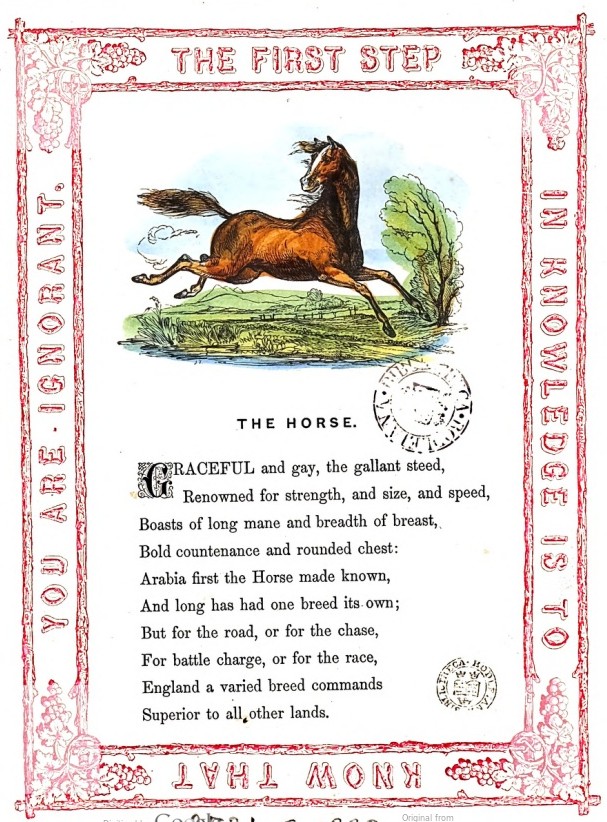
Hair taken fi’om the tail of a horse — some say it should be a gray stallion — is used in Gloucestershire for reducing a wen or thick neck in females. Avicenna is said to have sanctioned tying a horse-hair round warts as a means of strangling them. If a woman, among the old Irish, had only borne daughters and desired to beget a son, the tooth of a stallion was tied in a thong of sealskin hallowed by seven masses, and suspended round her neck. In England in the present day to cure worms a hair from the forelock of a horse is spread on bread and butter and given to the patient to eat. The hair is supposed to choke the worms.
The East Mongolians, according to Schmidt, to cure the sick place their feet in the opened breast of newly-killed horses. The inside of a horse’s hoof dissolved was used by a West Kent man as a cure for ague; it is kill or cure, producing a violent sickness, from which if one recovers he is hence- forth permanently cured, De la Pryme mentions a repulsive draught which, when all other remedies had been found inefficacious, completely cured one Peter Lelen, who had been “taken almost of a sudden, as he was at an adjacent town, with an exceeding faintness, and by degrees a weakness in all his limbs so that he could scarce go, attended with a pain in his syde which increased day by day.” No sooner had he tasted the compound — horse-dung and beer — “but that it made all the blood in his veins boil, and put all his humours into such a general fermentation that he seemed to be in a boyling kettle, &c., and this it was that cured him;” it is added, he coveted strong ale mightily.” Floyer also mentions this remedy.
Generally over England and Scotland it is believed that any directions given by a man riding a piebald horse as to the treatment of whooping-cough will be followed by satisfactory results. Jamieson says, “I recollect a friend of mine that rode a piebald horse, that he used to be pursued by people running after him bawling,
‘Man wi’ the piety horse,
What’s gude for the kink horse.’
He always told them to give the bairn plenty of sugar candy.” Among other writers the cure is mentioned by the latest writer on West of Scotland superstitions.
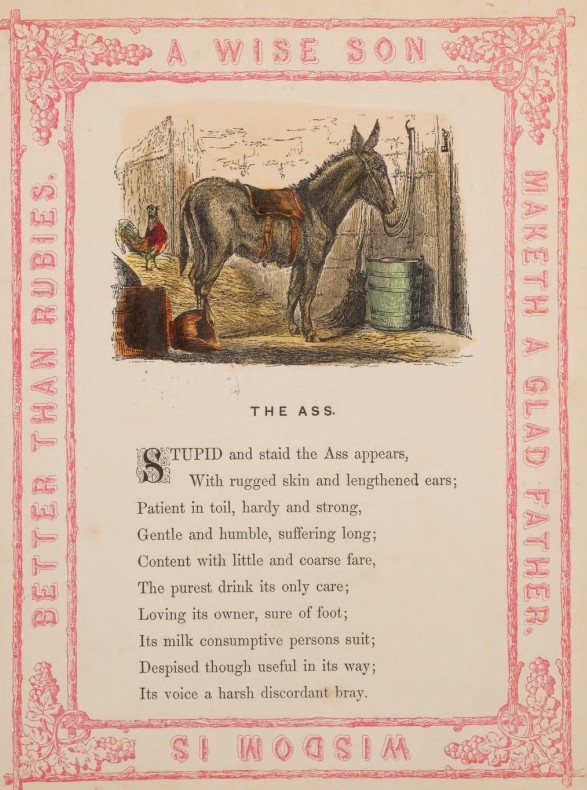
The skin of a wolf was reputed a complete preventive against epilepsy both in England and on the Continent, as Grrimm, ‘”Anderwarts wird angerathen gegen die epilepsie sich mit einer wolfhaut zu giirten.”3 The hoof of an ass’s right foot was reputed to have a similar virtue when mounted in a ring. Jones mentions that several such rings are in the Waterton collection, and Burton of old said, “I say with Renodoeus they are not altogether to be rejected.” Sinistrari mentions wolf and ass together when he refers to “la connaissance que nous avons de plusieurs herbes, pierres et substances animales qui ont la vertu de chasser les Demons, comme la rue, le mille-pertuis, la vervaine, la germandree, la palma-christi, la centauree, le diamant, le corail, le jois, le jaspe, la peau de la tete du loup ou de l’ane, les menstruea des femmes, et cent autres.” His conclusion is curious, “pour quoi il est dcrit: a celui qui sautient I’assaut du Demon, il est permis d’avoir des pierres, au des herbes, mais sans recourir aux enchantements.”
The skin of the wolf is also reputed a charm against hydrophobia, its teeth are said to be the best for cutting children’s gums, and if a person once bitten survives he is assured against future wound or pain of any kind. According to the Medicina de Quadrupedibus of Sextus Placitus wolf-flesh well dressed will prevent annoyance by apparitions, a wolf’s head under the pillow will secure sleep, and so on. The native Irish are said to have hung round the necks of their children the beginning of St. John’s Grospel, a crooked nail of a horseshoe, or a piece of a wolfs skin. The left jaw of a wolf burnt is an ingredient in a charm given in the Saxon leechbook, and even a wolfs tooth, according to Albertus Magnus (De Virtutibus Herbarum), gives such sovereign virtue to a bay leaf gathered in August if wrapped therein that no one can speak an angry word to the wearer. Alexander of Tralles, who flourished in the middle of the sixth century, recommends for colic, as guaranteed by his own experience, the dung of a wolf shut up in a pipe and worn during the paroxysm on the right arm, the thigh, or the hip, in such manner as it shall touch neither the earth nor a bath.
The hare, which shares with the cat the reputation of being the familiar of witches, has naturally some virtues attributed to it. Thus, that the right forefoot worn in the pocket will infallibly ward off rheumatism is a common belief in Northamptonshire, and generally over England; the ankle-bone has been said to be good against cramp. A hare’s brain in wine was good for over-sleeping in the opinion of the Saxon leeches; for sore eyes, also, the lung of a hare bound fast thereto, and for “foot-swellings and scathes, a hare’s lung bound as above and beneath, wonderfully the steps are healed.” “Thus much,” says Oogan, “will I say as to the commendation of the hare, and of the defence of hunter’s toyle, that no one beast, be it never so great, is profitable to so many and so diverse uses in Physicke as the hare and partes thereof, as Matth. [lib. iii. Dios, cap. 18] sheweth. For the liver of the hare dryed and made in powder is good for those that be liver sick, and the whole hare, skinne and all, put in an earthen pot close stopped, and baked in an oven so drie that it may be made in powder, being given in white wine, is wonderful good for the stone.”
The Chinese say that a hare or rabbit sits at the foot of the cassia tree in the moon pounding the drugs out of which the elixir of immortality is compounded. In a poem of Tu Fu, a bard of the T’ang dynasty, the fame of this hare is sung —
“The frog is not drowned in the river;
The medicine hare lives for ever.”
The devil’s mark was said to sometimes resemble the impression of a hare’s foot, sometimes that of the foot of a rat or spider. Seeing a hare was thought in Ireland to produce a hare lip in the child to be born, and as a charm the woman who unfortunately saw the hare was recommended to make a small rent immediately in some part of her dress.
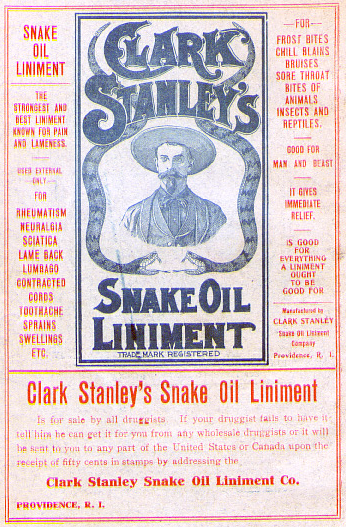
As the snake is the symbol of health, twined around the staff of Esculapius or Hygia, it is not surprising that its part in folk medicine is not unimportant. In China the skin of the white spotted snake is used in leprosy, rheumatism, and palsy, and the native doctors are said to make free use of the flesh of other serpents in their medicines. In New England in the present day keeping a pet snake, or wearing a snake-skin round the neck, is believed to prevent rheumatism; and rattlesnake oil is prescribed by the Indians for the same discomfort, and indeed for lameness of all sorts.
Serpents’ skin steeped in vinegar used to be applied to painful teeth. An old man who used to sit on the steps of King’s College Chapel, Cambridge, and earn his living by exhibiting the common English snake, made part of his business selling the sloughs of the snakes as remedies, when bound round the forehead and temples, for every headache. In some places they are also used for extracting thorns. Thus, if the thorn has fastened in the palm, the slough must be applied to the back of the hand, for its virtue is repellent, not attractive, and where it has been applied on the same side it is said that the thorn has been forced completely through the hand. For the cure of a swollen neck in Sussex a snake is drawn nine times across the front of the neck of the person affected, the reptile being allowed to crawl about for a short time after every third application. When the operation is finished, the snake is killed, the skin sewn in a piece of silk and worn round the patient’s neck. The swelling by degrees will gradually disappear, as probably it would at any rate.
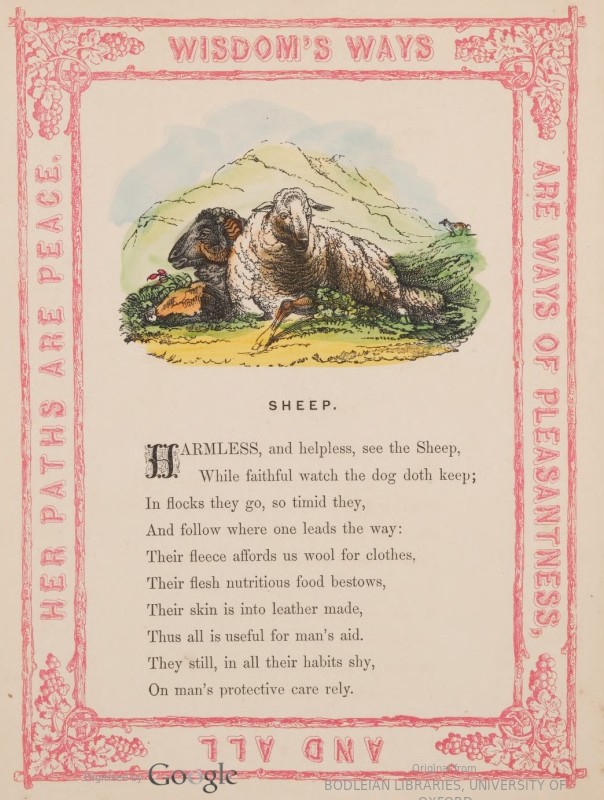
The patella of a sheep or lamb was worn in Northants to cure cramp. During the day it was worn as near the skin as possible and at night laid beneath the patient’s pillow. It was locally known as “the cramp bone.” That a human patella has been used does not surprise us when we remember that the knees as well as the fingers and toes of the dead were taken from the kirk in Lowthian by the Scotch witches when they had “danced a reel or short dance.”
A decoction of sheep’s dung and water was used in recent times in Scotland for whooping-cough, and in cases of jaundice. The same mixed with sulphur and porter was, according’ to an Irish official report of 1878, administered in that year at Youghal, Ardmore, to every child who showed symptoms of measles. This dose, locally known as “crooke,” brought about another complaint which the medical men found all ordinary remedies to have no effect in stopping. In Keogh’s Zoologia Medicinalis Hibernica a similar infiision is recommended as useful in the extreme in many diseases which are enumerated, In Somersetshire a consumptive patient is taken through a flock of sheep as they are let out of the fold in the morning. Soon after this it is believed the complaint will gradually disappear.
To help weak eyes, in South Hampshire a correspondent tells me snails and bread-crusts are made into a poultice. Mrs. Delany, in January 1758, recommends that two or three snails should be boiled in the barleywater or tea of Mary who coughs at night, “taken in time they have done wonderful cures. She must know nothing of it. They give no manner of taste. It would be best nobody should know it but yourself,” (this is the cautious tone to be expected, but it is what any village witch should have insisted on in a similar case;) “and I should imagine six or eight boiled in a quart of water, and strained off and put into a bottle, would be a good way of adding a spoonful or two of that to every liquid she takes. They must be fresh done every two or three days, otherwise they grow too thick.” From Schroder we learn how snail water should be prepared: “Take red snails, cut and mix them with equal weight of common salt, and put them into Hippocrates his sleeve, that in a cellar they may fall into liquor; which is good to anoint gouty and pained parts, and to root out warts, being first pared with a penfield.”
A Berwickshire man was told to rub a white snail on a wart on his nose; he did so, killed the snail, and the wart disappeared. In Gloucestershire to cure earache a snail is pricked and the froth which exudes dropped into the ear as it falls; but Pliny recommended long ago that when the uvula was swollen it should be anointed with the juice drawn with a needle from a snail which was suspended in the smoke. An old black woman in New England advised as a certain cure the oil from a pint of red earthworms hung in the sun. To cure a child it appears from the Holyrood Kirk Sessions Record it was stripped, rubbed with oil of worms, and held over the smoke of a fire.
A tooth from a living fox was thought to be an excellent cure for inflammation of the leg, if the tooth was wrapped up in a fawn’s skin and carried as an amulet. An Irish superstition is that a fox’s tongue applied to an obstinate thorn will cause its immediate withdrawal from a suffering foot. Marcellus says, if a man have a white spot or cataract in his eye, catch a fox alive, cut his tongue out, let him go; dry his tongue and tie it in a red rag, and hang it round the man’s neck; and one has only to turn to the Medicina de Quadrupedibus of Sextus Placitus to see the many virtues which attach to diffiei’ent parts of the animal.
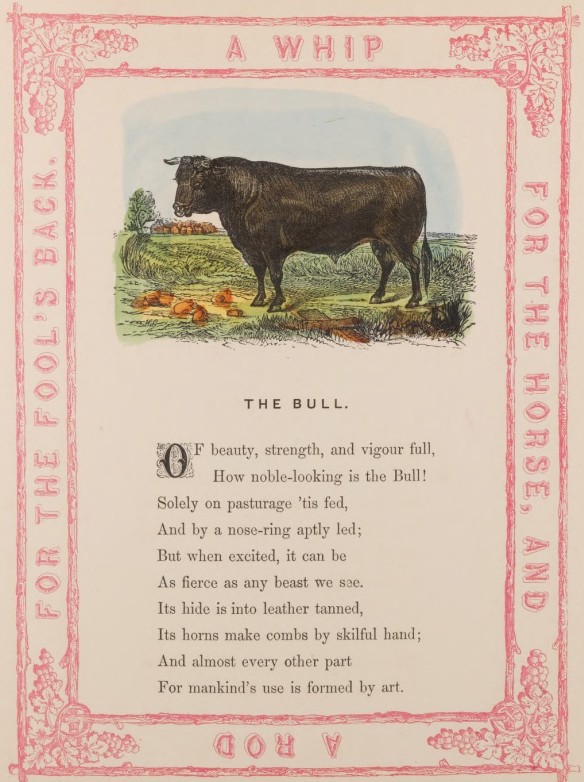
To cure snake bites, it is said in Worcestershire that the warm entrails of a fowl, newly killed, should be applied to the poisoned part. The occipital bone of an ass’s head is said to be a good periapt, and so also a bone from the heart of a living stag when inserted in a brooch from a rivet from a wrecked ship. In Madagascar, an ancient saying as to uses of the ox apportions the different parts of the animal thus: “Its horns to the maker of spoons; its teeth to the plaiters of straw; its ears to make medicine for a rash,” &c.
Fried mice are regarded in North-East Lincolnshire as an infallible cure for whooping-cough; the mother generally prepares the mess, for full faith, of course, in its efficacy; and instances are recorded of the whooping-cough in due course passing away, whether in consequence of this treatment I do not like to say. In Aberdeenshire, where this cure was also known, the mouse had to be eaten with a spoon made from a horn taken from a living animal, known as “a quick horn-spoon.” It was also recommended in that part of the country for jaundice patients. In Lancashire it was administered to young children for another purpose. It used to be a common belief that paralysis was due to the crawling of a shrewmouse over the affected limb, and when a mouse had been caught a hole was made in the trunk of a tree and the mouse plugged up in it.
That a child who has ridden upon a bear will never have whooping-cough is a common English belief, and much of the profits of the bear-keepers of old is said to have been made from the fees of parents whose children had been permitted to have a ride. The tooth of a bear is mentioned by Floyer, with the bones of carps and perches, the jaw of a jack, the hoofs of elk, horse, and ass, and men’s bones and skulls, as possessing virtue which depends “on the earthy part which absorbs acids, and on a volatile, whereby they are fetid and anti-hysterick.”
Anything that a western Indian dreams of at his first fasting may be his medicine for life, and one fortunate Indian, says an American correspondent to whom I am indebted for many curious and valuable notes, had the good fortune to dream of a great white bear. It was always his guide and adviser. One day he was in battle and severely wounded. When the enemy, however, had retired, and his brother warriors gathered round him, this Indian said the great white bear, his medicine, had appeared to him, and told him that if his friends would kill a bulfalo, and give him the raw heart to eat, he should be able to rise and walk, and go with them at least part of the way. The buffalo was soon killed, and the heart given to the sick man. That day he followed the trail, supported and encouraged by the great white bear, who, though invisible to all but himself, went by his side by day and slept by his side at night. The next day the bear prescribed the tongue of a buffalo, and when this had been furnished the wounded warrior was able to keep with his companions all the way. On the third day the bear ordered its patient to eat a buffalo’s dewlap, and such was the success of the remedy that he reached home in safety, and his wound healing quickly he lived for many years, till, as the Indian who told the story said, ” he and the white bear went together to the spirit land.”
Among such animal cures as may surely with propriety be called miscellaneous is that recommended for earache by a Demerara lady to a correspondent. To boil a cockroach in oil, and then stuff it into the ear was the remedy, but one of which my informant has not as yet proved the efficacy. An old Scotch certain cure for deafness was ants’ eggs, mixed with the juice of onions when dropped into the ear. For “swollen eyes the leeches recommended a live crab to be taken, his eyes extracted, and he replaced in the water alive, — the eyes put upon the neck of the man who had need, would soon bring about a satisfactory cure. For a strumous swelling the powder of a water crab, mingled with honey, applied to the swelling would justify their claim “soon he will be well.”
In the south of Hampshire a plaster of warm cowdung is applied to open wounds. The breath and smell of a cow are thought good for consumption in Fifeshire and certain parts of England, A paw cut from a live mole is thought in Sussex to be good for toothache. In Aberdeenshire a man who wishes to cure certain festers will catch a live mole, and rub it slowly and gently between his hands till it dies. The touch of that man will then work a cure.
To cure a sprain an eel-skin, wet and slimy as taken off the eel, is said to be used in Ulster. Scotch boys used to wear an eel’s skin round their leg when bathing, in order to secure them against cramp. The liver of an eel, according to Floyer, is commended in difficulty of labour, and is given in powder. Eels are said to be sent from Lochleven to London to cure cases of deafness. The woman who was collecting the eels was asked one day if she believed that eels cured deafness. She answered, “Od, I dinna ken. Sir; but thae Enghsh doctors shud ken,” and no doubt they should. Warts, they say in the North, should be rubbed with eel’s blood.
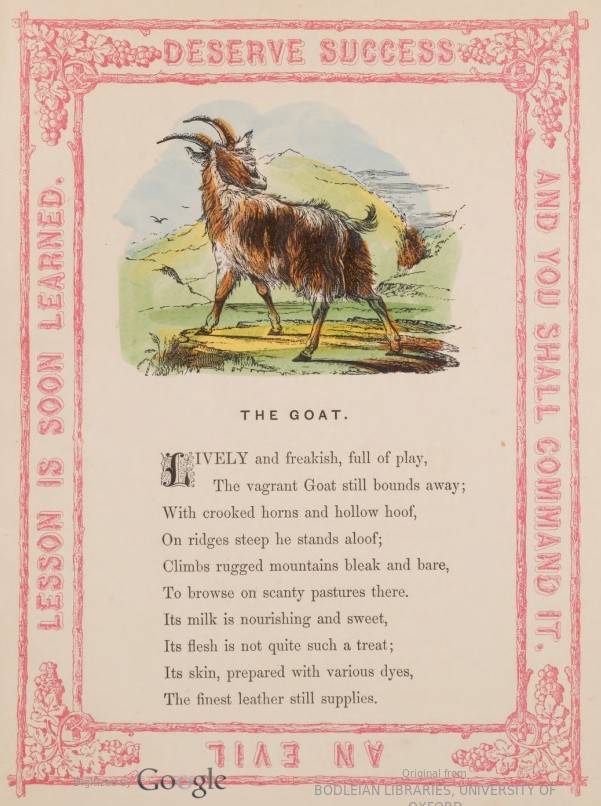
The Delphic oracle recommended Demokrates to get some worms from a goat’s brain, and in the Medicina which the Saxons adopted, a mountain goat’s brain, drawn through a golden ring, is recommended to be given to a child sick of epilepsy before it tastes milk. A goat’s horn, laid under the head of a sleepless man, “tumeth waking into sleep,” and for the bite of a snake the sufferer is told to shave off shavings of a goat’s horn into three cups, and to drink, at three different times, the milk of the same goat mingled with wine. In Scotland the blood of a wild goat, with ten drops of carduus water, was given in cases of pleurisy.
Cameron met a communicative friend in his journey across Africa, who told the party that the six circlets of skin on his left wrist were of elephant’s hide, and denoted the number he had killed. “This induced me to inquire whether the yellow ones on his right wrist were trophies of lions he had killed, but he replied, ‘Oh, no; goat’s skin, worn as a fetish.'”
Irish labourers believe that if a man with his tongue licks a lizard all over, not only will no lizard ever slip down his throat when he is lying on the grass for an hour’s rest, but also that his tongue has for the future acquired the power of curing any sore or pain to which it may be applied.
When the Queen of Charles II. was ill, and Pepys had come to St. James to inquire on 19 October, 1663, he was told that she had slept five hours pretty well, and that she waked and gargled her mouth, and to sleep again. Her pulse, however, beat faster, beating twenty to the king or my Lady Suffolk’s eleven. She had been so ill, he adds, as to be shaved, and to have pigeons put to her feet, and extreme unction administered.
So, too, in another desperate case, when in January, five years later, Kate Joyce sent word to Pepys that if he would see her husband alive he must come presently. Pepys says, “his breath rattled in his throat, and they did lay pigeons to his feet, and all despair of him.” This application of pigeons to the feet seems to have been a last resource; but in France pigeons used to be applied in a variety of ways to a variety of cases. To the heads of mad people, to the side of those suffering from pleurisy, the pigeon cut open along the back was applied hot. Pigeons’ blood was thought good for ophthalmic complaints; some drops of blood, let fall from under the wing of a young pigeon, would cure a wounded eye if they fell upon the wound. Pigeons’ dung burned, or otherwise reduced to powder, was used in poultices with linseed, mixed with old white wine, and otherwise.
Naturally what France did Scotland approved, but sometimes there seems to be excess of cruelty. At times, in the North-East, the pigeons were left fluttering in their dying agony against the dying man’s feet. Early in the morning a near relative would remove the pigeons and carry them to a place ” where the dead and the living did not cross, that is, to the top of a precipice, and left them.”
Possibly connected with the use of pigeons is the belief that persons cannot die on a bed of pigeons’ (some say game) feathers. As a Sussex man said of his friend, “Poor soul, he could not die ony way till neighbour Puttick found out how it wer, ‘Muster S__ ,’ says he, ‘ye be lying on geame feathers, mon, surely,’ and so he wer. So we took’n out o’ bed and laid’n on the floore, and he pretty soon died then.” Again, to ask for pigeons is generally thought a bad sign; it is thought to be the last craving for food.” Ah! poor fellow!” said a farmer’s wife to a correspondent of Notes and Queries, who wanted pigeons for a sick friend, “is he so far gone? A pigeon is generally almost the last thing they want; I have supplied many a one for the like purpose.”
So much for pigeons. In Yorkshire, here and there, owl broth is said to be considered a certain specific for hooping cough. Swan, in his Speculum Mundi, recommends owls’ eggs to be broken “and put into the cups of a drunkard, or one desirous to follow drinking, [they] will so work with him that he will suddenly lothe his good liquor and be displeased with drinking.” In Spain, storks’ eggs are esteemed for the same purpose. The owl, however, is generally thought an uncaimy bird. The Spaniard says it was present at the Crucifixion, and has never ceased to cry “crux, crux.”
The natives of Madagascar say it is with owls, wild cats, and bats that the spirits of the unburied, or of notorious criminals or sorcerers, are doomed to associate, and the English peasant does not think more kindly of the night bird. To carry the bones of a linnet, it seems from the trial of Elspeth Cursetter, was thought, in the seventeenth century, to secure health. Alexander of Tralles advises that a lark eaten is good, and adds that the Thracians tear out its heart while the bird lives and make a periapt, which they wear on the left thigh. When the German peasant hears the cuckoo for the first time he rolls himself three or four times on the grass, and thus secures himself for the rest of the year against pains in the back. He goes through the same ceremony, if it can be so called, when he hears the cuckoo for the first time in the year. The sinews of a vulture’s leg and toes tied on with due regard to the right going to the right, and the left to the left, were commended of old for gout.
1. Obscene dogs and importunate Yolucres/ They gave signs [Google translation.]
2. “It seems remarkable,”…“that dog spirits are visible and recognize the approaching god when he remains hidden from the human eye. When Grimnir entered at Geirrodr, ‘One gave a dog so angry that it would run into him ,’ was King Hess to catch the black emantella, ‘who does not want dogs arada.’ Aueh when Hel goes around, notice the dogs”…. “Only domestic animals could be offered, although not all, the dog did not mention it, which otherwise often behaves to the master like a horse; He is faithful and prudent, but besides that there is something ignoble and impure in him, which is why his name is reviled.” [Google translation.]
3. Elsewhere, it is advised to gird oneself with a wolf’s hide as a remedy against epilepsy. [Google translation.]
4. “the knowledge we have of several herbs, stones, and animal substances that have the power to drive away demons, such as rue, St. John’s wort, vervain, germander, castor oil plant, centaury, diamond, coral, jet, jasper, the skin of the head of a wolf or a donkey, women’s menstrual blood, and a hundred others.”….”Why is it written: ‘To him who withstands the demon’s attack, it is permitted to use stones or herbs, but without resorting to enchantments’”? [Google translation.]
William G. Black, Folk-Medicine: A Chapter in the History of Culture (London: The Folk-Lore Society and Elliot Sock, 1883), pp. 148-164. Footnotes have been deleted.
See: https://babel.hathitrust.org/cgi/pt?id=coo1.ark:/13960/t74t7621r&seq=1
Primitive Psycho-Therapy and Quackery
Robert M. Lawrence
… Dr. Rodney H. True, lecturer on botany at Harvard College, in a paper on Folk Materia Medica, read at a meeting of the Boston branch of the American Folk-Lore Society, February 19, 1901, gave a list of therapeutic agents, mostly of animal origin, forming the stock in trade of a European druggist some two hundred years ago. This list includes the fats, gall, blood, marrow from bones, teeth, livers, and lungs of various animals, birds, and reptiles; also bees, crabs, and toads, incinerated after drying; amber, shells, coral, claws, and horns; hair from deer and cats; ram’s wool, partridge feathers, ants, lizards, leeches, earth-worms, pearl, musk, and honey; eyes of the wolf, pickerel, and crab; eggs of the hen and ostrich, cuttlefish bone, dried serpents, and the hoofs of animals.
With the development of materia medica in Europe, the use of animal drugs diminished; but during the last decade of the nineteenth century, extracts of animal organs were manufactured on a large scale, and found a ready market. Thus some of the articles mentioned are reckoned among remedial agents to-day, but most of them doubtless owed their virtues to mental action. Wolf’s eyes in former times and bread pills nowadays may be cited as typical remedies, acting through the patient’s imagination and possessing no intrinsic curative properties, yet nevertheless valuable articles of the pharmacopœia from the standpoint of suggestive therapeutics. In a list of Japanese quack medicines, of the present time, we find mention of “Spirit-cheering” pills.
In “A Booke of Physicke and Chirurgery, with divers other things necessary to be knowne, collected out of sundry olde written bookes, and broughte into one order. Written in the year of our Lorde God 1610,” among many curious prescriptions we find the following: “A good oyntment against the vanityes of the heade. Take the juice of worm woode and salte, honye, waxe and incens, and boyle them together over the fire, and therewith anoynte the sick heade and temples.” The volume referred to was the property of Mr. William Pickering, an apparitor of the Consistory Court at Durham, England.
A commentator on the above prescription observed that few coxcombs, dandies, and heads filled with bitter conceits, would like to be anointed with this cure of self-sufficiency. The wax might make the plaster stick, but it might be feared that the honey and the incense would neutralize the good effects to be expected from the wormwood and salt. If, however, the phrase “vanityes of the head” be interpreted to mean a dearth of ideas, we may assume that the above prescription was intended as a stimulus to the imagination, and as such it might well have a therapeutic value.
Dr. William Salmon, a London practitioner, published in the year 1693 “A Short Manual of Physick, designed for the general use of Her Majestie’s subjects, accommodated to mean capacities, in order to the Restauration of their Healths.”
In this little volume we find a prescription for “an Elixer Universall, not particular for any distemper,” as follows:
℞
Rex Metallorum [gold] ꝣss.
Pouder of a Lyon’s heart. ꝣiv.
Filings of a Unicorn’s Horn. ꝣss.
Ashes of the whole Chameleon. ꝣiss.
Bark of the Witch Hazle Two handfulls.
Lumbrici [Earth-worms] A score.
Dried Man’s Brain ꝣv.
Bruisewort } aa lbss.
Egyptian Onions} ‘’
Mix the ingredients together and digest in my Spiritus Universalis, with a warm digestion, from the change of the moon to the full, and pass through a fine strainer. This Elixer is temperately hot and moist, Digestive, Lenitive, Dissolutive, Aperative, Strengthening and Glutinative; it opens obstructions, proves Hypnotick and Styptick, is Cardiack, and may become Alexpharmick. It is not specially great for any one Single Distemper, but of much use and benefit in most cases wherein there is difficulty and embarrassment, or that which might be done, doth not so clearly appear manifest and Open to the Eye.
The above elixir is a fine specimen of the product of a shrewd charlatan’s fertile brain, and doubtless found a ready sale at an exorbitant price. The fact that one, at least, of its ingredients is mythical, probably enhanced its curative properties, in the minds of a gullible public. The horn of the unicorn was popularly regarded as the most marvellous of remedies. In reality, it was the tusk of a cetaceous animal inhabiting the northern ocean, and known as the sea-unicorn or narwhal. In the popular mind it was of value as an effective antidote against all kinds of poisons, the bites of serpents, various fevers, and the plague.
In describing a scene in the Arctic regions, Josephine Diebitsch Peary wrote as follows in her volume, “The Snow Baby” (1901):
Glossy, mottled seals swim in the water, and schools of narwhal, which used to be called unicorns, dart from place to place, faster than the fastest steam yacht; with their long, white ivory horns, longer than a man is tall, like spears, in and out of the water.
One of the teeth of the narwhal is developed into a straight, spirally fluted tusk, from six to ten feet long, like a horn projecting from the forehead. This horn is sometimes as long as the creature’s body, and furnishes a valuable ivory. The narwhal also yields a superior quality of oil.
Sir Thomas Browne in his “Pseudo-doxia Epidemica” remarked that many specimens of alleged unicorn’s horn, preserved in England, were in fact portions of teeth of the Arctic walrus, known as the morse or sea-horse. In northern latitudes these teeth are used as material wherewith to fashion knife-handles or the hilts of swords. The long horns, preserved as precious rarities in many places, are narwhal-tusks.
The belief in the medicinal virtues of unicorn’s horn is comparatively modern, as none of the ancients, except the Italian writer Ælian (about A. D. 200), ascribed to it any curative or antidotal properties. Sir Thomas Browne characterized this popular superstition of his time as an “insufferable delusion.”
H. B. Tristam, in his “Natural History of the Bible,” remarks that there is no doubt of the identity of the unicorn of Scripture with the historic urus or aurochs, known also as the reêm, a strong and large animal of the ox-tribe, having two horns. This animal formerly inhabited Europe, including Great Britain, and survived until comparatively recent times, in Prussia and Lithuania. The belief in the existence of a one-horned quadruped is very ancient. Aristotle mentions as such the oryx or antelope of northern Africa. The aurochs was hunted and killed by prehistoric man, as is shown by the finding of skulls, pierced by flint weapons.
In the Septuagint, the Hebrew word reêm was translated monoceros in the Greek text. This is alleged by some authorities to be an incorrect rendering. The Vulgate has the Latin term unicornis, the one-horned.
In Lewysohn’s “Zoologie des Talmuds” is to be found the following rabbinical legend: When the Ark was ready, and all the creatures were commanded to enter, the reêm was unable to pass through the door, owing to its large size. Noah and his sons were therefore obliged to fasten the animal by a rope to the Ark, and to tow it behind. And in order to prevent its being strangled, they attached the rope to its horn, instead of around its neck…. It was formerly thought that the legendary unicorn was in reality the one-horned rhinoceros, but this seems improbable. The fabulous creature mentioned by classic writers as a native of India was described as having the size and form of a horse, with one straight horn projecting from its forehead. In the museum at Bristol, England, there is a stuffed antelope from Caffraria, which closely answers this description. Its two straight taper horns are so nearly united that in profile they appear like a single horn.
The unicorn of Heraldry first appeared as a symbol on one of the Anglo-Saxon standards, and was afterwards placed upon the Scottish shield. When England and Scotland were united under James I, the silver unicorn became a supporter of the British shield, being placed opposite the golden lion, in the royal arms of Great Britain.
Robert M. Lawrence, Primitive Psycho-Therapy and Quackery (Boston: Houghton Mifflin Co., 1910), pp. 158-164. Found in chapter xiv. Ancient Medical Prescriptions. Footnotes have been deleted.
See: https://babel.hathitrust.org/cgi/pt?id=nyp.33433068191703&seq=1&q1
The Infancy of Medicine
Dan McKenzie
CHAPTER I
THE EVOLUTION OF ANIMAL REMEDIES
Primitive man believes in a much closer union between the lower animals and the human race than we do. Darwinism, no doubt, connotes a belief in a closer linking together of the various species of living beings than the mediaeval philosophy admitted, but the Darwinian conception of the relationship of man to the lower animals in no degree approaches the close and intimate union supposed to exist between them by primitive races.
The belief in the identity in nature of man with the animals is due to magic and has created an extensive series of customs which have played an important part in the evolution of religion and, as we hope to show, in that of medicine also.
What seems to be the earliest stereotyped belief or creed dependent upon this primal magical idea is what is known as totemism, a large and widely extended group of primitive beliefs and customs, the nature of which it is necessary for us to discuss. Totemism has been and still is a fruitful source of controversy among folk-lorists and archaeologists, and in my brief sketch of the subject I shall endeavour to portray only those features which meet with general agreement.
The word ‘totem’ comes to us from the North American Indians, among whom the institution existed in a very complete and active form, and from whom modern ethnology first obtained its knowledge of the custom. Totemism may be defined as the belief in virtue of which a tribe traces back its origin and ascribes its continued existence to an animal species, which is the god of that particular tribe. The human tribe and the animal species are thus knit together by a close and indissoluble tie based upon a magical idea of unity, of which we shall from time to time encounter many instances. In consequence of this fundamental belief, all the individuals of that animal species are sacred to the tribe whose totem it is. It may not be killed by any member of the tribe either for sport, for food, or, if it is a ferocious animal, for self-protection; as this would entail the destruction of the tribe.
There is, however, a recognized exception to this rule. On certain stated occasions a young healthy individual of the species, without spot or blemish, is deliberately slain as a solemn rite and as deliberately eaten, with the object and intention of appropriating the physical, mental, and moral qualities of the animal-god, which by the act of eating are received into the bodies of the feasters, and so into the body general, in order that the tribe may thereby be prevented from becoming old, worn-out and degenerate. The totem animal is killed to preserve and perpetuate the existence of the clan.
If their god be wantonly slain, then, by homoeopathic magic, the tribe also will decay; if, on the other hand, one of the totem animals is cut off in the full vigour of early maturity, its vitality, absorbed into the tribe when the carcase is eaten, magically renews the youth of the nation. The full and complete absorption of the animal’s life is ensured by the feasters devouring the entire animal, not a hair being thrown away and not a drop of blood lost. Professor Robertson Smith says that, among the ancient Arabians, the camel, their sacred animal, was entirely devoured; hair, teeth, bones and all, not a vestige of him being left.
We have not yet succeeded in tracing totemism back to its beginnings. And although many theories have been propounded to account for its existence, none of them enjoys general support. For, in the absence of tribes whose beliefs and practices denote a stage earlier than the totemism of the fully-formed type it is impossible for us to verify conjectures by appeals to nature.
On the other hand, the subsequent progress and development of totemism has been very thoroughly investigated. The upward evolution of thought leads to an elevation in the status of the totem. He becomes a god, half-animal and half-man, like Anubis, the jackal-headed god of Egypt, or Pan (Faunus) the goat-god of Greece and Rome. Then, rising still higher in the scale, the animal-gods cast their skin, and emerge as man-gods with certain sacred animals pertaining to them and so sacrificed to them at religious festivals. Finally, the last stage is reached when the animal is no longer sacrificed but is only remembered as ‘unclean’ and not to be eaten, or when it is regarded as the companion of the god.
Totemism in its perfect state is found among the North American Indians and the blacks of Australia; the second stage in the religions of ancient Egypt and Assyria with their jackal, lion, and fish gods; the third stage, in the case of most of the gods of Greece and Rome; and the fourth stage, among the Jews and many other civilized nations of modern times.
Now at all these stages, medicaments, obtained from the sacred animal, were employed for the cure of disease.
Just as the folk of Britain were told, when they passed through the smoke of the Beltane fires, that this would preserve them from sickness, so the eaters of the sacrificed totem-animal were rewarded for their pious orgy by the promise that thereby they would be protected against the effect of magical and demoniac enemies.
As we have seen, the magical doctrine that we absorb the totem-animal’s properties underlies the rite of eating him. So, in like manner, magic of the same character accounts for the use of many animals other than totems as remedies in disease. Thus the lungs of a long-winded animal like the fox are expected to cure consumption, and the fat or ‘grease’ of a hairy animal like the bear, to cure baldness.
Again, we shall be able to furnish instances to show that animals which attracted notice by reason of their usefulness, ferocity, or some such peculiarity, were on that account deemed sacred and medicinal. And inasmuch as these qualities also led to the selection of certain animals as totems, we find in the evolution of animal remedies the same magical and religious laws in operation that we discussed in the last chapter.
In addition to the influence of totemistic magic upon the origin of animal remedies a certain amount of support must also have been contributed by the common practice of transferring disease to animals, as the sins of the congregation of Israel were transferred to the scapegoat.
Finally, there is yet another aspect of the subject upon which, did space permit, an interesting chapter might be written. This is the origin of the medicinal use of insects, like lice, maggots, bees, and so on. The special interest lies in the fact that, along with worms, these forms of lowly life were supposed to be generated, de novo, from the environment in which they were found, a belief which lingered on in science until Tyndall destroyed it. Lice and maggots were developed from human skin and flesh, worms from corpses, and so on. And medicinally they were supposed to contain the virtues of their generator. In like wise the old Norsemen believed that dwarfs sprang from the earth ‘as maggots do in meat,’ and the Scriptural verse that ‘God formed man of the dust of the ground’ may perhaps contain the same idea.
From such beginnings the use of animals and animal products in the treatment of disease underwent extension from a limited number to a large number, as civilization flourished and commerce with its interchange of ideas and customs spread abroad the high reputation enjoyed by the different animal remedies in their several native countries. In consequence of this extension, again, not only were animals which had some sacred or sympathetic significance, used as remedies, but, as time went on, almost all animals and their every part and organ came to enjoy some sort of reputation in the cure of disease. This extension reached its culmination in Europe in the seventeenth century, as the ‘Dispensatories’ of that period abundantly show, but it was also in operation in ancient Egypt, in Rome, and in mediaeval Arabia and Europe.
Moreover, as we shall see in the next chapter, precisely the same course was followed by herbal remedies, and it is to this development from magic and religion to irrational therapeutic universalism that we owe the bewildering multiplicity of medicinal agents in pre-scientific medicine.
There are also, we must remember, several instances of animal products being used for which no reason, other than that of an empirical belief, generally well-founded and supported by experience, can be suggested to account for their employment. An example of this variety is to be found in Cod Liver Oil…. But it is to be noted that this class is very limited indeed, and we shall see that nearly all the old animal remedies, as well as most of the old herbal remedies are referrible to primitive magic or religion, and not to empiricism.
Perhaps this is the most appropriate place for an allusion to the theory associated with the name of Elliot Smith that animal remedies were first employed in Egypt and that all the other nations in the world, without exception, adopted the practice from that ancient civilization.
Now, as we have already seen, in so far as European official medicine is concerned, that division of our art almost certainly borrowed animal remedies from Egypt, since historical data point to such a transference. But the support in favour of the theory that it was in Egypt and nowhere else that such remedies originated is less firmly founded. At all events even the most enthusiastic promulgators of that theory would probably hesitate to call its support historical. It is, in a word, an inference drawn from observations and suppositions upon which there is at present considerable disagreement.
The controversy may be left for settlement to the hands of time and growing knowledge. All that we need say at the present moment is, that wherever the ideas underlying the recourse to animal remedies first arose in the mind of man, the manner of their genesis was, almost certainly, something like that which we have sketched above.
The foregoing outline of our present theme shows that it would be necessary, if we wished to deal exhaustively with the material at our disposal, to discuss nearly every species in the zoological kingdom, to say nothing of the kingdom of fabulous animals. Consideration of space fortunately forbids us to enter thus deeply into the subject, so we shall describe only the most interesting, suggestive, and illustrative examples.
As we have already considered the subject of the transference of disease to a living animal, and the converse process, the transference of an animal’s vitality to an exhausted patient, there is no need for us to repeat what we have said about them.
We shall begin with a discussion of cures by parts of dead animals….
Dan McKenzie, The Infancy of Medicine; An Enquiry into the Influence of Folk-Lore upon the Evolution of Scientific Medicine (London: Macmillan and Co., 1927). pp. 97-101. Footnotes have been deleted.
See: https://babel.hathitrust.org/cgi/pt?id=uc1.b4210693&seq=1
Zoologia Medincinalis Hibernica
John K’Eogh
PREFACE.
In the treatise of botany, which I lately published, I shew’d, that the medicinal productions of this kingdom, are sufficient to cure the natives thereof, of any distemper they are subject to, without sending for exotic medicines, which destroy more than they cure, so I have no occasion to offer arguments to confirm the truth of this assertion.
Therefore I hope the reader will look on this undertaking, with an impartial eye, and that be will take the design, or intention of the author to be good, though the performance might not be answerable to it.
I also expect the inconveniences and circumstances I laboured under, when I was writing this book, will plead an excuse for me, if it be not so perfectly finished as you would have it. But I hope this attempt, or essay of mine on this subject, will in process of time occasion abler pens to handle it. The chief apology I can make for myself, for any errors, or faults, which might be found in this treatise, is, that being a lover of my country, and a well-wisher of the natives thereof, I thought it my duty to publish any thing which might be an advantage or benefit to it or them.
There is not a bird, beast, fish, or reptile, but has some medicinal virtue for the service of man, if found out; so it is incumbent upon all lovers of knowledge, all who have a regard for their country, and the preservation of their healths, to endeavour, by making experiments, to find out the medicinal arcana’s of nature undiscovered, whether proceeding from vegetables, animals, or minerals; for next to our immortal souls, what ought more to be taken care of than our bodies, which ought to be preserved in a healthy state, by which means life is made agreeable and comfortable to us? but on the contrary, what satisfaction or enjoyment can men have in this world, whose bodies are afflicted with disorders? There have been several books writ on the curiosities of nature, which favour more of pleasure, than real benefit.
Therefore I shall not here describe the various Shapes, food, instincts, customs, sagacity, &c. of animals, being not the design of my present undertaking.
My principal intention in publishing these treatises on vegetables and animals, was to contrive to cure the diseases, which the natives of this kingdom are afflicted with, by simple, easy, and safe methods, such as by herbs, or parts extracted from animals, which are prepared either by pulverization, decoction, infusion, distillation, &c.
You must observe, that the English names of the animals are placed alphabetically in this book, by which means you may readily turn to them, when occasion offers. I thought proper to insert the Irish names of the said animals, because by this means, when you want them, the native Irish can inform you, what they are, and where to be found.
As an appendix to my treatise on Botany, or Vegetables, I shew’d you the prophylactic part of medicine, or a method how to prevent approaching disorders, before they take possession of any of the principal parts of the body. Now in this book I give you a short account of the diagnostic part of medicine, how by the symptoms or signs appearing, you may know a distemper, which is a branch of medicine first to be known by physicians, before they can apply remedies, for by mistaking the disease, how many patients have been destroyed, and how many doctors have lost their credit, by prescribing contrary things for their patients.
To this I have also added a short treatise of the prognostic part of medicine, by which you may know the event of a distemper by the symptoms, how it will end, whether in life or death. For it will not only be a great advantage to the patient, if it be mortal, to have timely notice given him by the physician, to prepare himself for another world, but also will be a credit to him, when he is called upon to visit a patient, to declare bis judgment, that it is not in his power to recover him; and on the contrary, it will be a great comfort and satisfaction to tell him, that he will get the better of his disorder; so upon these accounts the physician will be blameless.
Therefore these three parts of medicine, which I have before mentioned, are the principal parts of it, vid. first, the prophylactic part to prevent a disorder, secondly, the diagnostic to know a distemper, thirdly, the prognostic, to foresee the event of the distemper, But I sincerely wish, that these branches of medicine could be brought to a demonstration, by a society of wise and ingenious men.
We have an account, that the great and learned Paracelsus never undertook to prescribe for a patient, until first be could certainly conclude, from a symptom or complication of symptoms, what the distemper was, and by the symptomata lethalia, or deadly symptoms, whether it was mortal. I heartily wish our physicians were so exact; for by so doing they would gain great honour and reputation in the world, and be very serviceable to the inhabitants of this kingdom.
A TREATISE,
Shewing the Medicinal Virtues of Birds, Beasts, Fishes, Reptiles, or Insects, which are known, and Propagated in this Kingdom.
HOUSE CAT, Hib. Cat-lij, Lat. Catus, vel Felis Domesticus: Cats Grease is discussive, and Anodyne, it dissolves Tumors, eases Pain, and prevails against Nodes in the Skin, but much more powerful if made use of after the following Manner, Take of it two Ounces, Palm Oil half an Ounce, Oil of Anniseed one Dram, mix them, and anoint the Parts therewith. The Liver pulverized taken to the Quantity of two Drams in any proper Vehicle, is Nephritic, and Diuretic, good against the Gravel and stoppage of Urine. Half an Ounce of the Gall mixt with two Drams of Honey, Honey, is good against Pearls, Films, Pin, and Web, Blindness, and Dimness of the Sight, the Eyes being often washed therewith. The Ashes of a Cat’s Head blown into the Eyes, or mixt with Honey for a Balsam, have the same Virtue, as before mentioned. It is affirmed by some, that the Blood kills Worms in the Nose, and in other Parts of the Skin. It is reported that ten Drops of Blood taken out of the Tail of a Bore Cat drank, cure the Epilepsy or Falling Sickness. The Dung pulverized one Ounce, mixt with Mustard Seed in Powder, three Drams, Juice of Onions two Drams, Bears Grease enough to make an Ointment, cures the Alopecia or Baldness. A few Drops of the Blood given in any proper Vehicle, are good to cure Convulsion fits. The Flesh being salted and bruised draws Splinters, and Thorns out of the Flesh, and helps to cure the Hæmorrhoids, and Pains of the Back, as Aldrovandus declares. The Fat of a gelded Cat is good to cure Arthritic disorders, as Schroderus testifies.
A DOG, Hib. Guire, Madera, Lat. Canis. The gall of a dog mixt with honey and roſe- water, water, cures most disorders of the Eyes, such as Ophthalmia’s, Films, Pearls, &c. it being applied to them three or four times a day; but if you mix with the above ingredients salt of Vitriol, and fine Aloes in powder, you seldom fail to cure the said disorders: The Dung, or Album Græcum taken inwardly is aperitive, and abstersive, therefore useful to cure a Dysentery and Cholic, outwardly applied with Honey it cures Quinsies, sore Throats, Inflammations, and Oedmas: The ashes of the said Album Græcum, mixt with the Oil of Roses cures Warts being applied to them: The Liver of a mad Dog reduced into powder drank in a proper Liquor, or the said Liver roasted or broiled, being eaten, is said to cure the biting of a mad Dog: The Blood of a Dog being drank, is with success made use of against Poyson, and the bite of a mad Dog; it also helps to cure the Cholic, and opens obstructions of the Womb and Spleen: One ounce of the Secundine pulverized, mixt with four drams of Ox Gall, causeth a speedy delivery, and brings away the Birth, and after Birth, dose one dram in a glass of Sack. Take the ashes of the bones, or teeth, one ounce, filings of Ox horns half an ounce, mix them, being drank in a proper Liquor, they are useful to cure the Cholic, and Falling-sickness: The tooth of a dead Dog calcined, being collected into a body with posset drink, cures the Tooth-ach being applied: Album Græcum, or Dogs-turd pulverized mixt with Honey, and Wood-lice, or Sow-lice bruised, made into a plaister, and sprinkled with Hungary water, is excellent to be applied to a sore Throat, especially in the small Pox: It is reported that Dog-skin gloves, or shoes, are apt to give a Paralytic disorder to any one that wears them: A young Whelp dissected cures any part pained, being applied to it, as Gesner affirms: The fat helps to cure the Palsy, as Sextus saith: The marrow, mixt with old Wine cures the swelling of the Fundament being applied to it: The grease mixt with old oil, and the juice of worm-wood dropt into the Ears cures deafness proceeding from any cause, as Sextus declares.
A RAT, Hib. Lugbrancagb, or Lugbsrancagh, Lat. Mus Major, Sorex. The fat is good against all manner of pains, and aches, proceeding from a cold cause, especially if half an ounce of the fat be mixt with one dram of the oil of amber, and the grieved parts anointed therewith: The ashes of the whole rat, strew’d upon kiby heels, heal them, being blown into the eyes clear the fight: The dung made into powder, and mixt with bears grease, cures the alopecia, the part being anointed therewith: Take half a dram of the powder of the said dung, caroline in fine powder one scruple, calomelenos, and flos sulphuris, of each sight grains, mix for a dose against the worms: Rats dung reduced to powder, cures the bloody flux, being taken in any proper vehicle.
John K’Eogh, Zoologia Medincinalis Hibernica; or, A Treatise of Birds, Beasts, Fishes, Reptiles or Insects (Dublin: S. Powell, 1739), pp. 14-15, 32-34, and 75. Lead image can be found in: https://en.wikipedia.org/wiki/Quackery. The lower images appear in: Domestic Animals (Edinburgh: T. Nelson & Sons, ca. 1855).
See: https://babel.hathitrust.org/cgi/pt?id=uc1.31378008346093&seq=1