United Kingdom
We want you to have a greater ability to learn about some of the unpleasant animal issues in our world.
Sporting Scenes and Country Characters
Charles White
THE POACHER.
A poacher carries his life in his hand. Having little sympathy with his fellow men, and less of all the obligations due to society, he pursues his course with a fixed determination of purpose and a recklessness of consequences peculiar to himself, and worthy of a better cause. Tracing him from his sylvan haunts, he will be found the frequenter of the tap-room, the alehouse, and the beer-shop — the hero of the band with whom he associates, and listened to on all occasions, because he has surmounted extraordinary difficulties and braved extraordinary dangers.
The village poacher is generally what is termed a labouring man; and he makes use of his occupation to serve his own purposes. He has a keen and penetrating eye; he is the personification of cunning, possessing at once the silent stealth of the cat and the ferocity of the bull-dog. His knowledge of all the habits of the several species of game is remarkably correct. He knows the track of the hare, the haunts of the partridge, and the roost of the pheasant. He has little sympathy with the feathered creation: he flies at the highest game, and despises the rabbit where the hare abounds. During his occupation in the fields, his mind is bent on his nocturnal rambles. Nothing escapes his attention: his eye is rivetted to the “run,” and to the “sneuce:” his greatest feat is to elude the detection of the keeper, and to secure a rich booty.
During the poacher’s leisure hours on a Sunday (for he seldom visits either church or chapel), he may be seen loitering on the roads in the neighbourhood of some well-stored preserve. He observes at feeding-time, about sunset, where the game is most abundant, and forms his plans accordingly; knowing full well that he has the best chance of success where game is the most plentiful. He uses the net, the snare, and the air-gun — and frequently the common fowling-piece, which, being made to unscrew, he can secrete in his capacious pockets; and he often derives much assistance from a well-trained lurcher, which hunts mute. The snare is set by stealth, not only in the hedgerows, but in the fields and in the woods, where the run is visible. His greatest danger is in taking them up; but his sense of hearing is remarkably acute; he can mark the slightest footfall, and is never alarmed with the rustle of the beech leaf, or the deep moan of the Scotch fir. He has all the alertness of the North American Indian, and is almost as untiring on foot. If he be suddenly pounced upon, the loss of life is almost inevitable.
When the village is hushed in slumber, and the “drowsy tinkling” is no longer heard, the poacher, having gone to bed early, and therefore refreshed, sallies silently forth — not by the accustomed road, but by bye-paths, across gardens, and over fences — and seldom returns by the way that he set out. Care is generally taken by his fellow-poacher, with whom a plan has been previously laid, to secure the presence of the keeper and the watcher in some other part of the domain, in order that they may not only proceed with perfect safety, but with perfect success.
They return to their respective dwellings secretly; and the sale of their plunder is frequently entrusted to their wives, who convey it to the neighbouring towns, and dispose of it to those who carry on a secret trade in the sale of game, not being licensed dealers. There is little difficulty in selling the largest quantity, and at a price, too, which amply remunerates the poacher. That the act empowering the sale of game has diminished the number of poachers to the extent which had been anticipated, may be fairly questioned.
When once the habit of poaching has been acquired, it is a matter of no small difficulty to shake it off. It has been frequently remarked, that the propensity for field sports is inherent in our nature; and there is, unquestionably, a certain charm connected with the practice of poaching — whether arising from the profit or the adventurous nature of the calling — which is seldom, under any circumstances, wholly obliterated. Once a poacher, a poacher he continues to the end of the chapter.
In prosecuting his lawless occupation amid these midnight and destructive plunder-scenes, — where all sense of shame and degradation is wholly disregarded, where passion is excited to the highest pitch, and where desperation is so far in the ascendant as to leave behind not only traces of the greatest destruction of the preserves, but of bleeding wounds, and even of the murder of his fellow-creatures, the poacher displays a degree of circumspection and of courage worthy of a better cause.
The mode of procedure is usually as follows: — A number of poachers — often connected with manufacturing towns — having previously met to arrange the plan of operations, agree to proceed, frequently to a long distance, on their dangerous excursion, in a body more formidable than that of the keeper and his assistants; and, carrying everything before them, occasion the most extensive slaughter on all hands. The force of their opponents is duly calculated; the first point of operation is carefully laid down; the means of retreat, in case of danger, are agreed upon; and, in case of a determined attack from the keeper and the watchers, the former is marked for almost certain destruction, particularly if his previous informations have inflicted punishment on any one of the party of poachers.
The threatened visitation of the poachers at that period preceding Christmas when the demand for game is greater than at any other period, induces many proprietors of estates either to invite their several friends for a day’s diversion, or to give directions to their keepers to kill a considerable number of all descriptions of game, from fear that they may fall into the hands of the poachers. For, however vigilant the faithful preserver of the covers may be — however cautious he may be on all occasions to keep them unmolested, free from the destruction of vermin of every description, and provided with every necessary security — it is impossible that he can exercise any effectual means to prevent the nocturnal visits of the poacher, although he may be acquainted with all the meetings of suspected persons at beer-shops, inn-kitchens, and tap-rooms, or even watch the cottages of those labourers who possess in this respect a notoriety, which, whether well or ill founded, can never be shaken off.
Besides, the keeper is exposed to other and more wily depredators, who proceed in their career, not in a body, — not by preconcerted arrangement, — not by a fixed determination of purpose to kill or be killed, — but solitarily. It may, indeed, be fairly questioned, whether a few solitary poachers, occupying their several peculiar localities — apparently honest men, regular at their daily laborious occupation, — men who, according to appearances, dare not say “boh to a goose,” but who are fully aware of the habits of every kind of game, — do not, in the course of a season, effect more destruction on a well-preserved estate, than is inflicted by the visitations of a whole armed force of regularly-associated poachers.
The solitary poacher is incessantly at work, — he lets no opportunity slip; he knows the whereabout of the keeper and his assistants; he is well acquainted with the character of the ground, the bye-ways, the broken fences, the gates, the short cuts through the woods, and the intricacies which may enable him to elude discovery.
TRICKS OF KEEPERS AND POACHERS.
It is said that there are tricks in every trade, and, assuredly, the keeper and the poacher, in pursuing each his respective calling, are not free from this imputation. There are, no doubt, many honest keepers, but it must be apparent, that the occupation of a keeper affords him innumerable opportunities for the commission of dishonest actions. He has the whole range of the estate; and, if he be mercenary, and has opened communications with the conveyancers, which he can do with perfect safety, particularly if the spot on which he resides be adjoining a turnpike road, he can carry on a secret trade in game to an almost unlimited extent. From his connexion with these soi-disant legal functionaries, the gamekeeper becomes somewhat learned in the law, and understands all its technicalities. He knows particularly what a fence is; nor is his capacity circumscribed; for he has such an acquaintance with horticulture, that he knows what a peach is. But, if you believe him, in all his proceedings he is perfectly disinterested.
The practice of allowing the gamekeeper to carry a gun, is one of the means which he can most readily turn to his own advantage. It has, no doubt, a very plausible appearance: for, are there not vermin on the estate to be destroyed? — and must not his master’s table be supplied with game? But, alas! it too often happens, that the gamekeeper’s eyes, from some cause or other, become confused to such a degree, that he is apt to mistake a hare for a weasel, and a pheasant for a hawk. In consequence of the prevalence of this unfortunate failing, many gentlemen will not allow their keepers to carry a gun; but still, if they are so disposed, there are a thousand other means at their command for killing an unlimited quantity of game, by nets, traps, and snares.
But it is not only by the unlawful use of his gun, that the gamekeeper seeks to augment his income; he has other means at his command, which, though perhaps not so nefarious in a moral point of view, are no less deserving of notice and reprehension. Should, for instance, a gentleman, who visits his master for the purpose of a day’s shooting, be known to the keeper as rather chary of his cash, he takes him to that part of the estate where there is the least game; or, if he has particular orders to take him to the best preserves, knowing him to be a dead shot, he contrives to give the dogs of the unsuspicious stranger a good draught or two of butter-milk before starting, which has the effect of spoiling their noses, and of making them point when there are no birds, to the great mortification of the visitor, who wonders what really can be the reason why his dogs are so much at fault; his worthy companion, at the same time, declaring they are not worth their keep, or that the man who broke them knew nothing about his business.
Besides this, there are other means to thwart the sport of the stranger, by marking wrong, or throwing the dogs off the immediate locality of the game. Of course, the conduct of the keeper is the reverse of this, when a gentleman pays well!
There are two classes of poachers, — the day and the night poacher. The day poacher is usually solitary: night poachers, on the contrary, are gregarious. The solitary poacher, in most instances, displays more stratagem than those who go out in murderous gangs, clearing everything before them, and braving, with a bold and determined front, every danger. The solitary poacher, for instance, perceives that a long drain or a small rivulet runs in a certain direction, separating field from field. The communication by the highway is over a bridge; and the hares, during the time of feeding, can only cross from one part to the other by the means of this bridge. Therefore the poacher sets his net across the bridge, and waits in ambush. In the course of a short time, probably, a hare or two are caught in the net, when he is immediately at hand, and secures them.
The same trick is resorted to at a gate which leads into a cover from an open field. The gate is thrown open, and the net fixed between the posts. A lurcher scours the whole field; the hares make for the wood immediately, and are entangled and also secured. The same plan will likewise apply to rabbits, just at night-fall, or rather later. To these tricks may be added the fact that the gun of the poacher is made to un-screw, so that he can put the breech in one pocket and secrete the barrel on the other side of his jacket. The latter part of the gun can also be used, in case of danger, as a very formidable weapon of attack or defence.
The poacher, besides, keeps two or three dogs of the lurcher breed, which answer his purpose best, as they hunt without giving mouth, possess a good nose, and are extremely sagacious animals. These dogs are kept in dark cellars, and are only taken out during the night, so that, in fact, they scarcely ever see the daylight. Nevertheless, they are as eager for the sport as their masters themselves, for whom they do good service in the destruction of game.
In day poaching, a wet afternoon, a Sunday morning, or a market-day, are selected, — when the farmers are neither at home nor in the fields. Snares and nets are then set in every direction in the very heart of the preserves. A lurcher dog, properly trained for the purpose, that never barks, is then cast off by a motion of the hand to rouse the game, which is soon caught and stowed away in sacks in some secret place, until the darkness of night prevails, when it is cautiously fetched away.
If the poacher be detected in the cover, he motions his dog to leave the spot, which instantly obeys; he has nothing on him; he is not armed; and has a thousand excuses to make, — that he has lost his way, — is seeking for some stray cattle, and is probably suffered to depart; not always, however, without a search; for, even under the simple garb of the shepherd, the poacher endeavours to conceal his real character, and his booty.
Occasionally, a gang of night poachers divide themselves into two parties; one of which will proceed to the outside of woods near a high road, and there commence firing their guns or pistols, in order to draw the attention of the watchers to that point, whilst the other is effecting as much destruction as possible in another part of the preserves. When the former perceive the advance of their opponents, in the direction where they first commenced firing, they immediately retreat, for the purpose of drawing them away from the best preserves, and afterwards make their escape, either by the turnpike road or into another liberty; thus leaving their companions to pursue their system of destruction in perfect safety, or to make good their retreat. All share equally in the plunder.
In securing a booty of pheasants, a moonlight night is fixed upon. Air-guns are often used, some of which will kill at the distance of thirty yards. The poacher is well acquainted with the spots where the pheasants roost; and, on a clear night, they can be distinctly seen perched on the boughs, and are easily shot. If, from the nature of the preserve, there should be some difficulty in getting a clear shot, a different plan is pursued. Major Bevan, in his work, “Thirty Years in India,” whilst alluding to the subject of night-shooting, says: — “I tried the experiment of fastening a fire-fly on the sight of my gun, and found it of the greatest value in directing the eye along the barrel, and enabling me to cover my object distinctly.”
The aim of the poacher is sometimes directed by a different light. He, perhaps, can see the pheasant, but not distinctly; and, should the moon have gone down, contrives to place himself in such a direction that he can have a bright star in the line of the bird. He bends down until he has got the star in the right position, — just over the bird, for instance, — he takes his aim by the star and kills the pheasant. Other means are also adopted, in case of danger arising from the use of fire-arms. A bunch of matches, placed at the end of a long stick, is lighted and held under the boughs on which the pheasants are perched. They become stifled, and fall to the ground senseless, when they are instantly secured and killed.
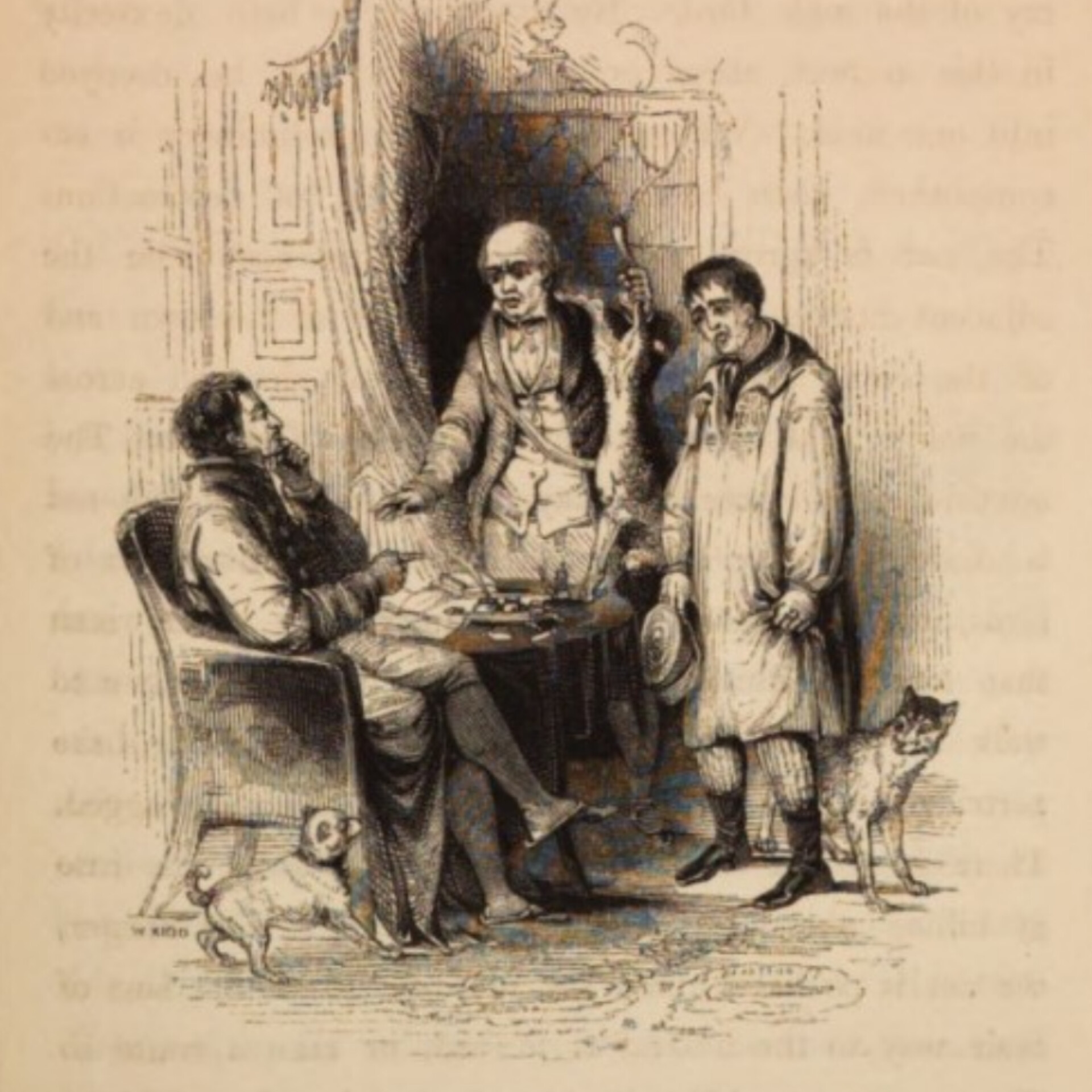
Among the many tricks resorted to by the poacher for the purpose of deceiving the keeper, a favourite one is, to place a dead hare in a snare near the house of the keeper, or in any other situation suitable for the purpose. The keeper soon discovers this, and proceeds, with an assistant, to watch the hare, secreting himself at a short distance, in expectation that the setter of the snare will come to the spot to fetch his victim. Whilst the deluded keeper is thus employed, the poachers are busily at work in another direction with their snares; and whilst he is watching the dead hare, they are securing as many as they can conveniently carry home.
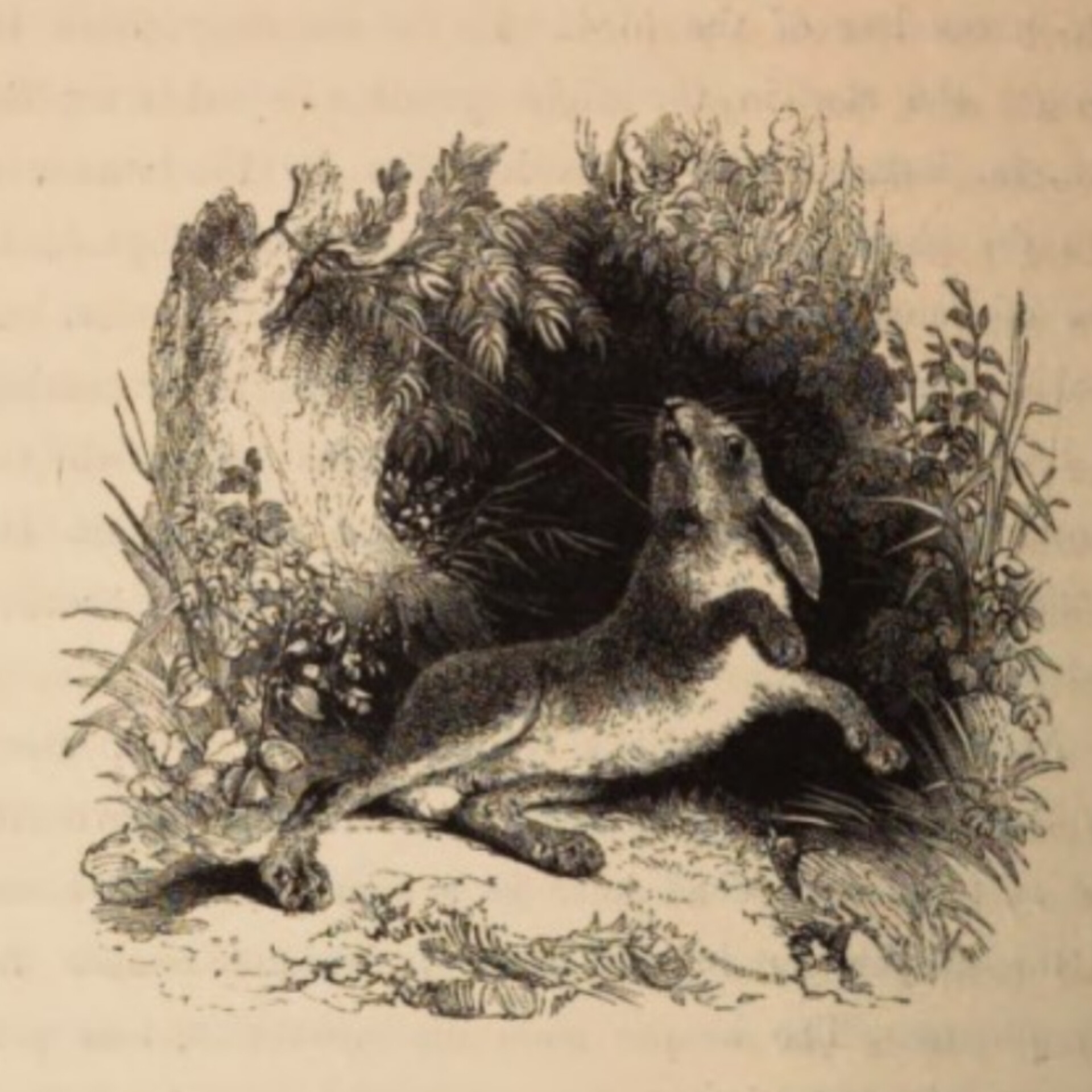
Much practice enables the poacher to set his snares in an unerring manner; and, in order that the wire may be as pliant as possible, the snares, previous to being used, are placed within a bundle of hay. The hay is set on fire, and the embers are allowed to cool gradually before the snares are taken out. By this process, the wire is rendered so tough and flexible that it can be bent in any form to answer the purpose of the poacher. The snarer, however, is liable to be thwarted in his designs, in consequence of the hares raising a loud cry of distress, which may be heard at some distance. The poacher prevents this, where the situation requires it, by bending down the branch of a large tree, a young oak, or other sapling. To these the snares are attached, and the branch or young tree is pegged down to the ground. The snares are set in the runs in the wood; and when the hare is caught, her struggles detach the peg, — up springs the tree, and poor puss is hung up aloft, and, of course, can make no noise.
Great destruction is also effected by the drag partridge net; for, by its skilful application, all the coveys of an estate may be secured in the course of a few nights. This engine — if engine it may be called — is about forty yards in length and twenty-five yards in width. It is composed of silk and hair twisted together, with meshes at the proper distance. It is rather an expensive article, but is very strong, and, when folded up, can be contained in a moderate-sized pocket, which is a matter of very great convenience. Through the meshes on one side of this net, a long and stout cord is passed, considerably longer, indeed, than the net itself. On the other side, a number of weights are attached, for the purpose of keeping it down, while it is dragged by two men, who have each hold of one end of the long cord.
They know well where the coveys assemble during the night. If, after proceeding to the locality, they find that one covey is close at hand, and that others are not a long way off, they use a “call,” — a close imitation of the cry of the male bird. By exercising a little dexterity in this respect, three or four coveys can be decoyed into one field. When this necessary preliminary is accomplished, then commences the work of destruction. The net is spread out at a short distance from the adjacent hedge. Each man takes hold of his own end of the cord, and the net, weighted, is dragged across the field. The first attempt may be a failure. The next breadth is tried. It proves successful. The net is drawn over, perhaps, the whole of two coveys of birds, which immediately begin to flutter. Each man then lets the net fall to the ground, and commences to walk on the cord till the spot is reached where the partridges are caught they are then killed and bagged. There is no noise, — no report of a gun, as in the case of killing pheasants. On the least approach of danger, the net is pocketed; and the poachers make the best of their way to the nearest high road, or take a route so circuitous as to elude all detection, and arrive at home before daybreak. For the sake of avoiding apprehension, the poacher resorts to these and many other stratagems, which do not, however, always screen him from the arm of justice.
HOW A POACHER IS SOMETIMES EMPLOYED.
The notice of the tricks of keepers and poachers may be appropriately followed by the narrative of an adventure which occurred in the county of —, and which may serve to illustrate the habits of the fraternity and the desperate expedients to which they occasionally have recourse. On an extensive estate, on which there was, at the time of his commencing his duties, but little game, a keeper was employed, who knew his business well. He secured the confidence of his master by his assiduous conduct, and was praised for his perfect skill. Game of every kind increased, particularly the pheasants. From a variety of suspicious circumstances, however, he fell into disfavour, and was finally dismissed.
This worthy guardian of the preserves, supposing that he was about to be supplanted by a man employed on the estate, who would obtain his situation by what he considered unfair means, became desperate, and determined that his successor should have the mortification of entering on deserted covers, considering that he would thus be revenged on his master at the same time.
Keepers are usually aware of the habits of poachers in their own neighbourhood. An old poacher, on whom the keeper could depend, was accordingly invited to help in the work of destruction, and to share the plunder. A spot on the outskirts of a wood, which could not be approached without difficulty, was the appointed rendezvous; the time — midnight. The keeper was armed with his double-barrel, and supplied with abundance of ammunition, purloined from the store of his master. At that solemn hour of night, an awful gloom pervades the dark mazes of the wood, which impresses minds unaccustomed to such scenes with an indescribable feeling of dread. Each passing sound, at that still hour, reaches the ear with a double acuteness. The imagination converts the mossy trunks and crooked branches of the ancient oaks into a thousand fantastic and unnatural forms; and the awakened conscience, if not seared by a long course of habitual crime, burdens the spirits with the memory of any wrongs done or injuries inflicted.
Not so the hardened poacher. He is callous to the gentle and benevolent feelings of our nature. Whether there be thick darkness, or a faint glimmer from the moon, “like a silver bow new bent in the heaven,” or a subdued radiance from the host of innumerable stars, fretting the wide expanse with golden fire, he proceeds unmoved. The keeper and the poacher have no fears. The former is acquainted with all the intricate paths in the woods, and knows all the roosting-places of the pheasants. The keeper marks his birds; bang, bang, goes the double-barrel; down tumble the victims, and the poacher picks them up.
Adventures of this sort are not always unattended by serious consequences. On one occasion, the faithful keeper and his friend the poacher were proceeding through a narrow part of the wood which contained a large number of pheasants. The night was stormy; the rain fell heavily. The birds sat very close, and were easily killed. It was a night after the poacher’s own heart. Proceeding onwards, they heard the report of gun after gun. There was evidently a large body of poachers approaching them, and it seemed probable that they should meet face to face. When the larger party fired, the wood seemed on a blaze. Their number amounted to nine, and they carried five guns. They could all be distinctly seen. “Be firm,” said the keeper to his ally, “I don’t known them, nor they us, — they are all strangers.”
They approached nearer and nearer. They passed each other. Not a word was spoken on either side; and the silence was only broken by a few random shots. Each party knew well enough that one was as bad as the other; and that one dare not inform against the other; and it was evident that the strangers knew not the faithful guardian of the preserves. A dreadful slaughter was effected that night.
Pursuing this murderous warfare, the best covers were soon nearly cleared. But the vindictive feeling of the keeper not being yet fully satisfied, he was induced to try the preserves nearer home, — and particularly one situated in the immediate vicinity of a highly respectable residence. This was an extremely dangerous attempt, especially as news had been spread around that poachers were abroad every night; for, although the keeper was always out, he happened to be unable to come up with them.
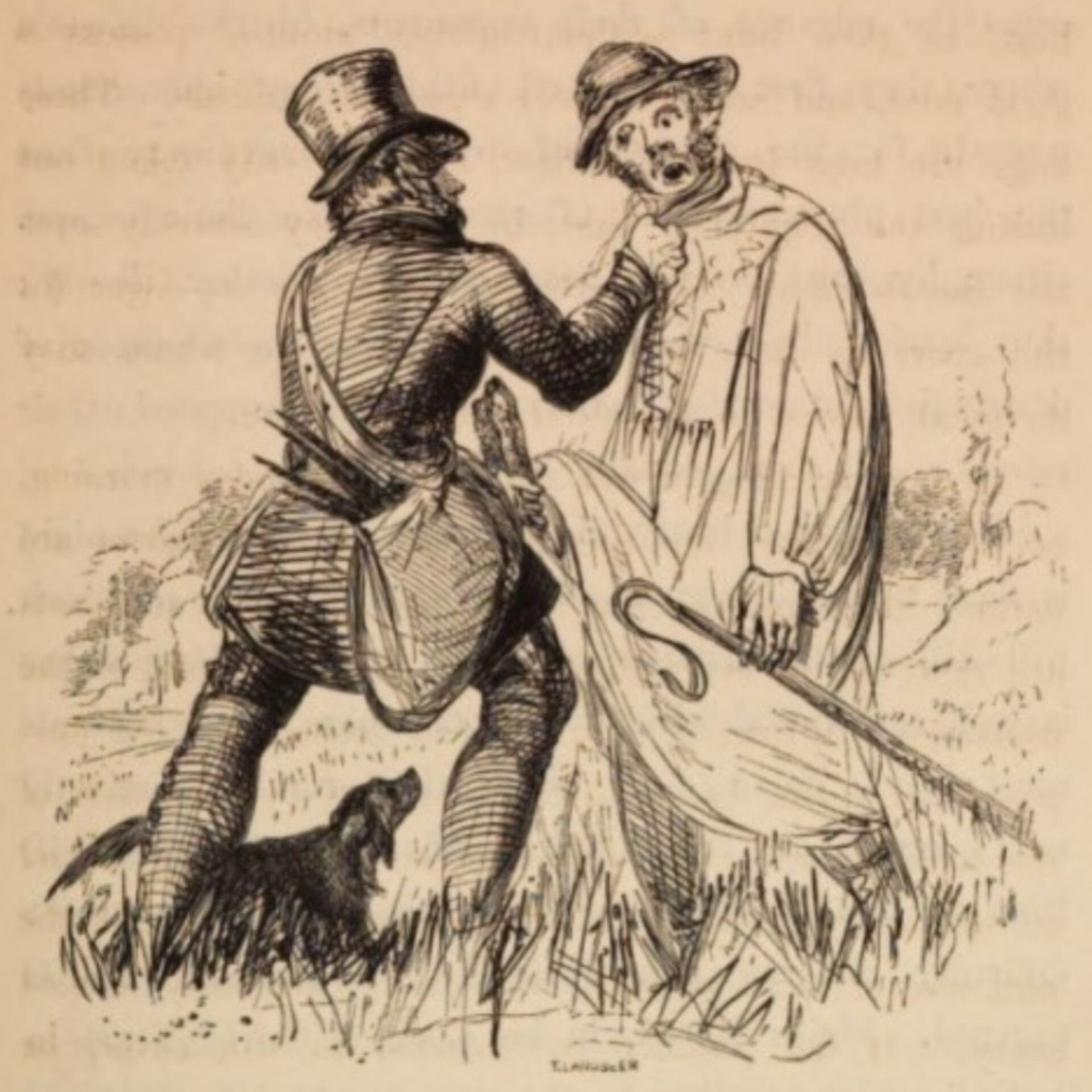
Suspicion being thus awakened, every one about the spot was nightly on the alert. The lion and his jackal again met, and commenced operations so near the residence as to be distinctly heard by its inmates, who had strengthened themselves by an additional force, and had applied to the huntsman to have his couple of bloodhounds ready in case it was found necessary to lay them on after the poachers. This precaution was unknown to the keeper; and the whole posse sallied forth in the direction where the flashes from the gun were visible. So sudden and unexpected was this attack, that the keeper was in the greatest danger. He threw away his gun amongst the underwood, —calling to his companion, “Run — the Philistines are upon us!”
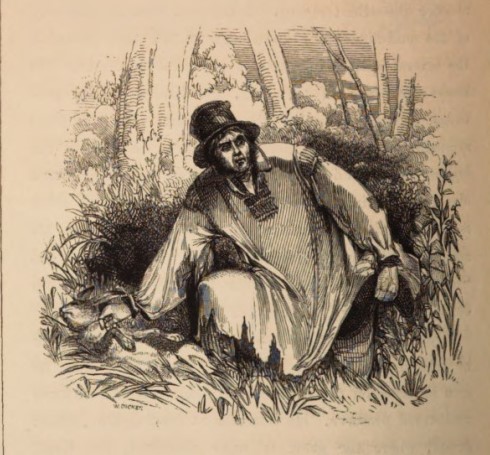
The keeper immediately rushed out of the plantation. His companion at the moment was feeling about for a pheasant which had just fallen, and laid his hand accidentally upon the gun. He seized it, and rushed also into the adjoining stubble-field. He laid himself down in the middle of the inclosure upon his face. He was pursued; but, from the colour of his old fustian jacket, his enemies passed within a few yards without discovering him, and afterwards retreated.
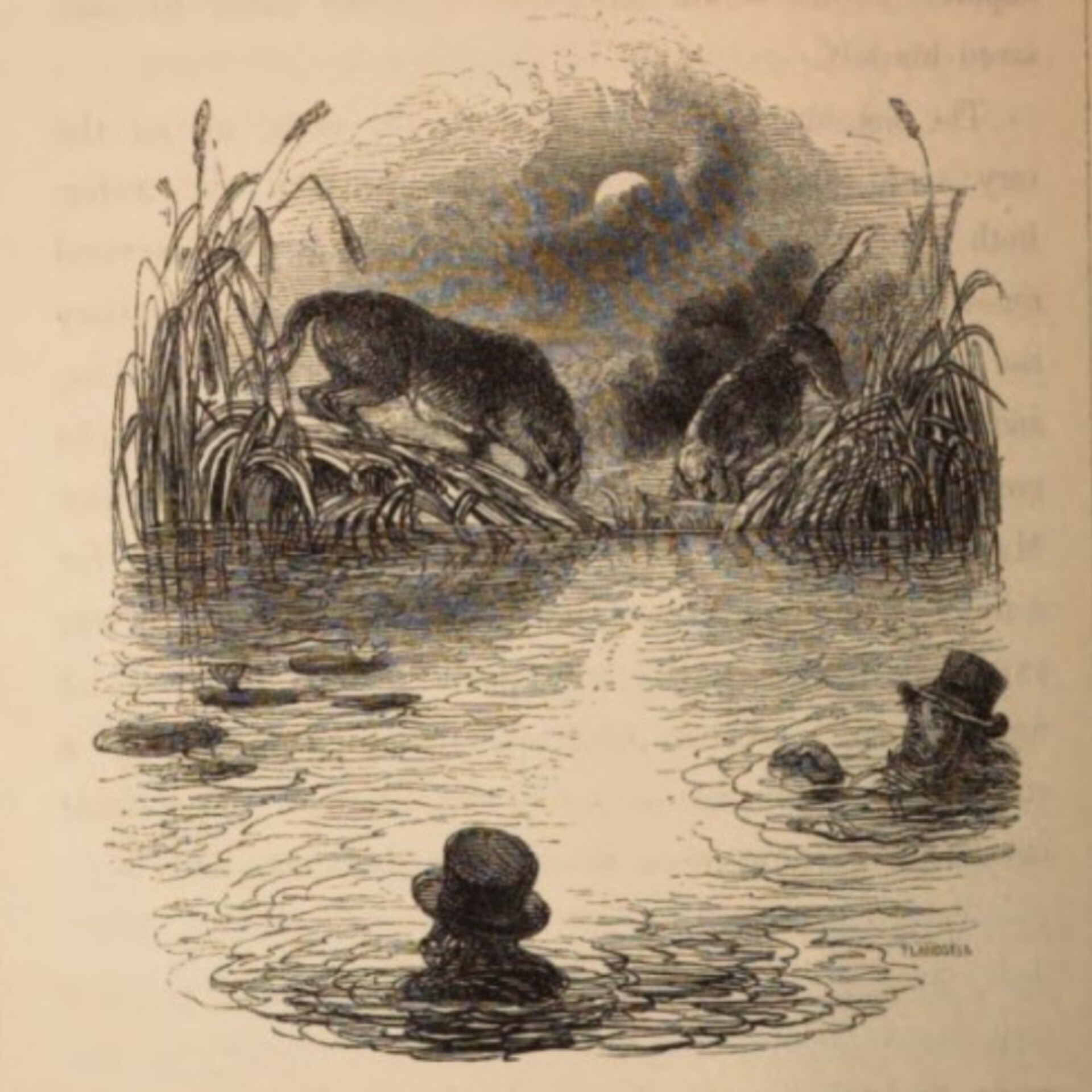
Agreeably to previous arrangement, the keeper and his friend were to meet, in case of being surprised or separated, in a field adjoining a wood which contained the most intricate paths, well known to the keeper. They did so. Previously, however, the crafty poacher, had contrived to stow away the gun and the well-filled bag. They both arrived at this point breathless; and while they were endeavouring, with heads inclined, to mark the progress of their pursuers, the deep and well-known cry of the blood-hounds smote the ears of the keeper. “By heaven,” he exclaimed, “the hounds are after us! Come along instantly!” They immediately plunged into the depths of the wood, threaded all its intricacies, and reached the other side in safety. At a short distance from this point, there was a large fish-pond, all the parts of which were quite familiar to the keeper, who, to his other talents, added that of a skilful fisherman. They had no sooner reached its margin, than, pausing to take breath, they heard the awfully deep note of the hounds that were making their way through the wood which they had just left. Not a moment was to be lost.
Their situation was dreadful. The sweat burst from the brow of each in large and fearful drops, — their knees were inclined to refuse their office, — their breath was thick and quick, and their hearts beat with terror. But, although the occasion was trying, each one held off despair at full arm’s length. The cry of the hounds was deeper and nearer. “They are coming, — follow me!” said the wily and desperate keeper. He walked cautiously into the water at a known point, closely followed by the poacher, who, amid all his numerous adventures, had never encountered anything like this. The keeper waded until the water reached his neck; and there he stood as mute as a fish. His companion, being of shorter stature, could not advance so far, and therefore was obliged to keep nearer the bank. The ripple that found its way to the shore was never curled with a more fearful import. Either would have sacrificed the other to have saved himself.
The hounds, faithful to the scent, came up to the very spot where the worthies had entered the water. Both dogs tracked the whole margin of the pond several times, and invariably stopped at the point which they had at first reached. But the scent was completely lost, and the hounds were finally called off, — doubtless to the great delight of the half-drowned keeper and poacher. Making assurance doubly sure, the keeper refused, for a time, to leave his post, although his companion was extremely anxious to stand upon rather higher and drier ground. At length, after having waited for considerable time, not a sound was heard. The faint streaks of morning were interlacing the east, and
“Jocund day
Stands tiptoe on the misty mountain tops,”
ready to spring and take his welcome flight over the waking world. The call of the partridge was heard on the fallows, — that of the pheasant in the adjacent woods, — the hare was returning to her form, from her feeding-ground, — and the rooks were winging their noiseless flight from their nightly aerie to the lower grounds, — when the two waders, who had hitherto stood as patient as the fisher-heron watching eels, reached the bank.
Few words passed between them; for the courage of both was cooled, and their silence was eloquence enough. The keeper, shortly afterwards, left that part of the country, and eventually came to an untimely end. The poacher never poached afterwards, but took to the more quiet and peaceable paths of honesty, sobriety, and industry.
Charles White (Martindale), Sporting Scenes and Country Characters (London, Longman, Orme, Brown, Green, & Longmans, 1840), pp. 216-222 and 312-332. Lead image appears on page 218 and the other Images appear on pages, 317, 320, 323, and 330.
See: https://babel.hathitrust.org/cgi/pt?id=hvd.hwdzg7&seq=1