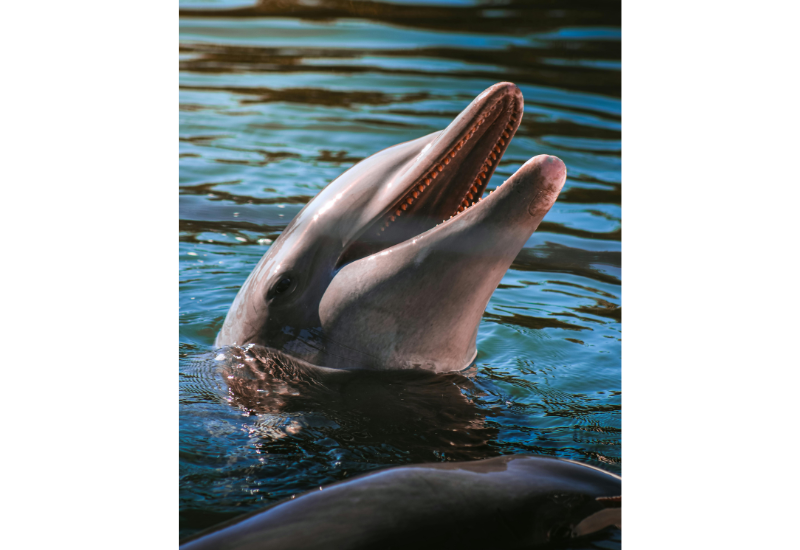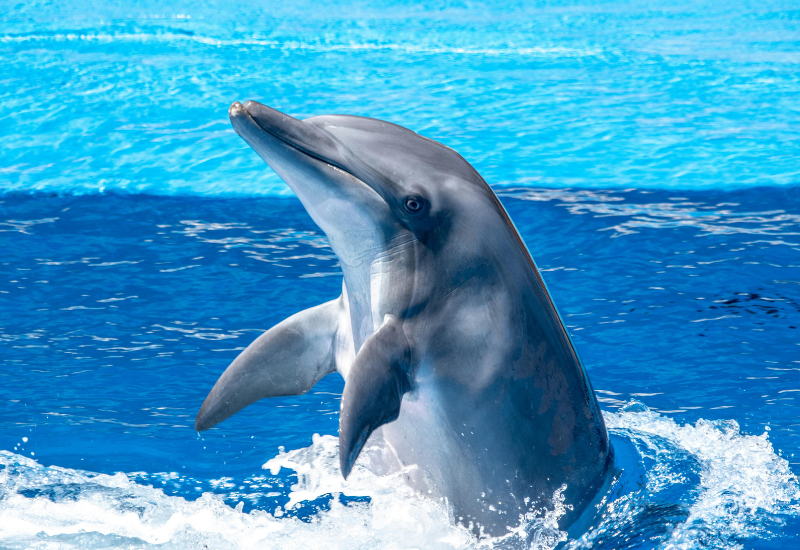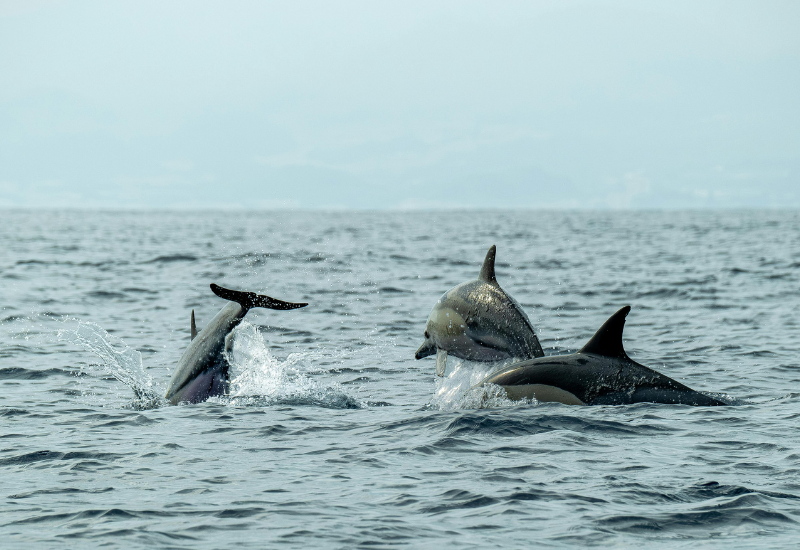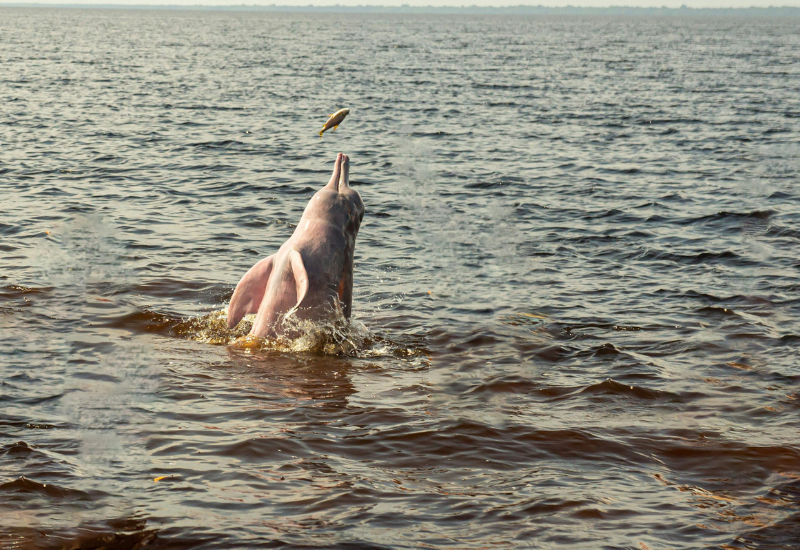
Dolphins
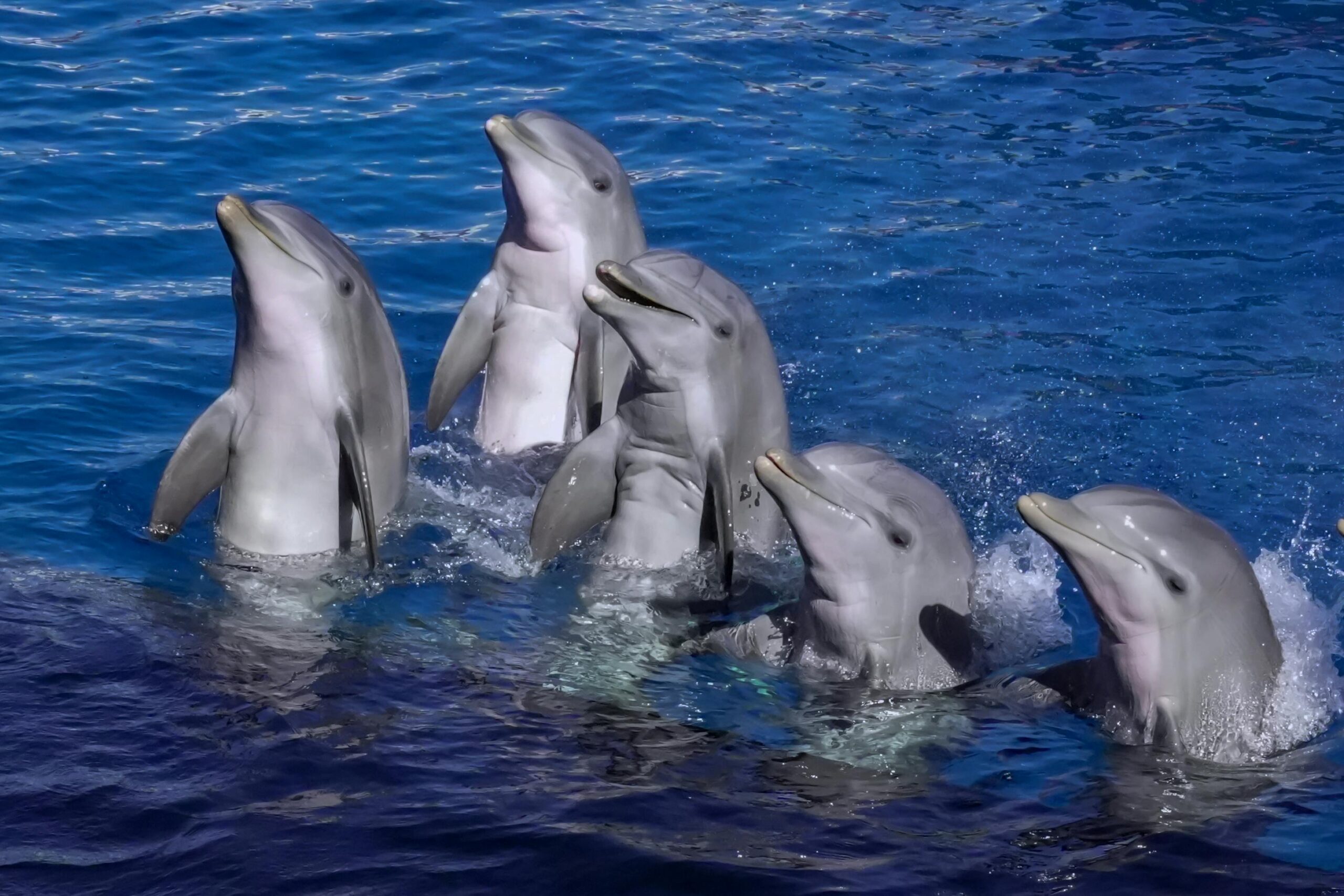
We want you to have a greater ability to learn about some of the unpleasant animal issues in our world.
Guide to Whales, Porpoises, and Dolphins
Richard Lyddeker
River-Dolphins.
Three living species of Dolphins, respectively inhabiting the rivers and estuaries of India, the Upper Dolphins. Amazon, and the Rio de la Plata, represent two distinct families…. The first of these is the Platanistidæ, including only the Susu (Platanista gangetica) of the Ganges, Indus, and Bramaputra, which ascends those rivers almost to their sources, but never passes out to sea. In common with the next family, the Susu… has eight double-headed ribs and a long beak; its costal cartilages ossify late in life; the petrosal and tympanic bones are connected with the skull mainly by ligament; the temporal fossa is large; all the cervical vertebræ are free; teeth are present in both jaws; and the flippers are short and wide.
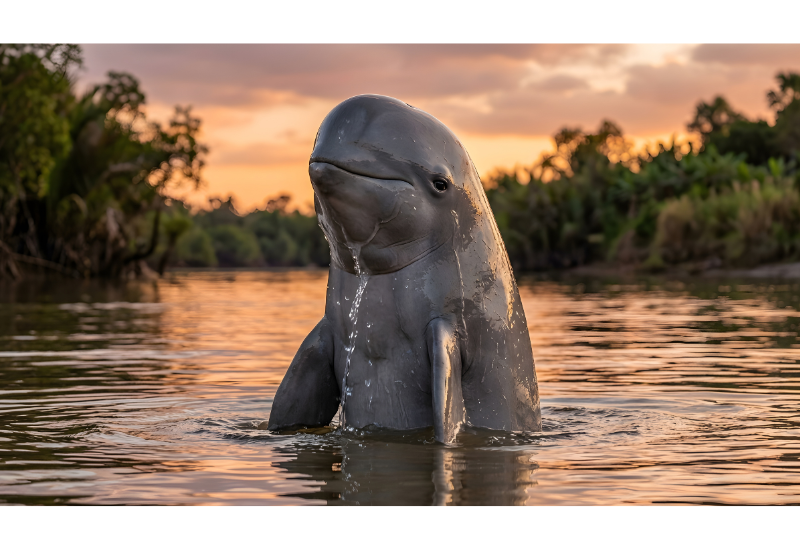
From the next family the Platanistidæ differ by the slit-like form of the blow-hole, the presence of a cæcum to the intestine, the development of a high crest on each maxilla…, and by the teeth undergoing remarkable changes with age. The Susu, which grows to a length of 8 feet, is blind, and feeds by groping in the mud of the rivers for crustaceans and small fishes….
The second family, Iniidæ, includes the Amazonian Dolphin (Inia geoffroyensis), which grows to 7 feet, and the La Plata Dolphin (Pontoporia, or Stenodelphis, blainvillei), inhabiting the estuary of the Rio de la Plata, and scarcely exceeding 4 feet in length, together with a number of extinct genera. In both recent species the opening of the blow-hole is crescentic, there is no cæcum to the intestine, the upper jaw does not carry crests, and the transverse processes of the lumbar vertebræ are very broad. The snout of Inia retains a number of scattered bristly hairs. In the La Plata Dolphin the beak is very long, with from 50 to 60 pairs of teeth; and there is a back-fin which is wanting in both the Amazonian Dolphin and the Susu. The La Plata Dolphin….
The La Plata Dolphin has the cervical vertebræ separate and the transverse processes of the lumbar vertebræ very broad, as in Inia, but the pterygoid bones of the skull are involuted, the sternal ribs (costal cartilages) are ossified, and the true ribs articulate with the vertebræ in the same manner as in the Delphinidæ. The extinct Pontistes is very close to Pontoporia (Stenodelphis), but larger. In both these genera the prenarial region of the skull, and also the shape of the nasal bones and the form of the zygomatic process, recall the corresponding regions in the Porpoise (Phocæna).
The two living species, together with the extinct Argentine genus Pontistes, constitute the subfamily Iniidæ; in addition there are two extinct subfamilies, the Argyrocetine (with the genera Argyrocetus, Cyrtodelphis, Pontivaga, Ischyrorhynchus, and Champsodelphis) and the Acrodelphine (with Acrodelphis and Heterodelphis). The Argyrocetinæ, of which the type genus is from the Miocene of S. America, although several of the others are European, have flat skulls, very long beaks with a great number of teeth, and the frontal bones forming a broad zone on the forehead. In the Acrodelphine the frontal zone is narrower, and the teeth in the type genus have numerous accessory denticules apparently representing the serrations on those of the extinct Squalodon, a genus mentioned later. The[re is also the] Patagonian Argyrodelphis,….
Dolphins and Porpoises.
In the family Delphinidæ are included all the existing toothed Cetaceans which do not come under the definition of the Physeteride, Ziphiida, Platanistidæ, or Iniidae. From the existing representatives of the first two the members of this family are distinguished by the general presence of teeth in both jaws, as well as by the characters of the skull, while from the two last they differ by the mode of articulation of the ribs with the vertebræ. There are only four or five ribs with double heads; the costal cartilages are fully ossified at an early age; the petroso-tympanics…, which differ in form from the corresponding bones of the Physeteride and Ziphiida, are united by ligament with the skull; and the blow-hole is situated on the right side, and has the horns of the crescent pointing forwards. The nasal bones are short; the skull has no crests; and the teeth are smooth.
The family is divisible into the subfamilies Delphinapterinæ and Delphininæ, in the first of which all the cervical vertebræ are free. In this are included only the Narwhal (Monodon) and the Beluga, or White Whale (Delphinapterus). In the second sub-family at least the first two cervical vertebræ are united. It includes two groups, in the first of which there is no distinct beak. This group comprises the Porpoise (Phocæna), the species of Cephalorhynchus, the estuarine Dolphins of the genus Orcella, the Killer (Orca), False Killer (Pseudorca), Pilot-Whale (Globicephalus), and the Dolphins of the genera Grampus, Feresia, and Lagenorhynchus.
In the second group of the Delphininæ the fore part of the head is prolonged into a distinct beak, marked off from the fatty elevation in front of the blow-hole by a V-shaped groove. None of the species exceed ten feet in length. The majority feed on fish, for the capture of which their long narrow beaks, armed with numerous sharp teeth, are well adapted; but a few appear to devour molluscs and crustaceans. For the most part they associate in large shoals; and although the majority are marine, a few habitually dwell in large rivers like the Amazon. This group includes the true Dolphins (Delphinus), Bottle-nosed Dolphins (Tursiops), and numerous long-beaked species of the genera Prodelphinus, Steno, and Sotalia.
Richard Lyddeker, Guide to Whales, Porpoises, and Dolphins (London: British Museum, Dept. of Zoology, 1909), pp. 29-32.
N.B.: References to images and museum collections have been deleted.
See: https://babel.hathitrust.org/cgi/pt?id=chi.086867309&seq=1
Animals: A Popular Natural History of Wild Beasts
Wallace Rice
THE TRUE DOLPHINS
The true dolphins are almost as well known as porpoises, and for the same reason: their playful gambolling in shoals near to passing ships. Their bodies are more slender than those of the porpoises, their heads smaller, and their well-toothed beaks prominent. In conventionalized form they form a frequent inspiration for the decorations of the later French monarchy.
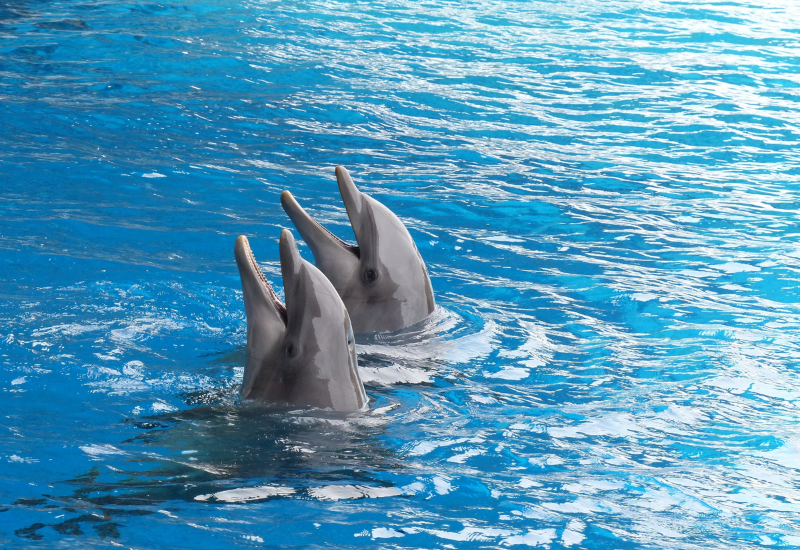
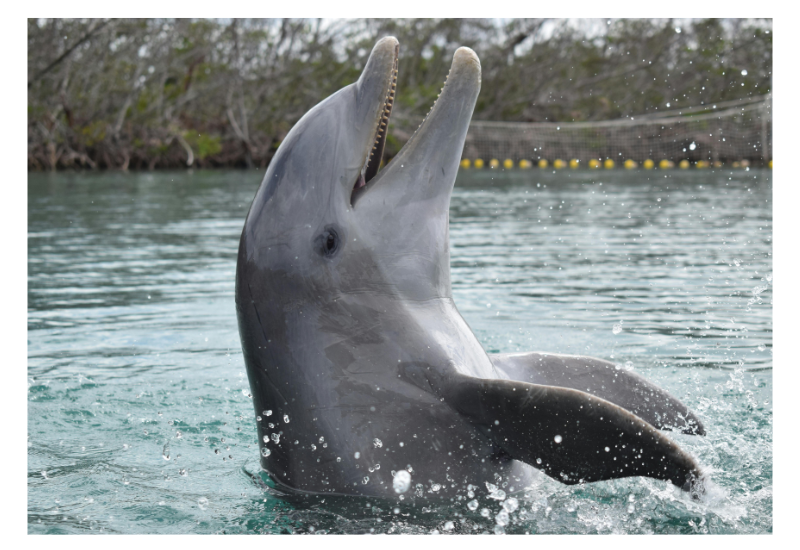
The common dolphin (Delphinus delphis) is of wide distribution throughout all seas except those about the poles, and it has been assigned to many species. It is not more than seven feet and a half in length, and one of the few certain specific distinctions is to be made with the red-bellied dolphin (D. roseiventris), a smaller beast, not more than four feet long, from the Torres Strait. The bottle-nosed dolphin (Tursiops tursio) is also widely distributed, eighty of them being taken in a single day off the coast of North Carolina, where a fishery has been established for their capture and utilization. The largest specimen was four yards long and yielded twenty-four gallons of oil. They are variously marked, in all shades ranging from purplish black to pure white, generally lighter beneath, but some uniformly grey.
The rough-toothed dolphin (Steno frontatus) is given its name from the flutings on its teeth, but it is still more easily identified in a wild state by its curious coloration, the purplish black above being ornamented with large stars in lighter shades, while the rosy-purple of the under parts is also spotted with deeper purple. It is found in the South Atlantic and Indian Oceans. In the latter roams the plumbeous dolphin (S. plumbeus) lead color above and white under the jaw and at the ends of the flippers and flukes. The Indian Ocean is likewise the home of the speckled dolphin (S. lentiginosus), also lead color, which is here varied with pear-shaped spots of white. All three members of this genera are distinguished by the great length of their beaks.
THE RIVER DOLPHINS
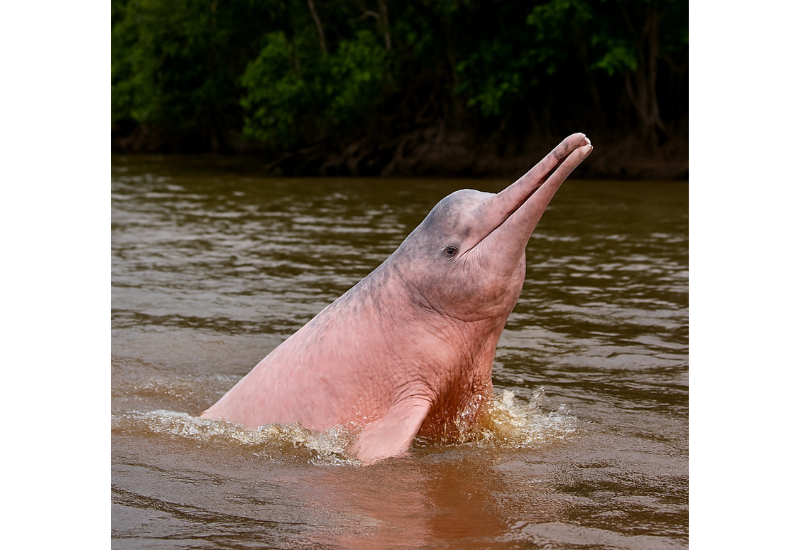
With similarly long beaks, but all of them inhabitants of fresh or brackish water, are the river-dolphins. The Brazilian species (Sotalia brasiliensis) is common in the Bay of Rio de Janeiro, and like the others of the genus is notably pale in color. The tucuxi (S. tucuxi) is an Amazon species, not clearly set off, and with it are the pale river-dolphins (S. pallida), and another closely related (S. fluviatilis). The Chinese white dolphin (S. sinensis) is milky white, shading into pink at the extremities, and with the eyes black. It is native in many Chinese rivers, and has been known since 1741 to Europeans. The Cameroon dolphin (S. teüszei) is found only in the Cameroon River, and is remarkable among all Cetaceans as feeding exclusively on vegetable matter, its teeth being blunter than those of the carnivorous members of the genus. None of the river-dolphins exceeds eight feet in length; and they are to be carefully distinguished from the fresh-water porpoises before described.
Wallace Rice, Animals: A Popular Natural History of Wild Beasts (Chicago: H.S. Stone & Co., 1901), pp. 169-170
See: https://babel.hathitrust.org/cgi/pt?id=osu.32435079838660&seq=1&q1=
STATEMENT OF NINA YOUNG, MARINE MAMMALOGIST,
CENTER FOR MARINE CONSERVATION, WASHINGTON, DC.
Ms. Young: Thank you, Mr. Chairman and members of the sub-committee. Thank you for this opportunity to appear before you today to present our views on S. 1420, the International Dolphin Conservation Program. My name is Nina Young, and I am the marine mammalogist for the Center for Marine Conservation, and my statement today is made on behalf of the Environmental Defense Fund, Greenpeace, National Wildlife Federation, and World Wildlife Fund.
Our organizations strongly support S. 1420 and the Panama Declaration, because they provide the basis for an international, legally binding, enforceable fisheries agreement in the ETP that will protect dolphins, tuna, marine life, and the ecosystem.
Only S. 1420 fully implements the Panama Declaration. Contrary to what some will tell you, this legislation will not abandon the goal of eliminating dolphin mortalities or 20 years of marine mammal protection under the MMPA. To the contrary, it will lock in progress made under the MMPA and the voluntary La Jolla Agreement, and make further progress toward eliminating dolphin mortality in this fishery.
We support S. 1420 for several reasons. First, it will allow dolphin stocks to recover. Under the MMPA and the La Jolla Agreement there has been almost a 99 percent reduction in dolphin mortality. Dolphin stocks in the tuna fishery are now stable, with only one exception, the Northeastern Offshore Spotted Dolphin. Until a few years ago, annual kill rates for these stocks were high enough to cause declines and to hamper their recovery. Now these kill rates for all stocks are below 210 of 1 percent of the population estimate, and under S. 1420 they must be reduced to less than 10 of 1 percent. According to scientists, these levels are more than four times lower than that necessary to require these populations to recover.
Second, S. 1420 seeks to protect dolphins and investigate issues of capture stress. Some are concerned that chase and encirclement harms dolphins. Of course, we would prefer that those tuna be caught without encircling dolphins. But now there are no economically viable or ecologically sound alternatives to this particular method.
We, too, are concerned that dolphins that are chased and encircled probably experience some level of stress, but as you have heard, there is no conclusive scientific evidence that chase and encirclement reduces reproductive capacity, causes dolphins to die after release, or develop stress-related diseases. In fact, there is evidence that some dolphins have actually habituated to encirclement and have developed behaviors that reduce their risk in the net. Nevertheless, we feel that stress should be investigated, and we support the provisions in S. 1420 that would examine the impact of chase and encirclement on the health of dolphins.
Third, S. 1420 will protect the ETP ecosystem, the tuna fishery, and it will reduce bycatch of other marine life. One of the MMPA’s stated objectives is to maintain the health and stability of marine ecosystems. Historically, we have neglected this objective. Dolphin safe is not dolphin safe if it is not ecosystem safe. Fishing methods that do not involve sets on dolphins, such as the log and school sets, have 10 to 100 times greater bycatch of tuna, and similar amounts for other marine life. These bycatch data are alarming for especially slowly reproducing species such as sharks, sea turtles, and billfish.
To be clear, we are not sanctioning setting on dolphins, nor are we advocating a shift to dolphin sets. We are advocating increased dolphin protection without creating an incentive, as the Boxer- Biden bill does, to shift to ecologically damaging log and school set. Your efforts, Mr. Chairman and those internationally, demonstrate that fishery conservation and bycatch reduction are today a prior- ity. S. 1420 provides a vehicle to reduce bycatch and protect the fishery and the ecosystem by reducing dolphin and non-dolphin bycatch in all types of sets.
Finally, the claims that changing the definition of dolphin safe to mean no dolphins died is tantamount to consumer fraud. It is simply unfounded. Under the current definition, consumers are misled to believe that by purchasing dolphin-safe tuna they have secured protection for dolphins, that dolphins no longer die in tuna nets, and that fishers are no longer encircling dolphins. As we have heard here, that is simply not the case. Dolphins in the ETP continue to die, and as we see from the graph, they also continue to encircle dolphins. They continue to encircle dolphins at a rate that is similar to those prior to the establishment of a label in 1990. For our organizations, truth in labeling lies in the passage of S. 1420.
In conclusion, dolphin-safe as currently defined will not stop dolphins from drowning in the ETP, and it certainly will not protect the ETP ecosystem. The Panama Declaration, implemented through S. 1420, provides an international solution to the tuna/dolphin problem. Our failure to act on this legislation could undermine the world’s most effective international fisheries agreement and dolphin conservation regime, and once again place dolphins at risk. It is for these reasons that we urge speedy passage of S. 1420.
Thank you.
[The prepared statement of Ms. Young follows:]
CENTER FOR MARINE CONSERVATION
STATEMENT OF NINA M. YOUNG, MARINE MAMMALOGIST,
CENTER FOR MARINE CONSERVATION
Before the Subcommittee on Oceans and Fisheries
Senate Commerce, Science, and Transportation Committee
April 30, 1996
SUMMARY STATEMENT
The Center for Marine Conservation, Environmental Defense Fund, Greenpeace, National Wildlife Federation, and World Wildlife Fund strongly support S. 1420 and the Panama Declaration because they provide the basis for an international, legally binding, enforceable fisheries agreement in the Eastern Tropical Pacific (ETP) that will protect dolphins, tuna, marine life, and the ocean ecosystem. S. 1420 is the only legislation that fully implements the Panama Declaration and the International Dolphin Conservation Program. Contrary to what some will tell you, the Panama Declaration will not abandon 20 years of marine mammal conservation under the Marine Mammal Protection Act (MMPA) nor will it abdicate the goal of eliminating dolphin mortality. To the contrary, S. 1420 and the Panama Declaration will permit the U.S. to lock in the progress made to date under the MMPA and the La Jolla Agreement and make further progress toward eliminating dolphin mortality in the purse seine fishery for yellowfin tuna. We support S. 1420 for several reasons.
First, S. 1420 will allow dolphin stocks to recover. The remarkable success of the MMPA and the voluntary La Jolla Agreement have resulted in almost a 99% reduction in dolphin mortality. Having declined in the 1970s and 80s, dolphin stocks in the tuna fishery, are now stable, with only one exception, the northeastern offshore spotted dolphin.
But even for this species and others in the tuna fishery which sustained, up until the early 1990s, annual kill rates high enough to hamper or retard their recovery, the kill rates, for all stocks, are below 0.2% of the population abundance — a level more than four times lower than that recommended by the National Research Council to allow recovery. The new levels of protection for dolphins have been endorsed by over a dozen leading scientists (Appendix A). Further, S. 1420 requires that these annual kill rates be further decreased to less than 0.1% of the population abundance, with the goal of eliminating mortality entirely.
Second, S. 1420 seeks to protect dolphins and investigate the health-related issues of capture stress, while addressing the equally important need to reduce ecologically-damaging bycatch. Some are concerned that the chase and encirclement of dolphins causes harm and stress levels that can impede dolphin reproduction or result in dolphin deaths. Our organizations would prefer, of course, that fishing be conducted without encircling dolphins, but no ecologically sound and economically viable alternatives have been identified. While we are concerned that dolphins that are chased and encircled probably experience some level of stress, there is no conclusive scientific evidence that chase and encirclement reduces reproductive capacity, causes dolphins to die after release, or develop stress-related diseases. In fact, there is evidence that some dolphins have habituated to encirclement and developed behaviors that reduce their risks in the net. Nevertheless, we believe that stress should be further investigated and we support provisions in S. 1420 that would examine the impact of chase and encirclement on dolphin biology and health.
Third, S. 1420 will protect the ETP ecosystem, the tuna fishery, and provide for reductions in bycatch of other marine life. One of the MMPA’s stated objectives is to maintain the health and stability of marine ecosystems. To date, not much attention has been given to this objective. S. 1420 will, for the first time, require measures to protect the ETP ecosystem.
“Dolphin safe” isn’t “dolphin safe” if it isn’t “ecosystem safe.” Recent data indicate that fishing methods that do not involve setting nets around dolphins, such as setting nets on schools of tuna or logs, have 10 to 100 times greater bycatch of other marine life and juvenile tuna. These bycatch data are alarming, especially for species that reproduce slowly — sharks, billfish, and sea turtles. In addtion, the IATTC estimates that, if sets on dolphin were replaced by school and log sets, from 10 to 25 million juvenile tuna would be discarded. This would have a drastic effect on the fishery as it represents between 13 and 32 percent of the total recruitment of the species.
Domestic and international fisheries conservation and management efforts have made bycatch reduction a priority. S. 1420 provides the vehicle to develop immediate measures to “avoid, reduce, and minimize bycatch of juvenile yellowfin tuna” and other marine life.
Furthermore, management of commercial fisheries using a precautionary approach dictates that we avoid and reduce the catch and discard of juvenile tuna, so as to guarantee the long-term sustainability of tuna stocks.
In summary, we are not sanctioning setting on dolphins nor are we advocating a shift to dolphin sets — dolphins sets have always represented approximately 50% of the total sets made in this fishery. We do advocate increasing dolphin protection without creating an incentive, as S. 1460 does, to shift to school and log sets. The most effective conservation strategy is one that would reduce dolphin, and non-dolphin bycatch at current proportions of log, school, and dolphin fishing. We believe S. 1420 will enable the fishery to reduce bycatch, conserve tuna stocks, protect the ETP ecosystem and the dolphins that rely on that ecosystem.
Finally, accusations by opponents of S. 1420 that changing the definition of “dolphin safe” to mean that no dolphins died is tantamount to consumer fraud are unfounded. Under the current definition, consumers are misled to believe that by purchasing “dolphin safe” tuna they have secured the protection of dolphins, that the tuna dolphin issue has been solved, dolphins no longer die in tuna nets, and fishers have stopped setting on dolphins. This is sadly, not the case. In the ETP dolphins continue to die, and fishers continue to encircle dolphins at the same rate as prior to the establishment of the “dolphin safe” label. For our organizations truth in labeling lies in the passage of S. 1420.
In conclusion, “dolphin safe” as currently defined and enforced will not stop dolphins from drowning in tuna nets in the ETP and it will certainly not protect the ETP ecosystem and its marine life. International problems demand international solutions. The Panama Declaration provides such an international solution and S. 1420 provides the necessary implementation by the U.S. of this international solution. We can no longer protect marine life in international waters solely through unilateral mandates. We must cement the international cooperation manifested in the Panama Declaration —failure to act could undermine the world’s most ambitious international fisheries management and dolphin conservation regime and place dolphins at risk.
We believe that now is the time for U.S. leadership in charting a new course that strengthens international protection for dolphins, biodiversity, and marine ecosystems. For these reasons we urge speedy passage of S. 1420.
STATEMENT OF NINA M. YOUNG, MARINE MAMMALOGIST,
CENTER FOR MARINE CONSERVATION
Before the Subcommittee on Oceans and Fisheries
Senate Commerce, Science, and Transportation Committee
April 30, 1996
Mr. Chairman and Members of the Subcommittee, thank you for the opportunity to present our views on the International Dolphin Conservation Program Act, S. 1420. My name is Nina M. Young; I am the Marine Mammalogist for the Center for Marine Conservation. Our statement today is also made on behalf of the Environmental Defense Fund, Greenpeace, National Wildlife Federation, and World Wildlife Fund.
Our organizations strongly support S. 1420 for one simple reason: S. 1420 will strengthen protection for dolphins, tuna and other marine life in the Eastern Tropical Pacific (ETP) ocean ecosystem. In addition, the Panama Declaration, especially its new levels of protection for dolphins have been endorsed by over a dozen leading scientists (Appendix A). S. 1420 is the only legislation that fully implements the Panama Declaration. The Panama Declaration is the basis for a binding legal agreement under the Inter-American Tropical Tuna Commission (IATTC) which:
- sets a goal of eliminating dolphin mortality by progressively reducing mortality through the setting of annual limits;
- caps mortality at low levels;
- establishes species/stock mortality limits which, by the year 2001, will meet the Marine Mammal Protection Act (MMPA) goal of a zero mortality rate for all dolphins and for each species or stock;
- establishes a system that provides incentives to vessel captains to reduce and eventually eliminate dolphin mortality;
- mandates reductions in bycatch of marine life taken in the fishery;
- requires that the fishery be managed using a precautionary approach;
- establishes scientific advisory groups to advise their national government and the IATTC on research and the conservation and management of the fishery and the ecosystem;
- strengthens the International Dolphin Conservation Program under the existing La Jolla Agreement by requiring membership in the IATTC;
- strengthens enforcement by imposing trade embargoes on countries that fail to comply with the new agreement;
- provides, through a strengthened labeling system, a strong economic incentive for fishers to fish for tuna without killing a single dolphin.
Substantial progress has been made under the MMPA, but more must be done to reduce and eventually eliminate dolphin mortality and ensure the health and stability of the ETP marine ecosystem. These goals can only be achieved internationally through a legally binding international regime based on sound scientific principles and tied to strong enforcement provisions. In our testimony we will review the progress made under the MMPA, examine the status of dolphin stocks, describe from a scientific standpoint why we believe S. 1420 will allow dolphin stocks to recover, discuss concerns that have been raised about stress on dolphins from encirclement, explain how S. 1420 will reduce the bycatch of juvenile yellowfin tuna and other marine life, and provide recommendations for strengthening amendments to S. 1420.
PROGRESS MADE UNDER THE MARINE MAMMAL PROTECTION ACT
The National Marine Fisheries Service (NMFS) estimates that approximately 6.3 million dolphins have been killed in the course of tuna purse seine operations by U.S. and foreign fleets in the Eastern Tropical Pacific since 1959. The MMPA was enacted in 1972 to protect marine mammals, including dolphins, from the adverse effects of human activities. Reducing dolphin deaths in the ETP yellowfin tuna purse seine fishery was among the driving factors behind the passage of the MMPA in 1972.
The MMPA has been remarkably successful. The 1984 and 1988 amendments included the comparability standards, that required foreign nations exporting tuna to the U.S. to provide evidence that they had adopted a dolphin conservation program and had reduced mortality to levels comparable to those of the United States. In 1990, the Dolphin Protection Consumer Information Act (DPCIA) responded to consumer pressure to reduce dolphin mortality by implementing the dolphin safe labeling program. These requirements under the MMPA, plus improvements in gear design and fishing operations, improved dolphin release methods, and implementation of the voluntary multilateral program to reduce dolphin mortalities known as the La Jolla Agreement, have resulted in a dramatic lowering of dolphin mortality from 423,678 in 1972 to less than 3,300 in 1995 — a 99% reduction.
S. 1420 WILL FURTHER DOLPHIN PROTECTION:
Despite the dramatic progress made under the MMPA, dolphins have continued to die in the ETP and, at the individual species or stock level the fishery has not met the MMPA’s zero mortality rate goal. The goal of the DPCIA was to end the practice of intentionally deploying nets to encircle dolphins. In adopting the DPCIA, however, Congress recognized that “a major obstacle to such a change [the end of encirclement] has been the difficulty of imposing it [DPCIA] upon the fishing fleets of nations other than the United States. And, unfortunately, the DPCIA did little to change the fishing practices of international fishers in the ETP — fishers continued to encircle dolphins at approximately the same rate as prior to 1990. In fact, as a percentage of total sets, sets made on dolphins represent 52% of the total sets made between 1980 and 1990, and about 54% between 1990 and 1995.
On the other hand, although the relative rate of sets made on dolphins did not decrease significantly after the passage of the DPCIA, dolphin mortality per set did decrease from 5.0 in 1990 to 0.46 in 1995. Moreover, the percentage of sets that involved no dolphin mortality increased from 54% to 85% during that same time period. Both of these measures demonstrate that fishers are rescuing greater numbers of dolphins and fishing with less mortality.
The DPCIA did not eliminate or ban the practice of encirclement. Fishers continue to set on dolphins in the ETP. The MMPA and the DPCIA were, however, influential in achieving the substantial decrease in dolphin mortality in the ETP. The challenge, then, is to find a way to preserve the substantial progress that has been made in reducing dolphin mortality and provide incentives for further progress. We strongly believe S. 1420 will accomplish these objectives. To understand why, it is useful to review the status of dolphin stocks in the ETP and discuss the impact S. 1420 is likely to have.
WHAT IS THE STATUS OF THE DOLPHIN POPULATIONS IN THE ETP?
Absolute abundance estimates for dolphins taken in the ETP tuna fishery, obtained from research vessel cruises conducted between 1986 and 1990, are summarized in Table 1.
Table 1. shows the nine dolphin stocks (or populations) from four dolphin species that are frequently taken as bycatch in the yellowfin tuna fishery. Spotted (Stenella attenuata), spinner (S. longirostris orientalis), and common (Delphinus delphis) dolphins account for over 95% of the mortality. More than 85% and perhaps as high as 95% of all of the sets made on dolphins in any given year involve either spotted or spinner dolphins or both. Consequently, while all stocks have declined since the fishery began, two, the northeastern offshore spotted and the eastern spinner, have declined to approximately 23% and 44% respectively of their pre-fishery abundance, and are listed as “depleted” under the MMPA.
Recent data, based on relative indices of abundance, indicate that all but one of these stocks (including the depleted eastern spinner stock) are stable, fluctuating around the same levels for the past decade. The exception is the 1993 and 1994 decrease in the relative abundance for the northeastern offshore spotted stock. Scientists do not know the exact reason for the decrease, but there are two hypotheses. First, evidence indicates the large scale movements of these dolphins across stock boundaries results in some portion of the overall population being outside the range assumed by the relative index of abundance analysis and, therefore, that portion is not accounted for in the calculation of the relative index of abundance. These movements are often in response to climatic and oceanographic changes, in this case the prolonged El Niño from 1991 to the first part of 1994.
Second, the population decline may be attributable to a natural lag. The estimated age of sexual maturity for northeastern offshore spotted dolphins is 12 years. For northeastern offshore spotted dolphins, scientific data indicate that more mature animals are killed in the fishery. Because the incidental kill declined substantially after 1976, one might have expected the northeastern offshore spotted stock to have increased between 1979 and 1990. However, the mean annual kill of northeastern spotted dolphins from 1979-1990 was 19,200 or 2.5% of the population abundance estimate. Kill estimates between 1988 and 1990 were between 3% and 4% of the population abundance estimate. The bias toward kills of sexually mature animals in particular would have prevented any substantial population growth given an estimated maximum population growth rate of 3.8%. Therefore, the population may have continued to decline because of a natural lag induced by the relatively late sexual maturity — the population may only now be reaching a point when there are a sufficient number of sexually mature females so the stock can begin to grow.
The same may also be true for eastern spinner dolphins with an estimated age of sexual maturity of ten years. It has not been determined whether kill estimates for this species are biased toward mature animals; nonetheless, the mean annual kill of the eastern spinner dolphin from 1979-1990 was 7,700 or 1.5% of the population abundance estimate. Kill estimates between 1988 and 1989 were between 2% and 3% of the population abundance estimate. The high kill rates would have retarded any substantial population growth given the estimated maximum population growth rate of 2.2% If the fishery killed more mature animals, the recovery of this population would be further delayed.
In summary, all dolphin stocks taken in the tuna fishery have experienced some level of decline since the fishery began. Most of these dolphin stocks are now stable. However, given the low levels of take for most species in recent years some of these stocks may actually be increasing. But, the low estimated rates of increase for these stocks (<5%) combined with our inability to detect increases of less than 5% means we cannot reliably state that these stocks are recovering. The northeastern offshore spotted and the eastern spinner have declined substantially from their original size and are considered depleted under the MMPA.” Until the implementation of the 1988 amendments to the MMPA and, subsequently, the La Jolla agreement, the annual mortality of these two stocks was high enough to hamper or retard recovery of these populations. With the annual incidental mortality for all stocks now below 0.2% of the population abundance, these dolphin populations should be able to recover.
WILL S. 1420 ALLOW DOLPHIN POPULATIONS TO RECOVER?
In 1992, the National Research Council (NRC) stated that “A kill rate of 40,000 animals per year would thus represent a kill rate of 25% or less of recruitment, almost certainly low enough to permit current dolphin populations to be stable and perhaps to increase. An annual kill of 20,000 (12.5% or less of recruitment) would probably result in substantial increases in dolphin populations.” By the end of the 1992 fishing season, incidental mortality levels for all of the dolphin stocks had declined to less than 1 percent of the estimated population. Once again scientists stated that at these levels the stocks would eventually increase and recover.
At present the annual incidental mortality in the ETP fishery is less than 0.2% and, in all but two cases (northeastern offshore spotted and eastern spinner), is less than 0.1% of population size for all dolphin stocks. While any human-caused dolphin mortality is undesirable, the great majority of independent and government marine mammal scientists consider these mortality levels to have a “negligible impact” on the dolphin stocks and to meet the MMPA’s zero mortality rate goal.
S. 1420 caps stock-specific mortality at the 0.2% level and requires that the fishery be at or below the 0.1% level by the year 2001. According to the NRC, “the committee notes that a complete ban on dolphin fishing or the purchase of tuna caught on dolphins is not required to ensure the survival and even the increase of dolphin populations.” Undoubtedly, by providing overall and stock specific mortality levels more than four times lower than that recommended by the NRC panel, S. 1420 will permit the recovery of these stocks to their former abundance.
WILL CHANGING THE DEFINITION OF “DOLPHIN SAFE” RESULT IN LEVELS OF STRESS ASSOCIATED WITH CHASE AND ENCIRCLEMENT THAT WILL RETARD THE RECOVERY OF THESE POPULATIONS?
To answer this question, several others must be answered first. First, what is stress? Stress is a nonspecific response of the body to any demand made upon it. Stress can consist of three phases. The first phase, the Alarm Phase, is where the animal perceives a threat and the body initiates a rapid physiological response involving the nervous system and the endocrine system. The Adaptation or Compensation Phase, the second phase, occurs when, after prolonged exposure to the stressors, the animal adapts to or compensates for the altered conditions causing the stress. The third phase, the Maladaption Phase occurs when the stress is of sufficient intensity and duration that compensation or adaption is impossible. In this phase, if the stress is severe or persistent, the body may fail to compensate for the stress and, under the worst circumstances, develop a pathological condition (e.g. illness, infection, immune suppression, death).
Second, what is known about marine mammals and stress? Dolphins, having evolved in the rigorous marine environment, are adapted to cope with many natural and human-related stressors. For nearly 20 years, U.S. vessels could obtain a general permit under the MMPA and its regulations to annually chase and encircle hundreds of thousands of dolphins in yellowfin tuna fishery in the ETP. Dolphins have been chased and encircled in this fishery for more than thirty-five years and have displayed adaptive behaviors in the nets since the 1970s (e.g. fewer displays of panicky dashing about the net). In 1992, the NRC noted that: “no specific information is available concerning the effects of the chase on the biology of dolphins. The chase is likely to result in stress. Some herds have developed strategies to avoid capture; others seem to have habituated to encirclement and seem to have developed behavioral patterns that reduce their risks once in the net.”
Some have argued that the chase and encirclement of dolphins causes stress of a duration and magnitude that severely impedes dolphin reproduction or even results in dolphin deaths — sometimes referred to as cryptic death. According to the phases outlined above, the chase, capture, and release of dolphins in the yellowfin tuna fishery is likely to result in an Alarm Phase and an Adaptation Phase. Whether it results in the Maladaption Phase is simply not known. Available scientific data provide no indication that mortality occurs after the dolphins are released from tuna purse seine nets. Furthermore, no scientific data demonstrate a preponderance of stress-related diseases or injuries in these dolphin stocks.
Speculative claims of reproductive complications or depressed reproductive capacity caused by stress related to chase and encirclement also are without any evidence. One researcher reports negative evidence of such mortality, stating that “Reproductive tracts [of dolphins collected from tuna vessels in the early 1980s] were examined for evidence of spontaneous abortion, and muscle myopathy; no evidence of either was found.” Myrick and Perkins claimed that stock differences in density dependent reproductive factors were not as predicted by scientific models and thus supported the hypothesis that stress can cause reproductive depression. Density dependent factors are: juvenile and adult survival rates, average age at sexual maturity, pregnancy rates, and juvenile growth rates. These factors change in response to population status. For example, in populations that have been severely reduced, such as the eastern spinner and northeastern offshore spotted, one would expect changes in reproductive density dependent factors such as: a decline in the average age of sexual maturity and an increase in the proportion of simultaneously pregnant and lactating females. The study by Myrick and Perkins cite a study by Chivers and Myrick that found that a stock with a longer fishing history had a higher age at sexual maturity than a population with a short history. As stated, this difference was contrary to what would be predicted (e.g a decline in age at reproduction). The researchers attributed these findings to stress. However, the Chivers and Myrick study and a subsequent study, with larger sample sizes, demonstrated that changes in several density dependent reproductive factors were present as expected for several dolphin stocks with no evidence of stress-related reproductive inhibition.
In addition, Myrick investigated several potential physical indicators of stress as they relate to chase and encirclement. In one study, he reported that spotted dolphins chased and captured in tuna purse seine nets have substantially depressed serum calcium values which, potentially, could lead to death. Presumably, the perception of a threat may cause the release of either cortisol or corticosterone from the adrenal cortex; these glucocorticoids can affect electrolyte balance, causing calcium to be removed from the serum and sequestered in the cells — lowering serum calcium. Myrick found that as a result of being chased for approximately 45 minutes and being held prior to release for an additional two hours, serum calcium levels were 7.3 to 8.7 mg/dl — he assumed these levels were far below normal.36 In fact these observed values fall within the published normal ranges for dolphins of 4-11 mg/dl.
Myrick and Perkins, postulate that dolphin adrenal gland color changes could be used as an indicator of stress. However, due to problems in experimental design, the hypothesis is not proven.”
Returning to the original question, then, will changing the definition of “dolphin safe” result in levels of stress associated with chase and encirclement that will retard the recovery of dolphin populations? Dolphins caught in association with tuna fishing probably exhibit the various stress phases. It is likely that the dolphins experience the Alarm Phase of stress (or “fight or flight” response) when they hear the distinctive sound of the helicopters, speedboats, or the purse seiner. During chase, capture, confinement, and release, the body’s reaction to stress in the Adaptation Phase is individual, but may be positively influenced by the dolphins past experience in the fishery. Does the available published scientific literature indicate that this stress could be so severe as to result in death or impede the long-term recovery of a dolphin stock? No. Does this issue merit further scientific investigation? Absolutely, and S. 1420 contains provisions requiring further investigation into the impact of chase and encirclement on dolphin biology and health.
Our organizations would prefer that tuna fishing be conducted without encircling dolphins, but no ecologically sound and economically viable alternatives have been identified. If further research shows that stress resulting from encirclement is likely to retard recovery, we will demand an end to encirclement under the “Emergency” provisions of S. 1420. In the absence of such research findings, however, we support the approach taken by S. 1420, which seeks to protect dolphins while addressing the equally important and scientifically demonstrated need to reduce the ecologically-damaging bycatch of sea turtles, juvenile tuna, sharks, and billfish resulting from fishing methods other than setting on dolphins.
S. 1420 WILL PROTECT ENDANGERED SEA TURTLES, JUVENILE TUNA, SHARKS, AND BILLFISH, IN ADDITION TO DOLPHINS, BY REDUCING BYCATCH IN THE ETP TUNA FISHERY:
In the MMPA, Congress stated: “…it is the sense of the Congress that they [dolphins] should be protected and encouraged to develop to the greatest extent feasible commensurate with sound policies of resource management and that the primary objective of their management should be to maintain the health and stability of the marine ecosystem.” To date, not much attention has been given to maintaining the health and stability of the marine ecosystem in the ETP. S. 1420 will, for the first time, require measures to protect the ETP ecosystem.
As our knowledge about fishery conservation and management increases, so does our concern about the impact of bycatch on the marine ecosystem. This concern is reflected in recent action in Congress and at the United Nations mandating bycatch reduction as part of fishery conservation and management. The Senate Commerce, Science, and Transportation Committee recently marked-up and passed out of Committee S. 39, the Sustainable Fisheries Act. S. 39 will amend the Magnuson Fishery Conservation and Management Act’s (FCMA) National Standards to specifically address bycatch: “Conservation and management measures shall, to the extent practicable, minimize bycatch and the mortality of bycatch which cannot be avoided.” Similar language exists in the United Nations Treaty on Straddling Fish Stocks and Highly Migratory Fish Stocks (U.N. Treaty), which the President recently sent to the Senate for its advice and consent.
Recent data indicate that fishing methods that do not involve setting nets around dolphins, such as setting nets on logs and floating objects or on schools of juvenile tuna, may have a substantial bycatch of non-target species and juvenile tuna. Specifically log sets result in 100 times more bycatch than dolphin sets and school sets result in 10 times more bycatch than dolphins sets. Of particular concern are species that reproduce more slowly than other species — sharks, billfish, and sea turtles. The IATTC has been using observers to collect data on the species and number of animals captured by vessels with capacities greater than 400 tons, since the latter part of 1992. These data, which constitute one of the largest and most complete bycatch data sets in the world, form the basis for examining the quantities and types of animals taken by the various fishing methods.” Table 2 summarizes bycatch data from the IATTC for all species incidentally caught by the various methods used to harvest yellowfin tuna.
Moreover, there is also growing concern about the discard of dead juvenile tuna. Data collected by the IATTC during 1993 and 1994 indicate that the average tons of tuna discarded per set for dolphin, schoolfish, and log sets was 0.17, 0.58, and 8.3 tons respectively. These estimated average weights of discarded juvenile tuna reasonably correspond to those estimated by NMFS of 7.0-15.0 tons per set on logs, 1.0-1.2 tons per set on schoolfish, and 0.06 tons per set on dolphins, depending on the geographic area. Further, the IATTC estimates that, overall, 7.4% of all tuna caught in the fishery “
during 1993 and 1994 were discarded — this is 31,660 tons of discarded tuna.” Then, according to IATTC reports, for 1993 and 1994, the total tons of yellowfin discarded by the international fleet was 449-917 tons from dolphin sets, 606-2108 tons from school sets, and 3802-4150 from log sets.
From these data and that of the IATTC, it has become clear that action is necessary not only to reduce dolphin mortality but also to reduce overall bycatch of other species in the fishery and avert a large-scale shift to log and school sets. Indeed, a scientific peer review of the IATTC bycatch data concluded “…that the various bycatch summaries [e.g. Table 2] allowed it to conclude that substantial differences in discard levels occurred for different set types [log, school, and dolphin sets]. On the other hand, the peer group did not believe there were adequate data or statistical analyses provided to estimate the degree of these differences…. Nevertheless, the sheer magnitude of the rate differences by set type makes it difficult to dismiss the conclusion that a major shift in the proportion of each set category would likely lead to substantial differences in levels and species compositions of the bycatches and size categories of harvested target species. Based on the findings of the peer review panel, it would be prudent that any proposed major shifts in fishing modes take into account the implied ecological impacts.
While the peer review could not ascertain the overall quantitative impact, or the impact of shifts to school or log sets on a particular species, the data qualitatively indicated that current “dolphin safe” fishing methods (school and log sets) resulted in greater bycatch. Moreover, any shift of fishing effort to these methods that may be caused by statutory requirements to end the encirclement of dolphins would likely result in greater bycatch of vulnerable marine species, including sea turtles already in danger of extinction.
Opponents of S. 1420 have asserted that bycatch considerations are not that important. They claim that in the 1970s and 1980s, when the fishery was larger, bycatch was probably greater because the number of school and log sets was larger and, furthermore, compared to other commercial fisheries, the ETP tuna fishery has relatively little bycatch. But the data indicate that bycatch is a problem in the ETP and prohibitions on dolphin sets will exacerbate the problem. It does not matter whether historically bycatch in the fishery was either greater than or less than it is today. Domestic and international fisheries conservation and management efforts have clearly made bycatch reduction a priority. IATTC’s extensive database on bycatch in the ETP tuna fishery will enable us to develop clear, effective, and, in some cases, immediate measures for bycatch reduction. S. 1420 provides the vehicle that enables us to work with the IATTC to develop these measures to “avoid, reduce, and minimize bycatch of juvenile yellowfin tuna and bycatch of non-target species.”
Furthermore, we cannot condone the catch and discard of juvenile tuna, while we work to manage commercial fisheries using a precautionary approach. Every effort should be made to avoid and reduce the catch and discard of juvenile tuna, so as to further promote the long-term sustainability and health of tuna stocks in the ETP. S. 1420 provides a mechanism to further advance the precautionary goals, internationally, of the FCMA and the U.N. Treaty.
In summary, we are not sanctioning setting on dolphins nor are we advocating a shift to dolphin sets — dolphins sets have always represented approximately 50% of the total sets made in this fishery. We do advocate increasing dolphin protection without shifting to school and log sets. We prefer that the fishery continues to operate within its existing proportion of log, school, and dolphin sets while requiring bycatch reduction measures for dolphin and non-dolphin bycatch. We believe S. 1420 will enable the fishery to achieve this goal.
RECOMMENDATIONS FOR STRENGTHENING AMENDMENTS TO S. 1420:
S. 1420 serves as an important foundation for locking in the increased international protection for dolphins, other marine species and the marine ecosystem contained in the La Jolla Agreement and the Panama Declaration. Consistent with the needed multilateral agreement envisioned by the Panama Declaration, there are strengthening amendments that should be incorporated into S. 1420 prior to enactment. These measures, the sources for which are S. 1460, the United Nations Agreement on Straddling Fish Stocks and Highly Migratory Fish Stocks, amendments to H.R. 2823 (as reported out of the Subcommittee on Fisheries, Wildlife, and Oceans), and other ongoing initiatves.
S. 1460 and S. 1420 contain many identical or similar provisions. With the exception of different definitions of “dolphin safe,” there are several provisions in S. 1460 that would strengthen S. 1420/H.R. 2823 while remaining consistent with commitments in the Panama Declaration. S. 1420 would benefit from the following amendments:
Page 2. Lines 6-14. — Amend line 6 as follows: “The purposes of this Act are-; redesignate the remaining text as paragraph (1); delete the period at the end of the sentence and insert “;” and insert the following new paragraph:
(2) to recognize that nations fishing for tuna in the eastern tropical Pacific Ocean have achieved significant reductions in dolphin mortality associated with that fishery; and
(3) to eliminate the ban on imports of tuna from those nations that are in compliance with the International Dolphin Conservation Program.
Page 2. Line 15. — Delete existing text and insert the following: “(b) FINDINGS. — The Congress finds the following:
(1) The nations that fish for tuna in the eastern tropical Pacific Ocean have reduced dolphin mortalities associated with that fishery from hundreds of thousands annually to fewer than 5,000 annually.
(2) The provisions of the Marine Mammal Protection Act of 1972 that impose a ban on imports from nations that fish for tuna in the eastern tropical Pacific Ocean have served as an incentive to reduce dolphin mortalities.
(3) Tuna canners and processors of the United States have led the canning and processing industry in promoting a dolphin-safe tuna market.
These added Purposes and Findings recognize progress made by ETP fishing nations, and would provide a stronger basis for action, given their references to reductions in dolphin mortalities, MMPA incentives for action, consumer preferences, and tuna canner and processor practices.
Pages 2, 3 and 4. Lines 18-23, 1-23, and 1-3 respectively. — Delete existing paragraphs (1)-(6) from the findings section. Redesignate these paragraphs as subparagraphs (A)-(F). Delete the period on Page 4, Line 11 and insert “, that requires —” and insert thereafter the redesignated subparagraphs (A)-(E). Since they are requirements in the Panama Declaration, they fit better in the “Definitions” section as descriptive statement regarding the Panama Declaration.
Page 5. Line 17. — Delete “and”
Page 5. Line 20. — Insert after the word “initiated” the following: (and within six months thereafter completed) all”
Page 5. Line 23. — Insert after the word “Commission” the word “necessary”.
Page 5. Line 24. — Insert after the comma the following:
and such harvesting nation has implemented the obligations of the International Dolphin Conservation Program and the obligations of that member as a member of the Inter-American Tropical Tuna Commission, and
“(iii) the total dolphin mortality permitted under the International Dolphin Conservation Program will not exceed 5,000 in 1996, or in any year thereafter, consistent with the commitment and objective of progressively reducing dolphin mortality to levels approaching zero through the setting of annual limits, and the goal of eliminating dolphin mortality,
“(iv) the tuna or products therefrom were harvested after the effective date of the International Dolphin Conservation Program Act by vessels of a nation which participates in the International Dolphin Conservation Program, is a member of the Inter-American Tropical Tuna Commission, and such harvesting nation has not vetoed the participation by any other nation in such Program.”
Opponents of the bill claim that S. 1420 fails to provide even minimal enforcement provisions and does not require countries importing tuna to the U.S. to be members of the IATTC. These provisions not only clarify that membership is required, but stipulate that steps to initiated membership must be completed within six months. Further, the addition of subparagraph (iii) strengthens enforcement provisions in that it provides, reinforces, and reiterates key phrases in the Panama Declaration that are central to achieving effective reductions in and elimination of dolphin deaths. The most important point is that a binding legal agreement, the enforcement of which is tied to U.S. embargoes will be more effectively enforced than the strictly voluntary La Jolla Agreement. However, even with its recognized flaws pertaining to enforcement, the La Jolla Agreement has been a remarkable success.
Page 6. Lines 4-11. — Amend text as follows (new language appears in bold).
“(d) ACCEPTANCE OF DOCUMENTARY EVIDENCE — The Secretary shall not accept documentary evidence referred to in section 101(a)(2)(B) as satisfactory proof for purposes of section 101(a)(2) if —
(1) the government of the harvesting nation does not provide directly or does not authorize the Inter-American Tropical Tuna Commission to release sufficient information to the Secretary to allow a determination of compliance with the International Dolphin Conservation Program or for the purposes of tracking and verification compliance with an international tracking program containing provisions as described subsection (f); or
If NMFS is to comply with the MMPA’s mandate and that of the original DPCIA, it is vital that NMFS be able to track tuna coming into the U.S. from other countries back through the processor to a particular vessel. For this to be done effectively NMFS must have access to vessel tracking, transshipping and processing records. In our opinion, a country’s failure to work cooperatively with NMFS to achieve this requirement should carry with it the penalty of an embargo of their tuna products.
Page 7. Line 8. — Insert after “zone” the following” (as defined in section 3(6) of the Magnuson Fishery Conservation and Management Act (16 U.S.C. 1802(6))”
This addition makes it clear that “exclusive economic zone” as used here means the zone established by Proclamation 5030, dated March 10, 1983, and that for purposes of applying that Act, that the inner boundary of that zone is coterminous with the seaward boundary of each of the coastal States.
Page 7. Line 24.— Insert the following as a new paragraph (e), and redesignate existing paragraphs (e)-(i) as (f)-(j), respectively:
(e) Sec. 108(a)(2)(16 U.S.C. 1378) is amended as follows:
(1) by striking “and” at the end of subparagraph (A); and inserting after subparagraph (B) the following:
(C) discussions to expeditiously negotiate revisions to the Convention for the Establishment of an Inter-American Tropical Tuna Commission (1 UST 230, TIAS 2044) which will incorporate the conservation and management provisions agreed to by the nations which have signed the Declaration of Panama and as part of the Straddling Fish Stocks and Highly Migratory Fish Stocks Agreement, as opened for signature and ratification on December 4, 1995; and
“(D) discussions with those countries likely to participate in the International Dolphin Conservation Program, to identify alternative sources of funds to ensure that needed research and other measures benefiting effective protection of dolphins, other marine species, and the marine ecosystem.”
Section 108, International Program, of the MMPA calls upon the Secretary of Commerce through the Secretary of State to negotiate multilateral agreements to protect marine mammals. We recommend amending this section to reference the multilateral initiatives that need to be pursued by the United States under the Panama Declaration. Regarding subparagraph (C), the President has transmitted the Highly Migratory/Straddling Stocks Convention to the Senate for its advice and consent, and given strong bipartisan support is expected. As addressed in that Agreement, its negotiators expected that its substantive and procedural measures would be incorporated into regional and subregional fisheries management organizations like the IATTC. In this regard, Articles 10 and 44 of the Agreement obligate States participating in bodies such as the IATTC to adopt measures compatible with those contained in the Agreement.
Subparagraph (D) addresses the critical issue of funding for research, effective enforcement and other initiatives. Given budget constraints, it is essential that other sources of funding be pursued without placing unnecessary demands on the U.S. Treasury, including such sources as donations by other countries, contributions by the fishing industry, revolving funds, and restructured arrangement for collection and use of fines or penalties from infractions associated with tuna fishing in the ETP.
Page 12. Lines 4-7. — Delete the existing subsection (f) and amend as follows:
“(f) The Secretary, in consultation with the Secretary of the Treasury, shall issue regulations to implement subsection (d) not later than three months after the date of enactment of the International Dolphin Conservation Program Act. Such regulations shall, in coordination with the international efforts, harvesting nations, and with the Inter-American Tropical Tuna Commission, establish domestic tracking and verification program and implement an international tracking and verification program that provide for the effective tracking of tuna labeled under subsection (d) including but not limited to provisions that address each of the following:
(1) The use of weight calculation for purposes of tracking tuna caught, landed, processed, and exported.
(2) Additional measures to enhance observer coverage if necessary. The designation of well location, procedures for sealing holds, procedures for monitoring and certifying both above and below deck, or through other equally effective methods, the tracking and verifying of tuna labeled under subsection (d).
(4) [sic] The reporting, receipt of, and database storage of radio and facsimile transmittals from fishing vessels containing information related tracking and verification or the definition of sets.
(5) The shore-based verification and tracking throughout fishing, transshipment, and the canning process using, among other things, Inter- American Tropical Tuna Commission trip records.
(6) The use of periodic audits and spot checks for caught, landed, and processed tuna products labeled in accordance with subsection (d).
(7) The providing of timely access to data required by this subsection by the Secretary from harvesting nations to undertake the actions required in paragraph (6).
The Secretary, when developing these regulations, shall establish appropriate procedures for ensuring the confidentiality of proprietary information either mandated or submitted voluntarily.”
Critics of S. 1420 claim that the redefinition of “dolphin safe” is unenforceable and would undermine consumer confidence in the label. These amendments strengthen the existing tracking and verification regime and add safeguards against fishing, storage, and shipping practices that might otherwise circumvent tracking and verification requirements under a redefined “dolphin-safe” label as in S. 1420. These provisions provide a comprehensive ship to shelf tracking system that will ultimately provide greater consumer confidence in the “dolphin safe” label.
Page 14. Line 17. — Insert after the word “nets” the following: “ocean current sensors or monitoring devices to detect unsafe fishing conditions before nets are deployed by a tuna vessel,”
Ocean current sensors and other monitoring devices can play a key role in decisions about net deployment that will reduce or eliminate the likelihood of “disaster sets” which have been a significant cause of dolphin deaths. Accordingly, such devices should be part of the regulatory scheme for U.S. vessels, and the U.S. should press for their required use within the IATTC regulatory regime.
Page 16. Line 6. — Insert new subparagraph (C) as follows:
“(C) ADJUSTMENTS TO REQUIREMENTS. — The Secretary may make such adjustments as may be appropriate to requirements of subparagraph (B) that pertain to fishing gear, vessel equipment, and fishing practices to the extent the adjustments are consistent with the International Dolphin Conservation Program.
This provides the Secretary with the flexibility to make changes to fishing gear, vessel equipment, and fishing practices as new and more efficient technology is developed.
Page 18. Line 16. — Delete the phrase “scientific research program” and insert “stock assessments”.
Page 19. Line 2. — After the period at the end of the sentence insert the following: “There are authorized to be appropriated to the Department of Commerce $1,000,000 to be used by the Secretary, acting through the National Marine Fisheries Service, to carry out this paragraph. Upon completion of the study, the Secretary shall submit a report containing the results of recommendations, to the Congress and to the Inter-American Tropical Tuna Commission.”
Page 19. Line 3. — Insert a new paragraph as follows:
“(5) Determining the extent to which the incidental take of nontarget species, including juvenile tuna, occurs in the course of purse seine fishing for yellowfin tuna in the eastern tropical Pacific Ocean, the geographic location of the incidental take, and the impact of that incidental take on tuna stocks, and nontarget species.”
Again, opponents of S. 1420 criticize the bill because it requires no bycatch research and allocates no money towards any research. These amendments specifically allocate money to conduct research on the effect of chase and encirclement on the health and biology of dolphins and dolphin populations incidentally taken in the course of purse seine fishing in the ETP. Further, the Secretary is directed to conduct additional research on the bycatch of juvenile tuna and other marine life to determine the impact of incidental take on tuna stocks and marine life.
Page 20. Line 2. — Amend reference to section 101 as follows: 101(a)(2)(B)(ii) (I) and (II) and 101(a)(2)(B)(iii);” This is a technical amendment. We urge the Committee to consider these amendments to strengthen S. 1420 as the move to mark-up.
CONCLUSION:
By assuring the successful implementation of the Panama Declaration, S. 1420 helps secure lasting, effective protection for dolphins and other marine life in the ETP. It does this by preserving and building on the unprecedented progress of the La Jolla Agreement in reducing dolphin mortality.
International problems demand international solutions. The NRC panel recognized this when they stated that “any policy designed to reduce dolphin mortality or prevent it absolutely will be effective only if it is based on sound information and if most or all nations that fish for dolphin-associated tuna anywhere in the world participate in its implementation.” In the long run we cannot protect marine life in international waters solely through unilateral mandates, especially as these nations continue [to] develop markets outside the U.S. for their tuna. We must act now to cement the international cooperation manifested in the Panama Declaration — failure to act could undermine the world’s most ambitious international fisheries management and dolphin conservation regime and place dolphins themselves at risk.
Together the Panama Declaration and S. 1420 provide an effective model for fishery conservation and management throughout the world. They assure the protection of the tuna resource, dolphins, marine biodiversity, and fishers alike. They provide for this protection through measures based on sound science.
More importantly, the Panama Declaration will allow the establishment of a binding legal agreement within the IATTC. In addition, the Panama Declaration requires nations to become members of the IATTC, further strengthening the IATTC, and to implement the provisions of the agreement in national law or regulations thereby facilitating a country’s ability to enforce the Panama Declaration conditions.
The U.S. will continue to use its markets to enforce this international agreement. Once the new binding legal agreement instituting the Panama Declaration has been developed, the existing tuna embargoes will be lifted. However, the U.S. will only import tuna from other countries in compliance with the new agreement. Any nation found to be out of compliance or diminishing the effectiveness of the new agreement will be embargoed.
The complexities of the problem require that we strike a balance, a balance that maintains the active participation of the fishing nations in a binding international agreement that will reduce and potentially eliminate dolphin mortality, protect and recover depleted dolphin species, reduce bycatch and conserve other marine life, and guarantee the conservation and proper management of the tuna fishery. The Panama Declaration and S. 1420 represent strong consensus among leading conservation groups, the Clinton Administration, the U.S. [the] tuna fishing industry, and eleven foreign fishing nations — all of which fully support S. 1420.
We believe that now is the time for U.S. leadership in charting a new course that strengthens international protection for dolphins and marine ecosystems. For these reasons we urge speedy passage of S. 1420.
APPENDIX A
LETTER FROM CONCERNED SCIENTISTS ON THE TUNA/DOLPHIN PROBLEM.
We the undersigned scientists recognize the achievements made over the last twenty years to reduce dolphin mortality in the Eastern Tropical Pacific purse seine fishery for yellowfin tuna as well as efforts by U.S. and international scientists to improve the data on estimates of abundance and recruitment for dolphin stocks incidentally taken in this fishery. Specifically, dolphin mortality in this fishery has declined dramatically from 423,678 in 1972 to 4,095 in 1994.
We support efforts domestically and internationally to continue progress to reduce and eliminate dolphin mortality in this fishery. Further, we strongly believe that sound resource management and conservation depend upon reliable science and take into consideration the conservation and management of the ecosystem as a whole. The Declaration of Panama signed, on October 4, by the United States and eleven other nations takes significant steps in this regard. The scientific merits of the Panama Declaration are notable.
First, the Panama Declaration establishes conservative species/stock specific annual dolphin mortality limits at 0.2% to 0.1% of the minimum population estimate (NMIN) up to 2001 and less than 0.1% of NMIN thereafter. One way to approach the question of how much mortality dolphin populations can sustain and remain stable or increase is to express harvest as a proportion of net recruitment (i.e., as a proportion of the number of animals added to the population each year minus those that died). Recent estimates of recruitment are 2-6% per year. The Panama Declaration’s annual species/stock specific mortality limits are set such a low level as to probably result in substantial increases in dolphin populations in the Eastern Pacific Ocean.
Second, the Panama Declaration establishes for the first time measures aimed at protecting other marine life caught incidentally in the eastern Pacific tuna fishery, and represents an important first step towards efforts to reduce bycatch in commercial fisheries and sound ecosystem management.
Third, the Panama Declaration places greater emphasis on science-based management and conservation of tuna, dolphin, and other marine life in the Eastern Tropical Pacific through provisions that strengthen the existing scientific review process; promotes greater interaction between the scientific communities of the nations participating in the eastern Pacific tuna fishery; and places greater reliance on scientific data to inform the conservation and management of the fishery and the incidental take of dolphins and marine life in the fishery.
As scientists, we fully support these scientific principles which provide the basis for the Panama Declaration, and believe that they represent a scientifically sound approach to the management of the tuna fishery and conservation of dolphins….
S. 1420, International Dolphin Conservation Program Act: Hearing before the Subcommittee on Oceans and Fisheries of the Committee on Commerce, Science, and Transportation, U.S. Senate, One Hundred Fourth Congress, Second Session, April 30, 1996 (Washington, DC: U.S.G.P.O: 1996), pp. 145-171 and 174-175. N.B.: Footnotes, referenced tables, and scientist’s signatory names have been deleted. Lead picture is found in: https://www.pexels.com/ and the photographer is Emilio Sanchez Hernandez. First upper row image (Lipeperegrin0;pexels.com); the second image (Magda Ehlers; pexels.com); the third image (Francesco Ungaro; pexels.com); and the fourth image (lu62; pexels.com). First lower row image is by Andy Eneses and can be found in: https://pixabay.com/; the second image (Christi J.; pixabay.com); the third image (Gabrupaw; pixels.com); and the fourth image (Katerina C. Haloupkova; pexels.com).See: https://babel.hathitrust.org/cgi/pt?id=uc1.31210010537700&seq=1&view=1u