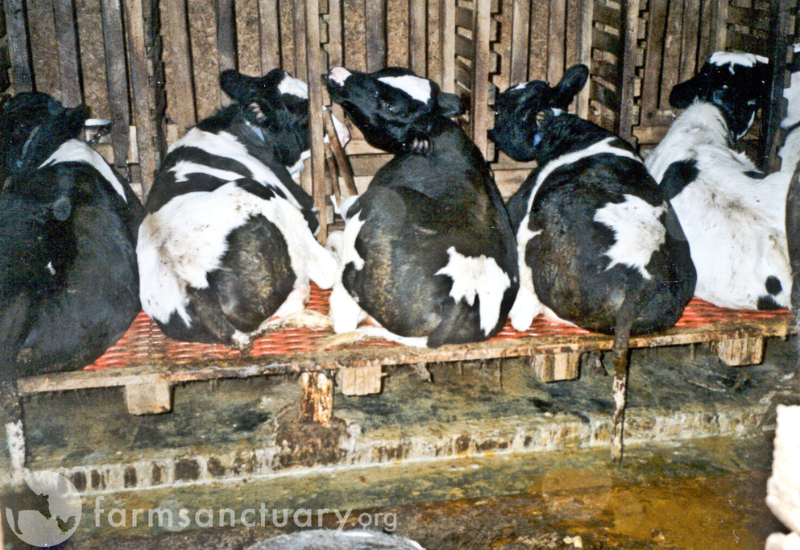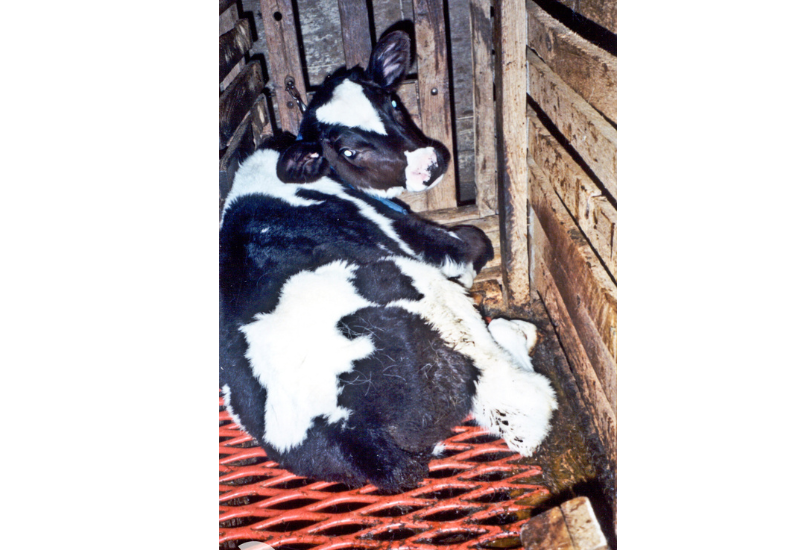
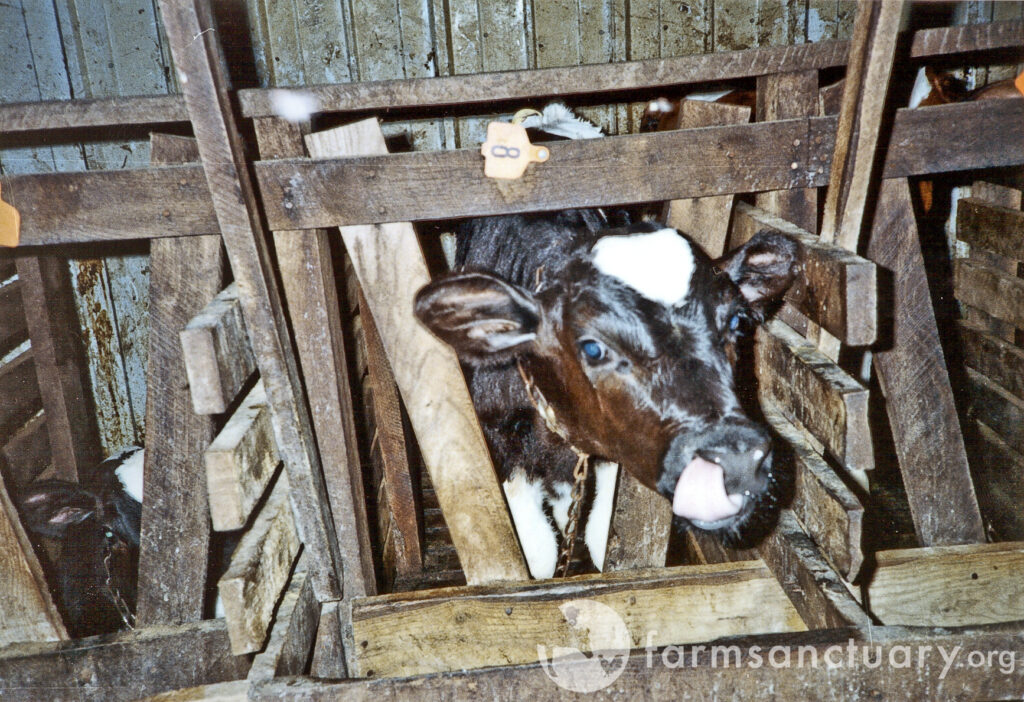
United States (Veal)
We want you to have a greater ability to learn about some of the unpleasant animal issues in our world.
STATEMENT OF MICHAEL W. FOX, VICE PRESIDENT, BIOETHICS AND FARM ANIMALS, HUMANE SOCIETY OF THE UNITED STATES, ALSO ON BEHALF OF THE AMERICAN HUMANE ASSOCIATION AND THE MASSACHUSETTS SOCIETY FOR PREVENTION OF CRUELTY ΤΟ ΑΝΙΜALS
Mr. Fox. Thank you, Mr. Chairman, members of the subcommittee, Congressman Rose.
I am Michael W. Fox, vice president of Bioethics and Farm Animals with the Humane Society of the United States. We are the largest animal protection organization in the Nation.
On behalf of over 900,000 constituents, many of whom we share with you, I appreciate the opportunity to testify on H.R. 84. I hold a degree in veterinary medicine and a doctoral degree in animal behavior. I have authored publications on farm animal behavior, husbandry, and welfare.
As a veterinarian and animal behaviorist, I am concerned about this issue. I also feel personally disturbed by some of the testimony today. One animal scientist, for example, saying that there is no scientific evidence that the behavioral needs of veal calves are not satisfied in these narrow crates.
I do regard a behavioral need of an animal with four legs to be able to turn around, walk and to be able to comfortably lie down.
Mr. Chairman, with your permission, I would like to summarize my testimony and submit it for the record.
We support this bill, which addresses the health and welfare problems which result from current inhumane confinement of veal calves in small crates. The bill alleviates these problems by mandating a larger enclosure, appropriate physical contact, and a sufficient supply of solid food and iron. We believe it provides minimum requirements for humane treatment of these calves.
Our purpose is singular: the quality of life and humane treatment of an animal. We are not promoting vegetarianism or trying to put the veal farmer out of business. Inhumane treatment of veal calves is largely the fault of a system which makes unreasonable demands on the farmer and is not the fault of the farmer who produces the animal.
While the practice of confining these calves in small crates is common in the United States, in the United Kingdom, use of the standard crate has virtually disappeared. The European Economic Community has passed a resolution to phase out veal crates by 1990.
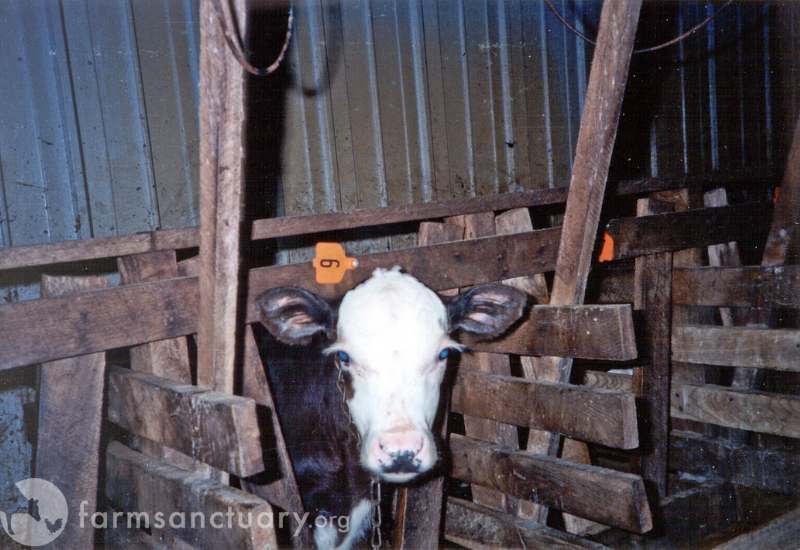
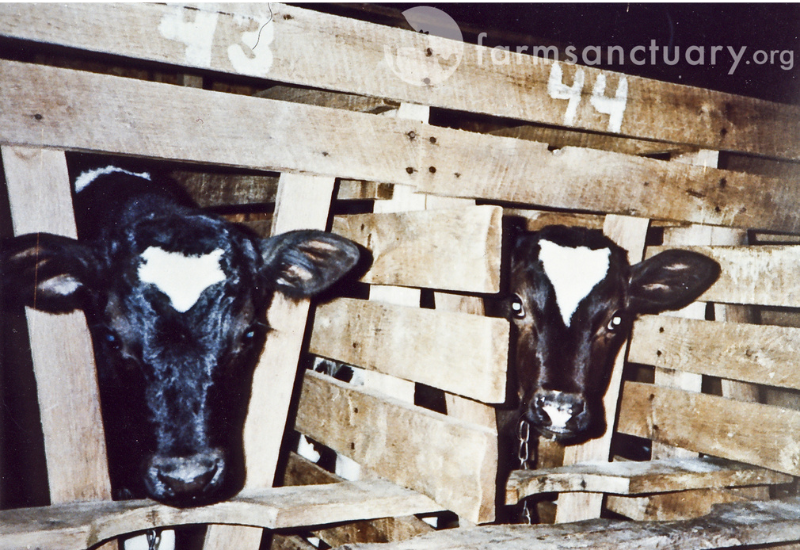
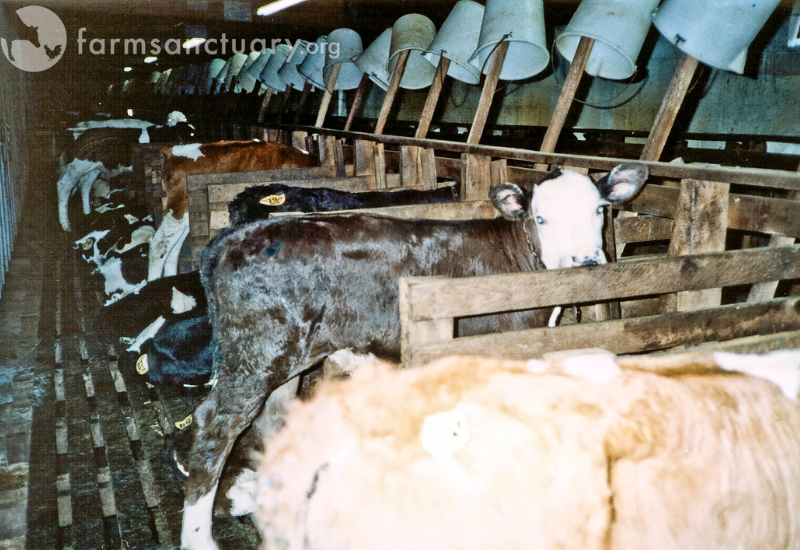
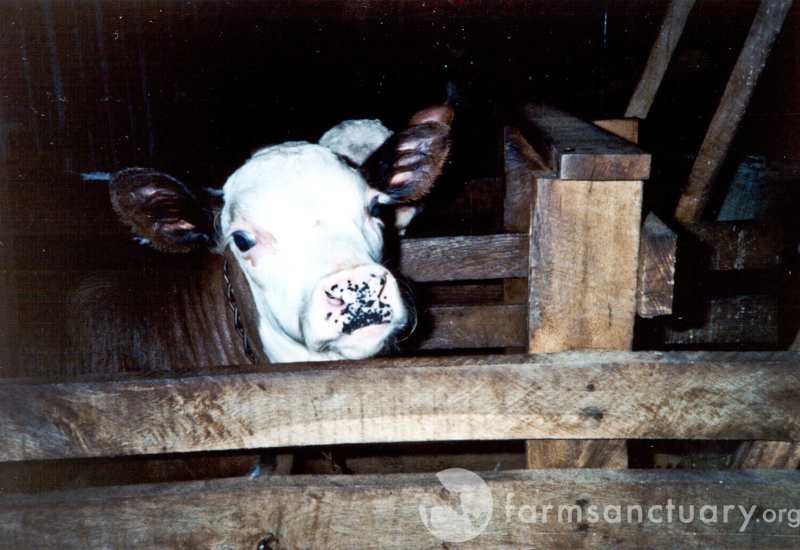
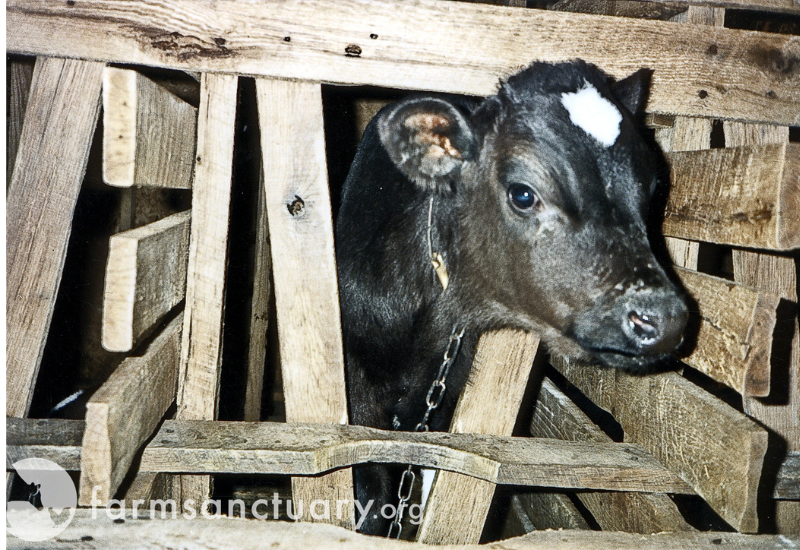
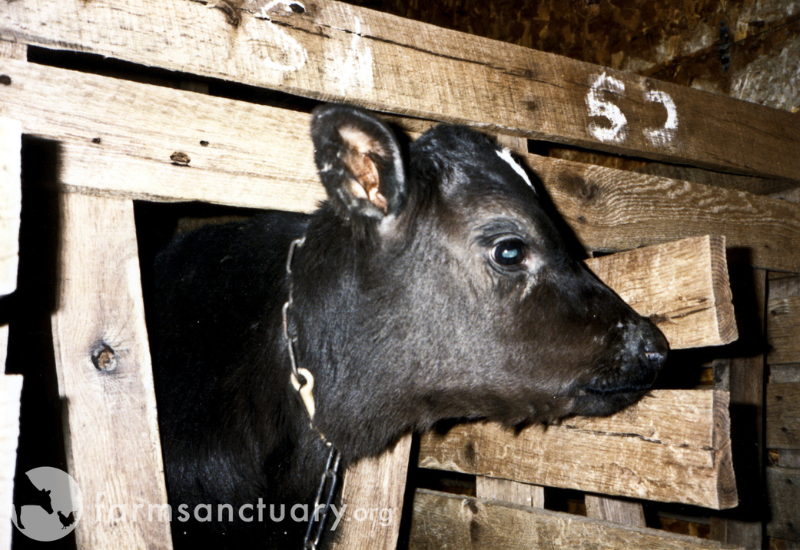
Meanwhile, in the United States, there are no Federal or State guidelines for minimal provisions for humane husbandry of any farm animal, including veal calves. The most common crate system is so confining, the calves cannot turn around or lie down comfortably. This confinement leads to behavioral and health-related problems.
For example, calves are subjected to conditions which cause chronic stress, making them more susceptible to disease and increasing the need for antibiotics. This is not simply a problem of tissue residue, but also fecal contamination of the carcass and transfer of resistant bacteria to other animals in the barn.
Calves cannot express natural behavior, making it more difficult for the farmer to detect disease early on. Calves cannot adopt normal postures to relieve heat stress and to sleep.
I would like to emphasize that they are fed a concentrated liquid diet, the special “milk-fed” veal. They have no free access to water so they thirst. So an indication of their well-being is not how well they eat, but that they are thirsty. They sweat a lot; they put on a tremendous amount of weight in a very short time.
Now, this bill goes a long way, but we are concerned that the bill’s language will permit the inhumane practice of tethering to continue. Therefore, we recommend an amendment to section 3, which would clearly prevent it.
If calves have more space, as provided by this legislation, stress would be reduced. Since the calf’s behavior would be more normal, farmers could detect health problems earlier on. Given more space, the calves could reduce heat stress by lying down and they could comfortably assume a normal sleeping position.
The fact that it was stated today that we don’t know what the normal sleeping position is for a calf and we need more scientific research, I find preposterous. Ask any good veal farmer and he will tell you.
We agree with H.R. 84’s mandate for sufficient iron and solid food. This would improve the health of the calf and the profit to the farmer, if not also the nutrition of the consumer.
Without sufficient iron, veal calves are subject to anemia and are unhealthy. Without solid food, the large first compartment of the calf’s stomach, the rumen, does not develop properly and normal microorganisms which help deter intestinal disease do not develop in sufficient numbers. This can lead to chronic indigestion, crate-licking and purposeless oral activities such as tongue-rolling.
Now, I visit veal calves and hogs in stalls and so on and when I am there, they are looking at me so they don’t engage in stereotypic behavior. So no matter how many animals you walk through and eyeball, you don’t get a good behavioral evaluation.
Some solid foods cause the meat to be pinker. However, this does not justify an improper diet. Unfortunately, there is a social consensus that pink meat is less desirable. The veal industry has promoted this European white veal cult for years, but taste tests and the choice of some of the Nation’s top chefs prove the best veal does not have to be white.
We hope that this hearing marks a turning point in improving veal calf management. Congressman Bennett’s bill represents an excellent compromise between the current crate system and the group housing system so vehemently opposed by many in the veal industry.
These changes will not harm the beleaguered family farm or independent veal producer since it is generally the largest, nonfarming corporate enterprise that contract veal growers and determine what calf-rearing systems they must use.
So long as there is public demand for veal, we believe the public has the right to a wholesome and healthful product. H.R. 84 provides the incentive to the veal industry to produce quality veal which short-changes neither the veal calf nor the consumer and which, in the long term, will therefore benefit the family farming community.
Many members of the farming community will be harmed if this legislation is not passed. We want to work together and we are confident that our different opinions on the treatment of veal calves can be resolved if we do so.
Thank you, Mr. Chairman, ladies and gentlemen.
[The prepared statement of Mr. Fox appears at the conclusion of the hearin.]
The Chairman: Thank you very much, Dr. Fox….
STATEMENT OF BRADLEY MILLER, EXECUTIVE DIRECTOR,
HUMANE FARMING ASSOCIATION
Mr. MILLER. Thank you very much. My name is Bradley Miller. I am the executive director of the Humane Farming Association. Our organization has been waging a campaign to end the abuses prevalent within the so-called milk-fed veal industry.
Some of the ads referred to earlier were run by our organization as a public service to the community.
I am very happy to report that last Thursday, the California State Senate voted to approve legislation to outlaw the veal crate in California. Last month, the Raley’s supermarket chain joined our boycott and has pulled anemic veal from all 55 stores in California and Nevada.
I would like to break from my written statement. There are many things that were said today that were quite concerning. It was unfortunate that the panel of veterinarians — most of them were working in some way with, if not receiving a grant from, at least employed by veal producers. We certainly could have provided many veterinarians that would be strongly opposed to the practices.
In either case, they are starting to change their vocabulary. For years, it has been known within the industry that the calves are, in fact, anemic. All you need to do is look back at some of their own publications and they talk about how to raise anemic calves.
What we have to emphasize here is that as we are arguing about what is and is not severe or borderline levels of anemia, this is all simply being done as a marketing gimmick. We need not be doing this to begin with.
The veal that we are talking about is not saving the consumers money; this is high-priced veal that is selling for two times as much as naturally raised veal. We are really talking about a consumer deception here.
Another thing they have been a little fuzzy on is the use of antibiotics. Many of the veal industry lobbyists flew to Sacramento in California to testify against our State legislation, which, by the way, makes it a little disingenuine when they talk about there is plenty of State legislation that would outlaw this cruelty, when, at the same time, they are fighting these very efforts on the State level.
But those hearings were very revealing. They testified last year that there are no medicated veal calves feeds. If you look at the Senate testimony in California, they were testifying that the feeds are not medicated. Well, just looking at their own veal industry publications — this is from this year, unless they went back to medicated feeds — full-page ads for medicated — not starter feeds. We are not talking about giving the calves antibiotics when they first get into the facilities; we are talking about giving giving them subtherapeutic doses of antibiotics throughout their entire lives.
They talk about there being plenty of controls. The USDA statistics, which they had a difficult time talking about earlier, we have had all along. I don’t know why the USDA people couldn’t have instant access to this.
The violation rate, antibiotic violation rate for all other forms of veal production is 1.1, 1.2 at the highest. You get into crate-raised veal, it is 3.2, 3 times as likely to have drug residue.
We are talking about a very serious problem that they have really tapdanced around.
Another point that came out is, that virtually all of the drugs used in formula-fed veal production have not been approved for nonruminating calves. You have veterinarians right here in this room, veal producers, that are not using these drugs according to FDA regulations. They haven’t been approved for this use.
The opponents have also made claims such as, “Well, we have to chain them in these boxes because — well, gee, if they were allowed to walk or turn around, they would be eating their feces.” But the fact is that calves deprived of all solid food and sufficient iron may be driven to eat their feces since they are desperate for essential nutrients. This legislation would correct that problem by providing calves with access to a wholesome diet.
The industry is also repeatedly saying that, “Well, if the calves weren’t in a humane situation, they wouldn’t gain weight and the producer wouldn’t make money.” The essence of the argument is, “Well, gee, as long as veal producers are making money, they couldn’t possibly be doing anything wrong.” We may as well throw out all animal protection laws because whenever industry is using animals, if they are making money, they couldn’t be doing anything wrong. We have to understand that weight gain alone is never a legitimate gauge of welfare. Animals are often able to grow and gain weight despite being raised in a harsh environment. There are numerous factors to consider, such as concentrated feed, a complete lack of exercise so they are not using a lot of calories, growth stimulants and so on. To say that weight gain is a sure sign of humane treatment is like saying obesity is a sure sign of health.
The veal industry researchers were questioned on their connection to the veal industry earlier by Congressman Rose-Stanley Curtis mentioned that 5 or 10 years ago he received a grant and John McGlone didn’t reply at all, but according to the veal industry’s own newsletter, they have applied for and have actually been approved for funding from the American Veal Association to conduct these studies. So it is patently obvious why they wouldn’t want to acknowledge the sound scientific studies that have been funded by, not the veal industry and not an animal rights group, but by the U.S. Government, at Texas A&M University, that showed conclusively that these calves are under stress and need additional medication.
It is also troubling, I think, to anyone that isn’t tied to the industry in some way, to hear the veal industry researchers say that there has never been — not only for veal calves, but behavioral needs have never been established for any animals. I believe that is a quote. They were up here saying that it has never been established that these animals have any behavioral needs.
What we are talking about here is really a form of extremism. This bill is quite moderate and the issues before this committee are really quite simple. That is, should a calf ever be allowed to walk, or rather, be allowed enough space to turn around during his life? Should a calf be deprived of nutritious solid food simply to produce an unnatural pale-colored meat?
For most Americans, the answer is obvious and that is why the consumer boycott of anemic veal continues to grow and will continue to grow. The veal industry may or may not be able to persuade members of the legislature to disregard the public’s opposition to animal cruelty and overwhelming support for this legislation, but they will never convince the American public that these practices are anything but what they are, and that is cruel, hazardous, and utterly indefensible.
Finally, by supporting this bill, this committee would be doing much more than protecting calves from cruelty. This committee would be doing more than protecting Americans from tainted meat. By supporting this bill, this committee would be saving the veal industry from itself. For the sake of the veal industry, if no one else, I urge your support of this legislation.
Thank you. [The prepared statement of Mr. Miller appears at the conclusion of the hearing.]….
STATEMENT OF ROBERT A. BROWN, PRESIDENT,
FOOD ANIMAL CONCERNS TRUST
Mr. Brown. My name is Robert A. Brown. I received degrees in biology from Harvard University and Northwestern University. I have held a number of positions in biological research, including the position of research manager for the Institute for Research in Animal Behavior. I spent some time on the curatorial staff of the Bronx Zoo, and I held another position more recently for 7 years in which I was supervisor of a full-service veterinary hospital.
In 1982, I founded the Food Animal Concerns Trust. The purpose of this not-for-profit organization is to promote appropriate technology in livestock and poultry husbandry. By that I mean, appropriate for the animals, appropriate for the farmers, and appropriate for the ultimate consumers of the product.
The previous witness from Berliner and Marx need not worry about me as an ivory tower theoretician. We don’t sit behind a desk and say how farming is done. We find farmers like Russ Dodge here to follow our standards, and we do really a substantial amount, I think it’s fair to say, of applied research in appropriate technology with veal and also with other species of farm animals.
Since the time is so short, I am going to address just one part of this bill, and that is its requirement that some solid feed or roughage be given to these calves. There are basically five reasons why this should be done — and I’m just going to go through them quickly.
First, is that in the normal situation in cattle, the calf is born on the range, suckles from its mother, and it starts to nibble some roughage within the first 2 weeks of life. Sticking to the normal patterns is always the best thing to do. To give them no solid feed at all is a great departure from the normal pattern. That’s the first reason for solid food.
Second, milk doesn’t contain any iron but solid foods do. So by requiring solid food, you will get rid of the severe anemia problem — which I would be glad to answer questions on — that these calves have.
The third reason for solid foods, as alluded to by Mr. Dodge, is that they are much cheaper than liquid foods. This enables the farmer to lower his overall feed costs. The saving depends really on how much milk versus solids he gives. But he has something that he can control and he gets many more sources of feed than he has now. It puts him a little bit back in the driver’s seat.
The fourth reason is something that I think should be of great interest to all of you, and that is, as mentioned in earlier testimony, when roughage is given, the rumen develops. When roughage is not given, the rumen does not develop.
Now, this means that the solid food provision has no incremental enforcement costs to the U.S. Government. The reason is that the USDA inspectors routinely examine the stomach on all of these animals that are slaughtered. If by this bill or elsewhere they are given authority to do so, the inspectors simply could condemn carcasses where there is nothing in the rumen or where the rumen hasn’t started to develop. You don’t have to go to a farm to check this.
The fifth thing, which I know is of concern to everyone on the subcommittees, is that when the rumen remains undeveloped, drugs are metabolized differently. This was suspected from various findings in the literature. The FDA got worried about this about 5 years ago. Anyway, they did initiate one study, which we have known the results of now for about 3 years, but we just have the paper in hand today. That was a study of the drug sulfamethazine. They found that the withdrawal time of sulfamethazine is twice that in the nonrumenating, liquid-fed calf as it would be in a calf that had a normal, solid diet. This was not a good finding for the veal industry.
Based on this bit of evidence, the FDA now has the firm opinion that there are no drugs that are approved for liquid-only calves. There simply are no drugs approved for these animals at all. This is a unique situation in livestock today. No other class of livestock is in this untenable position of having no drugs at all that can be used.
Now, since all formula-fed calves must be given drugs, such calves are now actually being raised in violation of the Food, Drug, and Cosmetics Act. It is our position that this is actually the case today.
There is only one, economically-feasible way to get out of this mess — and they’re in a big mess and that is to give them solid food. Because the other alternative is to start doing new drug applications on all the drugs they need to raise them this way, and it just can’t be done. I don’t think the drug companies are going to undertake the expense for such a small number of calves.
I see the red light on, but there are a couple of other things. I did want to tell Mr. Stenholm — he asked earlier what the worst finding was in these residue studies. I happen to know. It’s neomycin. It was a finding of 132 parts per million. The allowable tolerance is 0.25 parts per million. So there is approximately 530 times the allowable amount. That’s the worst thing in that batch of data….pp. 120-122.
DORIS DAY ANIMAL LEAGUE
Statement of the Doris Day Animal LeagueIn Support of H.R. 84, the Veal Calf Protection Act
before the Sub-committee on Livestock, Dairy
and Poultry, Committee on Agriculture
U.S. House of Representatives
Sara J. Amundson June 6, 1989
The Doris Day Animal League, with over 300,000 members nationwide, fully supports the “Veal Calf Protection Act” (H.R. 84). This bill will better protect both animals and humans by addressing humane concerns associated with the raising of milk-fed veal.
The members of the Doris Day Animal League share two primary objections to the raising of calves for veal in confinement:
1) a livestock production system which encourages unnecessary and inhumane intensive husbandry practices; and
2) the ramifications of these practices on consumers due to the antibiotic residues in the food produced as a result of these practices.
Most farmers, scientists and consumers will agree that the lives of the crated veal calf are stressful and traumatic, at best. Raised in the dark to preserve quiet so calves conserve energy, standing in stalls not large enough for a calf to lie down and fed an iron-deficient liquid diet, these animals live quite differently from those raised on the family farm. Given the many alternatives available to produce meat, and even veal in this country, the unnecessary suffering of these calves should simply not be tolerated.
In addition, these practices create an atmosphere for further abuse. These animals are hidden from society and raised by individuals who often have no training in farming or animal husbandry. This leads to cases of serious neglect which might be prevented if calves were raised in a more natural environment. The Veal Calf Protection Act would give calves a chance to develop a natural immune system, muscle tone and strength to better protect them from malnutrition and disease.
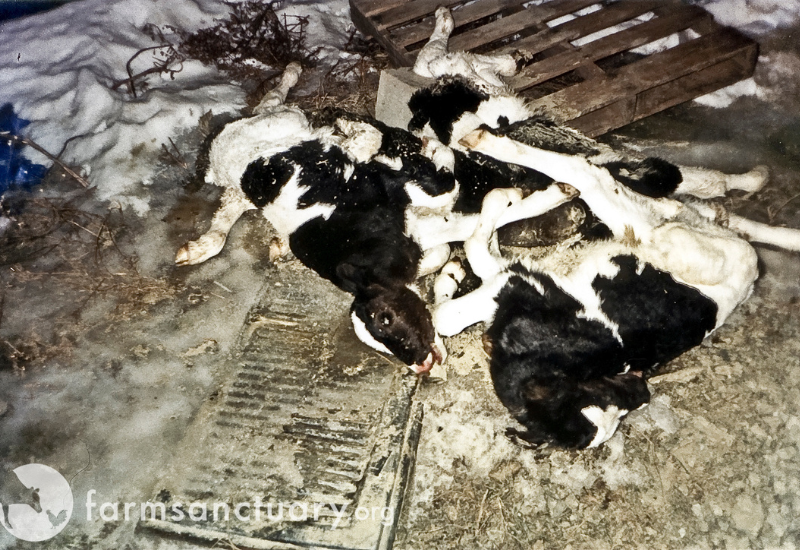
In one recent example, charges of 64 counts of cruelty to animals were brought against a farmer in Bradford County, Pennsylvania, the largest veal-growing county in the United States. On December 24, 1988, State Police Trooper David Motko and Diane Forrest of the humane society found 49 dead calves and 15 sick and diseased animals in a barn operated by Michael L. Slocum. Slocum was raising the calves under contract to Alpen Milch and Custom Blend Feed Company of Ohio.
As photographic evidence indicated, the veal calves were in a virtual state of neglect. Although one neglect case should not be an indictment of the entire industry, the issues brought out at trial do raise serious questions about veal farming in general. The concerns raised at the Slocum trial include: possible ground water pollution; feed company management problems; and the administration of medicated feed.
Veal farming appears to contribute to ground water contamination. In 1987, it was estimated that “more than half of the approximately 4,000 private wells in the Northern Tier (Bradford, Tioga and Potter Counties, Pennsylvania) are contaminated by harmful bacteria.” (Sunday Star-Gazette, November 1, 1987) Arthur Davis, Secretary of the state’s Department of Environmental Resources stated, “More people get sick from drinking water in Pennsylvania than in any other state.” With the Northern Tier of Pennsylvania represented by numerous large veal operations, a primary cause of ground water contamination is run-off from animal waste.
During the Slocum trial, several questions were raised with reference to contractual agreements between farmers and feed companies in veal-growing. Slocum insists he requested proper veterinary care from the feed company representative (David May) for the ailing calves. It appears the feed company did not respond to Slocum’s need for veterinary care until the request could be processed through the proper bureaucratic channels. Because of this, Slocum’s calves became more ill.
In addition, when the calves began to die in numbers on Slocum’s farm, he requested removal of the bodies. Slocum’s concerns centered around the possibility of the feed company accusing him of selling calves; thus, it was important for the company to see the bodies. Unfortunately, the company did not remove the bodies until after Slocum was charged with cruelty to animals. David May, the company representative, was unavailable to testify at the Slocum trial.
These questionable practices by the feed company indicate a genuine lack of concern for both the veal calves and the farmer’s husbandry practices. Although regulations requiring larger enclosures and social contact will not stop the mistreatment of all veal calves, it will give calves a more natural existence and therefore a better chance at a healthy life.
Another concern related to raising calves in small crates is the attendant reliance by veal farmers on subtherapeutic doses of antibiotics to fight disease. The resistance of antibiotic therapy to infection may be linked to the utilization of antibiotics in the raising of veal calves and other food-producing animals. Over 24% of salmonella bacteria are now resistant to many antibiotics. (Science, 21 November 1986, 234: 964) And the New England Journal of Medicine has warned: “It appears that unless drastic measures are taken very soon, physicians may find themselves back in the pre-antibiotic Middle Ages in treatment of infectious diseases.”
With regard to drug use in veal calves, the Food and Drug Administration has not approved any singular drug for use in the raising of veal calves. Yet, the United States Department of Agriculture continually finds residues in calves after slaughter, including drugs which have been banned for use in food-producing animals.
Chloramphenicol has been banned in the United States for a number of years, as its effects can be lethal in humans. (American Journal of Veterinary Research, 1988; 49: 914-17) Fatal aplastic anemia and toxicosis are two drastic human health threats caused by chloramphenicol. However, formula-fed calves continue to fail USDA residue tests. (Food Chemical News, July 20, 1987) Some drugs have not been banned in food-producing animals, but have serious side-effects when initially administered to the calves. “Nitrofurazone can be very toxic. NFZ can also cause bleeding disorders in calves, so (veterinarians) do not use it without some risk,” states Dr. Dean Elliott. (Farm & Home News, December 26, 1988) One can presume that the toxic effects of this drug may seriously endanger human health, as well. The article also states that “you (the farmers) are legally required to work with a veterinarian when using them.” Yet, the evidence clearly signifies that abnormal residues are being found in formula-fed calves. (FSIS Report, Spring 1989) This indicates either improper veterinary care or a lack of consultation with veterinarians by those in the veal calf business. The recent FSIS report distinctly demonstrates that antibiotic residues drop dramatically in calves raised in a more natural manner.
In conclusion, based upon the bill’s emphasis on the inhumane treatment of milk-fed veal calves and the need to seriously address the effects of drug residues in veal, the Doris Day Animal League supports H.R. 84. The unnecessary and inhumane treatment of animals and the misuse of drugs for increased profit at the expense of the American consumer, have no place in American society in 1989. Thus, we respectfully urge you to favorably vote H.R. 84 out of committee.
SOCIETY FOR ANIMAL PROTECTIVE LEGISLATION
P.O. Box 3719 Georgetown Station Washington, D.C. 20007
STATEMENT IN SUPPORT OF H.R.84
THE VEAL CALF PROTECTION ACT
Submitted for the record of the hearings held before the Subcommittee on Livestock, Dairy and Poultry and the Subcommittee on Department Operations, Research and Foreign Agriculture on June 6, 1989
by Diane Halverson, Research Associate for Farm Animals
I was born and raised on a diversified family dairy farm in southern Minnesota. My family milked Holstein cows, raised hogs and beef cattle for sale, and kept a chicken flock for family use. My father grew up on this farm also, and today runs the farm as a cash- crop operation.
When I was old enough I helped tend the farm animals, including the dairy herd, and baled hay, bedded cows and shoveled manure. Feeding the young calves was my favorite chore. My parents, my sister and I and many of our neighbors looked on raising animals and farming the land as a way of life we wanted to keep in spite of the risk, the long hours and hard work in the face of all types of severe weather, and the meager profits (or the losses) we experienced. I am well-acquainted with family farm agriculture, with a variety of animal husbandry practices and how the veal industry procedures contrast with those of a dairy and beef farm.
I have worked for the Animal Welfare Institute (AWI) since 1976 and for its sister organization, the Society for Animal Protective Legislation (SAPL), since 1987. In this capacity I have researched a wide range of farming methods, visiting research projects and farms across Europe and the U.S., with a substantial part of that research focusing on veal calf rearing. I have visited crated veal operations in California, Wisconsin, New York and Switzerland, and alternative loose-housing systems in Wisconsin, New Jersey, England, Virginia and Switzerland.
It is a mistake for the veal industry to cling to the charge that its critics are anthropomorphic “Bambi lovers” or that we speak out of ignorance of livestock farming or out of “sincere naivete as opponents of H.R.84 did during the June 6th hearing.
I attended the hearing in full and would like to respond directly to several of the remarks made in oral and written testimony, and then comment on specific provisions of the bill. In order that the meaning of full quotes will not be lost, I have underlined salient points.
The formula-fed crated veal system and the market for white veal did not originate with American farmers, chefs, butchers or consumers. It was developed in Holland in the early 1950s by the Dutch company Provimi. Taking advantage of the cheap, surplus skim-milk powder exported from the U.S. to Europe, Provimi began manufacturing milk replacer for veal calves using skim milk powder. Provimi also designed the crate system for confining calves.
The responsibility for bringing the commercial production of white veal to this country is claimed both by Provimi and by Berliner & Marx, a competitor of Provimi’s. According to Provimi there was little demand for the meat in this country, and the veal had to be promoted heavily.
Now, after nearly 40 years of experience with the veal crate system all across Europe, and 25 years of hearings and debates in which experts submitted evidence about the science, economics and ethics of the system, formula-fed crated veal rearing has been prohibited in Great Britain, and the European Parliament has recommended to the European Community that the system be abolished. Partly because the system is very dependent on antibiotics, it is not used at all in Sweden. Germany is also phasing out the system. Now, after long experience and extensive deliberations on the scientific, economic and ethical aspects of this system which was developed in Europe, Europeans are rejecting it. It is unfortunate indeed that Americans didn’t reject it too, in the first place.
One of the opponents of HR 84 appearing on the scientific panel (Dr. John McGlone) referred to the failure of a British loose-housing system tested in Wisconsin by Provimi, the Dutch firm that originated the formula-fed crate system in Holland and now has operations in the U.S.. I visited this installation with two veterinarians and two agricultural engineers from the University of Minnesota. Dr. McGlone said the loose-housing system Provimi set up failed. So did the crate system in the same installation. The scientists from the University of Minnesota submitted extensive comments to Provimi attributing many problems to the poorly designed ventilation system in this building. The crated calves in a section of the same experimental building showed a 30% morbidity rate (pneumonia) according to a Minnesota veterinarian who observed the calves. Both crated and non-crated veal and dairy calves across Minnesota and Wisconsin had severe respiratory problems that winter because of the unusually harsh weather. This Provimi experiment cannot be used to imply that all non-American loose-housing methods are unacceptable.
Furthermore, Provimi’s experiment only changed one aspect of the 26 formula-fed crate system, moving calves from individual crates into large groups of calves. It continued to deny calves of appropriate solid food and adequate iron, and dispensed food in uncontrolled amounts.
A second witness on the scientific panel (Dr. Stanley Curtis) testified that the health of formula-fed crated calves “is superior to that of calves raised in any other system with the exception of the calf hutch system.” This claim means little in the face of a violative drug residue rate of 3.5% for formula-fed veal, and scientific research and extensive comments in veal industry literature (excerpted later in this testimony) about health problems and the need for drugs.
One of the veterinarians testifying in opposition to the bill stated, in response to a question from the Subcommittee, that HR 84’s requirement that calves have room to turn around will so hurt the already narrow profit margin that the market for bull dairy calves would diminish to the point that these calves “may die in the gutter”. This is an unlikely prospect. In fact, as stated by National Farmers Union representative Howard Lyman, bull dairy calves are selling for up to $200 each. Prices are high because of the competition for these calves from farmers rearing these calves as dairy beef. In fact, a veal grower and feed distributor is quote in The Vealer, September 1987, stating: “As far as the calves, it’s hard to say when there’s going to be enough heifers having enough calves to produce a surplus again….Many of our competitors that bid against us for calves are going for beef and that’s raising the price and lowering the numbers.”
REQUIREMENT FOR SOLID FOOD
Formula-fed veal calves are denied solid food, and consequently never begin to ruminate, a normal part of the bovine’s digestive process. Normally, calves reared on the cow at pasture, and dairy replacement or dairy beef calves separated from the cow and reared artificially, will begin to consume solid food and ruminate at 1-2 weeks of age, and at 2 months of age spend 6 hours per day ruminating (Porzig 1969). “…by ten weeks of age rumination time is similar to that of an adult” (Webster 1984).
Formula-fed calves are deprived of the chance to carry out natural behavior important to their health and well-being. The following points will show why we strongly support H.R.84’s requirement for appropriate solid food for veal calves.
USDA Reports Violative Drug Residues in Formula-Fed Veal
In February 1984 and March 1984, The Vealer reprinted in two parts a speech delivered by Dr. Max Crandall, Associate Director for Surveillance and Testing, Food and Drug Administration, to the Regional Veal Seminar held at Cornell University. Crandall suggested that the prevention of rumination by denying veal calves solid food could lead to longer drug withdrawal periods than those being followed in the veal industry, since these periods had been determined by tests in ruminating calves:
“It is quite possible that because the calves are not ruminating, the preslaughter withdrawal period on the label may not be adequate to assure the absence of above tolerance residues at the time of slaughter. Residue studies are usually done in ruminating animals.”
“At the present time the Bureau of Veterinary Medicine has an active Veal Task Force evaluating the use of drugs in veal calves….Specific data are needed to ascertain whether a drug approved for use in beef cattle and calves will react the same if given to veal calves which are maintained in confinement under specified feeding/nutritional and management controls.”
A follow-up study released by the Center for Veterinary Medicine (CVM —formerly the Bureau of Veterinary Medicine) in May 1989, reports:
“As a result of an increase in illegal drug residues in veal calves and concerns expressed by the veal calf industry, the Center for Veterinary Medicine requested the Division of Veterinary Medical Research (DVMR) to initiate studies to provide scientific data on drug disposition in preruminant and ruminating classes of calves….Sulfamethazine concentrations reached lower maximum levels and depleted quicker in the tissues of replacement calves than they did in bob veal and fancy veal calves” (see attached USDA — CVM summary).
Data from the Food Safety and Inspection Service (FSIS) reveals drug residue violations detected in 1988 were higher for veal calves than for any other class of calves. Antibiotic residue violations were 3.28, or three times higher, for formula-fed veal, and sulfonamide residues measured .78 (see attached USDA — FSIS charts). According to FSIS, “because of residue problems that have recently been found in fancy veal, FSIS may implement a surveillance testing program for fancy veal similar to the bob veal surveillance program (see attached FSIS summary).
Solid Food Decreases Health Problems and the Need for Drugs
Not only does the lack of roughage prevent the onset of rumination that would help avoid residues, it also exacerbates disease problems and actually increases the need for drugs. University of Bristol veterinarian John Webster and colleagues researched veal calf behavior and health for seven years, and found that an entirely liquid milk replacer diet “prevents normal development of the rumen and its microbes, thus predisposing the calf to infectious enteritis or problems of mechanical indigestion from displaced hairballs” (Webster, Saville and Welchman 1986).
A report from the Research Institute for Animal Production, in the Netherlands reveals that feeding roughage to calves in an experiment was originally meant to counteract boredom in the calves, but also had the effect of decreasing the number of hairballs in the rumen from “about 15 to nearly zero. The “number of animals with severe ruminal keratosis also decreased. Intensive investigations including about 1800 animals showed a lower morbidity of 50% in calves…. This applies especially to conditions of the respiratory system and to enteric disorders (van Putten 1986).
Other researchers agree that solid food is of considerable value in preventing the formation of hairballs in calves (Unshelm, Andreae and Smidt 1981). Even a long-time veal calf veterinarian concedes advantages to giving veal calves roughage:
“When properly done, it will not affect the meat, helps to reduce stress, ulcers, mycotic (fungal) infections and it eliminates hairballs.” — Dr. Robert Blease “Newsletter for Veal Raisers,” Farm and Home News, January 9, 1989
It should be noted that the formula-fed veal industry’s mortality rate is maintained by lacing feeds with a higher dose of antibiotics than is normally found in the diets of dairy replacement calves. According to The Vealer, June 1987:
“….If it is known that the calves have had a good feeding of colostrum from healthy cows, initial medication may not be necessary. However, with anemic, relatively fat calves, it seems almost a must to have them on a constant low level antibiotic program.… Veal milk replacers usually contain broad-spectrum antibiotics at levels consistently higher than growth promoting levels found in milk replacers for herd replacements, and this regular low level of medication is used by many.”
Is not the necessity of administering antibiotics and hormones an indication that the system is unsatisfactory and needs changing, that the animals have not “adapted” to the environment? (Kiley-Worthington 1983)
If we look at the widespread dependence on drugs, we can get a measure of the need for solid food, first to reduce the need for drugs. and secondly to reduce incidence of residues by allowing these calves to ruminate. [The presence of solid food fed ad libitum, (together with an artificial teat on which calves could suck) would also help to control the problems of cross-sucking, urine-drinking, wood-chewing and eating of manure ridden straw or feces if calves are kept in groups (Stephens 1981).]
Current industry literature and 1988 USDA reports indicate that drug reliance and drug residues are problems that have never left the veal industry, despite the repeated denials of the problem by industry defenders. The following excerpts will help illustrate this.
1) In 1978, a survey of veal growers conducted by University of Wisconsin students led to this report:
Once in veal barns after a very large initial investment, the calves begin the feeding period…. This is where the feed companies come into the picture. The calves require a special feed so they will grow quickly in a semi-anemic condition so their muscle tissues will remain white or pink as a new born calf’s muscle is…. The calves’ semi-anemic condition may also add to their susceptibility to infection. The grower is equipped with a large arsenal of various antibiotics that would appear to be greater than that found in a veterinarian’s office….This represents another major expense. Many growers fear increased government regulations on drug residues in the tissues that occur because of their use on the farm and that which the feed companies add to the starter feed. If in the future they would not be able to liberally use these varieties of drugs, they would no longer be able to grow veal calves….
2) Dr. Max Crandall speaking at Cornell University (reprinted in The Vealer, March 1984):
“The recent action (March 16 & 29, 1983) of the U.S. District Court in Syracuse, New York emphasizes our concerns. As most of you are aware, the Court found it necessary to place four fancy veal producers in New York State under injunction on the basis of evidence that their calves contained the illegal, carcinogenic growth hormone diethylstilbestrol (DES) and they had marketed calves for slaughter containing violative residues.”
“….One complaint I often hear is that approved products on the market do not work, therefore, often times non-approved products are used….Other drugs such as chloramphenicol prescribed by a veterinarian have not been approved for use in food producing animals; there are no data to determine withdrawal times with any method of administration of this drug and USDA is now capable of finding chloramphenicol in the tissues of these food-producing animals and is actively involved in the screening for this drug, especially in calves.”
“FDA’s Bureau of Veterinary Medicine recently made a survey on drug uses in veal calves. When the producers kept written records of medicaments given to individual animals, some records were kept on the animal’s pen. It appears that most drug administration was not reduced to writing….General findings of this survey showed that as many as 60 single or multiple drug combinations were being used to treat veal calves. There were reported instances of use of drugs not labeled for use in food producing animals, use of drugs labeled only for swine or poultry (nitrofurazone), and using drugs labeled specifically for use in cattle, but the label is lacking adequate directions for use in veal calves. These usages can lead to the introduction in commerce of illegal or violative residues that clearly adulterates the edible meat from these animals.”
3) Dr. Richard H. Cockrum, DVM, The Vealer, April 1985:
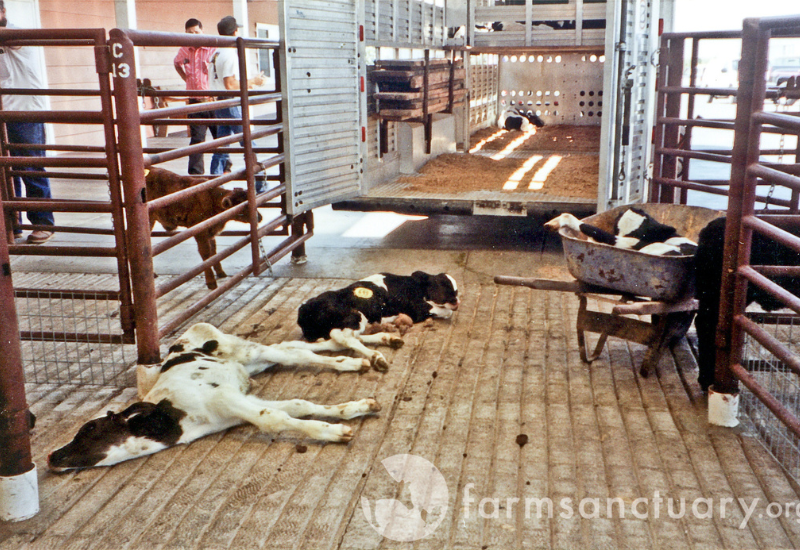
“Veal calf raising is being hard-hit with drug residue problems and with the restriction of drugs that are allowable for use… Baby calves are pushed together, hauled and deprived of food for varying degrees of time. Temperature changes create severe stress so that when the calves are unloaded at your farm, they can be from excellent condition to near dead. At this time all calves need to be fed ample food as well as given vitamins, electrolytes and iron. Heavy doses of antibiotics and/or sulfas are customarily given at this time to treat or prevent bacterial infection.”
4) from “Dr.John M.Wagner..A Real Veal Specialist,” The Real Veal Grower, December 1985 “….Also, the government has disallowed certain medications that we had the freedom to use with total impunity years ago that we can no longer use. That type of restriction, if it continues, is going to increase our cull and mortality rates.”
5) “The Vet Sez:”, The Vealer, April 1986. J.C. Gawthrop, a veterinarian whose columns appeared regularly in the magazine (and who testified in opposition to HR 84) “reluctantly” advised readers against the use of Ralgro, giving the impression that his primary concern was residue detection. noted that some veal growers were in fact using it: Dr. Gawthrop noted that some veal growers were in fact using it:
“Ralgro is a growth promoting implant that has been used widely in the beef industry…. The Food and Drug Administration has cleared the drug for use only in those types of animals listed. [Not cleared for use in formula-fed veal]….Ralgro causes several changes to occur in the veal calves that are obvious at slaughter….All of these changes are obvious on calves at slaughter. An inspector, who wanted to find problems, surely could….I have heard that some veal calves are being implanted. I cannot find fault with anyone who wants to grow a more muscular carcass more efficiently. However, I wonder if the improved efficiency is worth the risk of residue detection….Perhaps there isn’t aggressive enforcement of the Ralgro ban in veal calves at the present time. I wouldn’t want to implant calves one week and find out two months later that FDA is actively looking for evidence of Ralgro use in slaughter calves. I hate to see producers watch potential efficiency go to waste, but once the product is used it can’t be taken away or hidden.”
In response to this column, Dr. William Bixler, Associate Director for Surveillance and Compliance, Center for Veterinary Medicine, wrote The Vealer, July 1986: “FDA is very concerned that a publication reaching so many users of animal drugs would print an article or opinion that shows unwillingness on the part of the writer to strongly oppose extra label use of animal drugs.”
6) Alan DuVernay, publisher and editor, The Vealer, June 1986:
“In the area of drugs and biologicals, there are few products that are labeled for use in veal calves. The costs of obtaining label approval has become so high that it is easier for manufacturers to ignore labeling for our small use because the cost of doing so is very high. We then find ourselves in the gray area of using products we are told, and we believe, are safe but without the protection of having USDA label approval.”
7) The Vealer, May 1987:
“The way Rick Wade sees it, his two-room veal barn is actually an animal hospital.
“Three times a year we bring in 720 new Holstein bull calves from sales barns in Ohio, New York, Maryland, Pennsylvania, and Wisconsin,” explains Rick Wade, who runs Super Veal with his father Dick, at Wooster, Ohio. `They’re stressed and have been comingled with other livestock, and have had the opportunity to be exposed to many types of disease.’
“The new calves, typically weighing from 95 to 120 pounds and running from three to seven days old, are accidents waiting to happen. They start scouring the first week to 10 days. They’ve gone without food for 12 to 48 hours and they don’t even know how to drink their milk replacer…They’ve just been stressed and exposed to shipping fever. And, like clockwork, many are destined to get pneumonia…he constantly sees pneumonia draining dollars from other vealers in Ohio, Pennsylvania and parts of New York….It was in his sales capacity that Dick.Wade first became aware of both the extent of the pneumonia problem in veal pens….` Every one of our milk replacer customers would get calves up to 35 days old and then start running varying degrees of respiratory problems.. You could go in there and use all kinds of medications, and they still would get hit.'”
8) The Vealer, February 1988, Land O’Lakes advertisement for veal calf feeds: “You begin by taking a risk. You have to assume every calf you buy is sick until proven healthy. After that things get even more uncertain. Each day requires a constant monitoring of nutrients and medication, water quality, sanitation and ventilation. At Land O’ Lakes, we understand the risks a veal grower faces.”
9) It appears that rearing formula-fed veal calves is so tricky, and feed salesmen so persuasive, that desperate growers will put almost anything into the veal calves. Writing in his regular column in The Vealer, Dr. Gawthrop wrote, December 1986:
“I’m surprised at the claims that product representatives make which are eventually believed by veal growers. I have a client who fed drain cleaner to his calves at a salesman’s suggestion.”
Industry defenders point to weight gain as an indicator of calf health and welfare. Rapid weight gain is no assurance the calves are not suffering. With a high-fat diet and the liberal use of antibiotics, many calves will grow rapidly despite the stresses.
As the material discussed above indicates, veal calves are far from healthy animals. Many are rejected for kosher status because of health problems and abnormalities. According to Rabbi Abe Rine (The Vealer, January 1989):
“The conditions under which special feds are raised no doubt add to the inordinate amount of Trefah calves found among them. Their confinement and diet tend to make them more susceptible to lung abnormalities.”
By providing solid food, veal growers would avoid problems with drug residues, first of all by reducing the need for antibiotics, and secondly, by rearing ruminating calves for which drug withdrawal periods are already established.
Providing solid food would also help to address the public’s concern for the behavioral deprivation imposed on veal calves. As a scientific investigator of veal calf behavior has written,
“One of the greatest disadvantages of intensive farming systems is the lack of occupation [activity] for the animals involved and this also applies to veal calves. Their crates with slatted floors are really barren….Sometimes veal calves cannot see out of their boxes at all because some fattening houses have no windows and artificial lighting is considered to be too expensive except during feeding times….Other bovines suffer less boredom than veal calves do, because feed intake and ruminating occupy the major part of the time. But yeal calves have no opportunity for eating roughage or ruminating, and they manifestly miss this opportunity, because sham-ruminating can be observed for about two hours per day” (van Putten 1986).
REQUIREMENT FOR SPACE TO TURN AROUND
After seven years of concentrated study of veal calf health and behavior Professor John Webster and colleagues came to the conclusion that “
the most obvious insult to the welfare of the calf is to confine it in a box where, in the latter stages of growth, it cannot turn round, groom itself properly, adopt a normal sleeping position, or even stand up and lie down without difficulty.” (Webster, Saville and Welchman 1986).
Dr. de Wilt concluded that the crate is
“clearly unfavourable for resting and possibly also for sleeping, due to spatial restrictions which not only interfere with the support of the head during lying, but also with the lying on the side or on the brisket with both hindlegs stretched and with comfort behaviours which are partly associated with resting, such as self licking and stretching.” (de Wilt 1985)
The Vealer has acknowledged how strongly calves react against the crates, advising vealers to:
“Check the new arrived calves frequently during the first day and night. They are frightened and homesick and will go through all kinds of contortions to escape the confining stalls.”
It has been proposed that calves never truly adapt without suffering to prolonged crate confinement. Friend and Dellmeier suggest that “chronic frustration of a drive for locomotor-rotational exercise” could induce a state of “learned helplessness” in veal calves (1987).
There are many consumers who believe, without a scientific study to prove it, that the veal crate is inhumane. Calves have four legs and stand to nurse their mothers on the day of birth. They soon trot, run and kick, play with and groom each other. For many, this is evidence enough that a floor of wood slats, on which calves are forced to stand or lie in the same spot for four months unable to turn around, or adequately groom themselves, sleep comfortably or even walk is unacceptable and that H.R. 84 will help bring about a badly need reform.
REQUIREMENT FOR SUFFICIENT IRON IN THE DIET
Formula-fed veal calves are deprived of normal amounts of iron so that their muscle tissue will be light colored at slaughter. The light color of the formula-fed veal calf is supposed to mimic the pale flesh of a very young calf which has consumed only its mother’s milk. Thus formula-fed calves are deprived of solid foods containing iron. Other possible sources of iron, including the water with which the dry milk powder is mixed must also be avoided or carefully monitored.
According to the Cooperative Extension Service, University of Massachusetts, the iron deficient diet and lack of grain or hay in the diet are stressful and contribute to poor health:
The anemic condition resulting from milk-only feeding gives the desired lack of pigmentation to muscle tissues in the carcass. Milk is deficient in iron and thus a food source that will give the desired end product. Other feeds must be avoided, as they do contain iron. Trace mineral salt, hay, bedding are excellent sources of iron and must be avoided. Grains should also be avoided in the feeding program. Physiologically, this type of nutrition program results in marked stresses to the animals, especially as they approach 10 weeks of age….The calf does have stores of iron in the body at birth…this added storage iron can carry the calf pretty well through 8 to 10 weeks. However, by this time the calf is anemic and with a longer growing period, there is decreased energy utilization, decreased resistance to disease, decreased growth rate, and eventually death.
An article in The Vealer advises that calves are born with varying “hemoglobin or hematocrit levels…which will often result in dark veal”. Consequently,
“in order to obtain white veal in the majority of calves without penalizing baby calves born with low hemoglobin levels, a level of iron that is borderline, must be fed.” — Jack Rovics, The Vealer, March 1988.
In fact, Dr. Webster and colleagues at the University of Bristol concluded that “one cannot guarantee to produce ‘white’ yeal without feeding a diet that will certainly induce anaemia in some calves”.
Webster, et al suggested that the diet contain sufficient iron to “minimise the risk of iron-deficiency anaemia” though this would undoubtedly mean “that most of the veal would be pink” (Webster, Saville and Welchman 1986).
A similar recommendation was made by Professor R.G. Kauffman, Department of Meat and Animal Science at the University of Wisconsin — Madison:
“…it is clear that calves should be supplemented with iron to prevent anemia and to maximize growth and healthfulness. There is no scientific evidence to support the production of light-colored veal. Admittedly, many consumers and chefs believe there must be an advantage, but it appears to be a figment of their imagination” (1982)
We strongly oppose the practice of risking calf health by feeding an iron-deficient, roughage-less diet, and then severely restricting calf movement and behavior to help compensate for this abnormal feeding practice. It is particularly offensive since the sole purpose of this diet is to alter the color of the meat.
Members of the veal industry have even conceded color is unimportant, for example:
“If you took two calves on the Provimi program and one was a little darker than the other, I understand that when you cook them up you can’t tell the difference. I’m sure both would taste the same. It’s just a visual thing.”— Robert Codey, Provimi Sales Manager New York, November 5, 1979
“It’s all a psychological thing. If you put them both in a frying pan, they’ll even look the same. The worst mistake we ever made was to sell this meat just on color.” .— Guy Tober, Provimi Vice-President New York, November 5, 1979
Dr. Max Judge, Purdue University, told a seminar of veal growers:
“What does color mean in terms of palatability? I think we have to admit that the consumer out there is not the person who is saying that this veal has to be light. Survey results show that some consumers, admittedly, do look for light colored veal, but many of them don’t know the difference. So if we were to tell them that this is veal in this package, unless it was extremely strange to them, I think they would accept whatever color was within this specified range we mentioned. But the industry has said that color is an evidence of youthfulness, and so-called white milk-fed color is an attribute that our meat must have…. However, we have an animal that, at three months of age, is undergoing some biological changes that are inconsistent with the conditions we would like to have muscle becomes a little darker, the conformation changes, and the rumen tries to develop…There is no evidence that light colored veal is more palatable than dark colored veal; in fact, iron may actually improve palatability.” — The Vealer November 1988
We urge Congress to legislate feeding practices that provide sufficient palatable roughage and iron to maintain each calf in full health and vigor.
CONCLUSION
For many years we have awaited voluntary change by the veal industry and a commitment to the public to replace the extremely restrictive crates and provide healthful diets to the calves and wholesome meat to the consumer. But the veal industry remains largely unchanged, maintains that its methods are humane and wholesome, and has generally denied the need for development of environments and a diet that will maintain the calf in full health and vigor. It seems that necessity, in the form of legislation, will be the mother of invention. Even the industry’s belated call for “scientific research” appears to be a thinly veiled plea for biased studies which would give evidence” with which they could defend current methods. In a presentation to the American Veal Association (AVA) in 1988, then AVA President Eric Fleck said: “We want to be able to cite good, hard evidence that the practices that we as an industry advocate in the AVA Guide for the Care and Production of Milk-Fed Veal Calves are as healthy as the calves we produce.”
In fact, scientific researchers across Europe have been investigating the health and welfare problems of formula-fed veal rearing for many years, inspired by the public concern about intensive farming that resulted from publication in 1964 of the book Animal Machines. Professor John Webster and colleagues at the University of Bristol have been leaders in this research, and have developed a housing system that is a vast improvement not only over crates, but over other forms of loose-housing that have been tried in the U.S. and in Europe. Webster, et al concluded that calves can be successfully housed in small groups if they have access to solid food, and are fed from a computerized feeder that recognizes individual calves and records their daily intake of feed and liquids. Under these conditions, calves in this “Access” system had far fewer problems with enteritis, respiratory disease, digestive and other disorders than calves in any other housing system they studied, including crated formula-fed calves. There were also fewer deaths and culls or losses to other disease. We suggest that the extensive body of research already published outside the U.S. on this subject be fully considered in developing alternative management systems, so that costly and unnecessary research that only delays change is avoided.
Also, we should note that while some in the veal industry claim all group-housing attempts have failed, others claim group up housing is working:
“Today there are many operations which are raising calves in pens of 25 or 30. This was tried unsuccessfully in the first few years of the veal indus-ry, but now technology has overcome many of these problems.” — Dr. Robert Blease, Farm and Home News, November 14, 1988
The extensive work conducted in Europe on health and welfare has led the United Kingdom to enact legislation outlawing the veal crate. The British law, coming into force January 1, 1990, requires that the calf be a) “free to turn round without difficulty”; b) fed “a daily diet containing sufficient iron to maintain it in health and vigour”; c) have daily access to solid food so as not impair rumen development.
After listening to expert testimony, in 1987 the European Parliament recommended to the European Commission that the veal crate should be abolished. In February 1987 the European Parliament stated that it
“Believes that the present system of feeding calves on an exclusively liquid diet, while housing them in individual crates, which deny them the opportunity to move or turn round, should be abolished in favour of a system of group housing;
Is of the opinion that a diet containing roughage and adequate amounts of iron, which would lead to a pinker coloured meat, would not only favour the normal development of a calf, but is not likely to create consumer resistance, especially if the consumer is made aware of the method of production of white meat;
Is of the opinion that a diet which does not contain roughage but consists solely of feed with insufficient iron content, resulting in ‘white’ veal is unethical and that such a rearing system should be prohibited in Community countries;
Believes that legislation should be drawn up to achieve these changes, based on minimum standards which take into account the calf’s need for a well ventilated environment, a balanced diet, adequate room to stand up, lie down, turn around and adopt a comfortable sleeping posture, and that such calves should not be deprived of social contact with other calves after six weeks of age”.
A final EEC directive on the subject of veal calf rearing is being prepared.
Germany has also adopted regulations dealing with the welfare of veal calves. Solid food will be required and after 1992 calves must not be kept in individual pens.
Some have called this modest bill a threat to the independence, even the survival, of the family farmer. But what could be more threatening to the veal industry’s survival than the growing number of leading chefs and restaurants refusing to serve meat from calves deprived of the chance to turn around, and to sleep comfortably? What could be more threatening to a farmer’s “independence” than enslavement to expensive, fossil-fuel-dependent, disease-prone, drug- dependent and inflexible farming methods?
In the words of an Ohio farmer and former Farm Journal editor, Gene Logsden:
Maybe the animal rights movement is good for us…. I think farmers are being persuaded to paranoia over a movement that is going to do them more good than harm….Which is more a threat to your independent business as a family livestock farmer: animal rights or animal megafactories?….I have a lot more faith in veal farmers than to believe they can’t find a way to raise calves without tethering them constantly in an enclosure too small for them to…lie down in, freely groom themselves or turn around…. Given a chance to buy food that obviously has better quality or is guaranteed clean of ag chemical and drug residues, people are opting to pay more for what they eat. For the farmer, this should be a momentous historic event. The smartest of them are working with the diet-dillies, organic nuts, and Bambi lovers to bring this beneficial attitude into the whole market. Therein lies salvation for the ag economy, not in ever-increasing diseconomies of scale that have brought farmers to their knees in the 80s.” — Farm Journal, January 1989
Logsden’s is not the only voice in agriculture calling on the industry to get rid of crates. The editor of Meat Processing recently wrote:
“Over the years, veal growers have tap danced around the problem, trying to blame the purveyors, who blame the chefs, who blame the consumers. Fact is, it won’t be the end of the world if the public can’t dine on so-called ‘white’ veal, produced in part by restricting the movement of calves in veal crates…. No less an authority than Ferdinand Metz, head of the prestigious Culinary Institute of America, told purveyors at a recent NAMP Marketing Seminar that `pink veal tastes exactly the same (as white veal). There is no difference’….Thus confinement has no validity on the production side….Instead of fighting over whether it’s bad, or how bad it really is, the entire industry — from grower to end user — should unite in a public repudiation of the entire concept of confinement…..Why not come out publicly in favor of a humane alternative to veal calf confinement — whatever that may ultimately be — and start reaping the results of the ensuing goodwill? The industry can and should take a tough stance on certain issues that its critics love to attack. But an unnecessary and outmoded confinement system isn’t one of them.” — Dan Murphy, Editor, Meat Processing, February 1989
Formula-fed veal calf rearing was once held out as being more lucrative than almost any other livestock industry. But, according to a writer for Farm and Home News, September 26, 1988: “Today, with the high bob costs, production costs — including feed costs and the finished market price hovering around $2.00, the return is not the fabulous `easy way to make big bucks’ it may have been in the past.”
Furthermore, the veal industry has set up a Catch-22. The industry establishes unnatural expectations for the calves’ performance, and enormous obstacles for the calves to overcome, then severely deprives the calves when they cannot respond as the industry wants. For example, the industry wants calves to grow more quickly than normal in very stressful circumstances, so a high-fat, high- energy, roughage-less diet is fed. But this causes calves to sweat heavily. Knowing that the calves will want to lick themselves more than usual but depriving calves of solid food which would ameliorate the problems of the hair intake, they chain and crate the calves so as to restrict the grooming calves crave to do. This doesn’t make sense! This is not a system that deserves promoting or defending on economic or humane grounds. It is a ridiculous system that should be phased out and replaced with biologically sound and behaviorally appropriate ones. We urge Congress to support HR 84. 23
ASPCA: America’s First Humane Society
Barbara Pequet, J.D.
Director of Government Relations
ASPCA Legislative Office
1755 Massachusetts Avenue NW Suite 418
Washington, DC 20036
TESTIMONY on H.R.84
THE VEAL CALF PROTECTION ACT
of the HOUSE AGRICULTURE COMMITTEE U.S. HOUSE OF REPRESENTATIVES
Submitted for the record by John F. Kullberg June 16, 1989
THE AMERICAN SOCIETY FOR THE PREVENTION OF CRUELTY TO ANIMALS Headquarters: 441 East 92nd Street • New York, N.Y. 10128
The producers claim that these practices are actually beneficial to the health and welfare of the animals and that the industry should be left to self regulation without government intervention. The facts do not support this self-regulation appeal. After hearing from scientists, veterinarians, and humane veal calf producers, I am convinced that these animals can and must be handled in a more humane fashion during their short lives and that the American public deserves to be able to purchase veal free of drug residues. The current practice of confining a calf to a small crate with no room to move, turn around, groom itself, or even sleep in a natural, comfortable manner is unnecessary and cruel. Producers claim that they house animals in this way to make it easier to give individual attention to the animals, to chart their growth, and to treat illness and administer medication. The truth is that the animals are crated to inhibit their ability to move about and develop muscle tissue through exercise and that they are routinely given prophylactic quantities of antibiotics to ward off illness that would likely attack an animal maintained in this weakened state.
The calves are fed an iron-deficient diet of a liquid milk replacer made of skim milk, fat, and in most cases high levels of antibiotics. Producers claim that solids and roughage are unnecessary and that the animals must be fed a low iron diet in order to produce a white meat that commands a higher price at market. Producers say that the calves are only babies and that they are unable to digest solids. But the fact is that if these same animals were raised for beef or as dairy animals they would be allowed to eat solids and roughage and even be able to move around.
It should also be noted that in the past few years the veal industry has advertised white “fancy” veal as a low fat, healthy alternative to artery-clogging red beef. Recent reports, however, of unacceptably high levels of drug residues in fancy” formula-fed veal have called into question current farming practices. According to a recent study conducted by the U.S. Department of Agriculture, drug residues found in meat from formula-fed veal calves was greater than three times that found in the meat derived from other veal calves. And the U.S.D.A. has expressed serious concern about this statistic. The problem of high residue levels in formula-fed veal calf meat might come in part due to the non-ruminating nature of the animal. As discussed earlier, fed a liquid only diet, these calves metabolize nutrients and antibiotics differently from an animal fed solid foods. Food and Drug Administration studies have shown that safe drug withdrawal times in ruminating and non-ruminating calves is different.
In fact, just last month the FDA advised the industry that “no drug, not a single drug…is specifically approved at this time for use in fancy veal.” If no drugs are approved for use with these animals then why are there unacceptable residue levels in the meat? If the American consumer demands accountability of automobile manufacturers, clothing manufacturers, and other foodstuff providers, they certainly deserve to be able to purchase antibiotic-free meat!
Passage of H.R. 84 will do much to help, not hinder the veal industry by setting minimal humane standards of care for the animals. In addition, the American public is growing more and more concerned with the safety of our food supply and is becoming leery of the chemicals and drugs used in production. With passage of this bill veal calves will be fed a sufficient supply of digestible solid food and iron to maintain them in good health, producers will find it unnecessary to depend on drugs to keep their animals alive, and the American public will gain confidence that the final product is safe.
I presume that many will find this testimony predictable, given my position as president of a major humane society. If I may, therefore, I would like to conclude with an editorial entitled, “Achilles Heel on Veal”, by Dan Murphy, an editor of a major meat industry publication, MEAT PROCESSING, February, 1989. I believe this testimony is nothing short of eloquent:
“Once in a while, it’s rather refreshing to focus on an isolated problem that can actually be solved by direct action. It’s even better when the ripple effect of a resolution would carry far beyond the initial outcome.
Such is the case with the issue of veal calf confinement. Over the years, veal growers have tap danced around the problem, trying to blame the purveyors, who blame the chefs, who blame the consumers. Fact is, it won’t be the end of the world if the public can’t dine on so-called ‘white’ veal, produced in part by restricting the movement of calves in veal crates. Nor will the market for veal be shattered. Its culinary appeal and nutritional superiority will continue to attract legions of customers — no matter what the color of the product. No less an authority than Ferdinand Metz, head of the prestigious Culinary Institute of America, told purveyors at a recent NAMP Marketing Seminar that ‘pink veal tastes exactly the same (as white veal). There is no difference.’
Thus confinement has no validity on the production side. The animal activists have made damn sure that point has been driven home with scores of state legislators and congressmen, and more legislation is on the way in California, where Assemblyman Tom Bates is reintroducing his ‘veal calf rights bill,’ and in New York Bates’ bill would be a mini-nightmare of ill-conceived regulations on veal growers. But how do you oppose him? How do you come out in favor of confinement without sounding like a villain? The answer is, you don’t.
Instead of fighting over whether it’s bad, or how bad it really is, the entire industry — from grower to end user — should unite in a public repudiation of the entire concept of confinement. Granted, as Temple Grandin points out in a thoughtful article on animal welfare in this issue (page 64), group housing units are not yet perfected. More experimentation would have to be done. But why drag it out any longer? Why load up the animal activists’ shotguns with a fresh round of shells every time the industry slinks around the problem? Why not come out publicly in favor of a humane alternative to veal calf confinement — whatever that may ultimately be — and start reaping the results of the ensuing goodwill? The industry can and should take a tough stance on certain issues that its critics love to attack. But an unnecessary and outmoded confinement system isn’t one of them.”
Veal Calf Protection Act: Joint Hearing before the Subcommittee on Livestock, Dairy, and Poultry and the Subcommittee on Department Operations, Research, and Foreign Agriculture of the Committee on Agriculture, House of Representatives, One Hundred First Congress, First Session, on H.R. 84, June 6, 1989 (Washington, D.C.: Government Printing Office, 1990), pp. 84-86, 91-93, 367-379, 438-461, and 469-473.
All images: https://www.flickr.com/photos/farmsanctuary1/2163740772/in/photostream/
See: https://babel.hathitrust.org/cgi/pt?id=pst.000016111622&seq=1&q1=