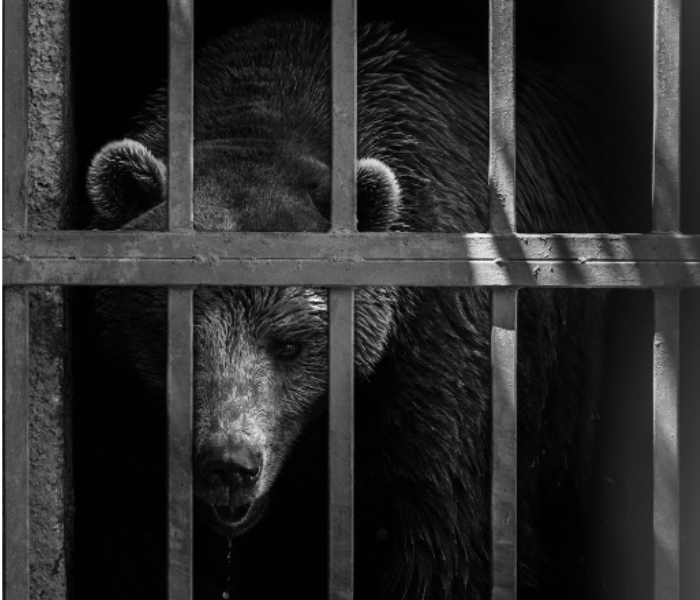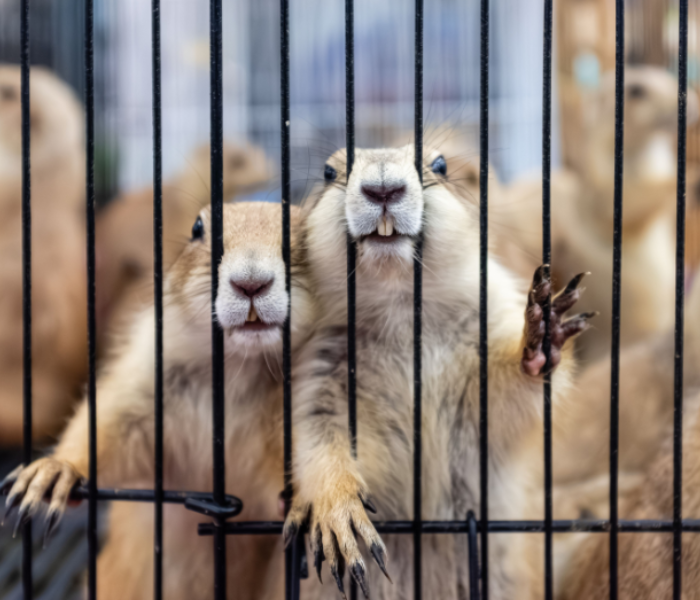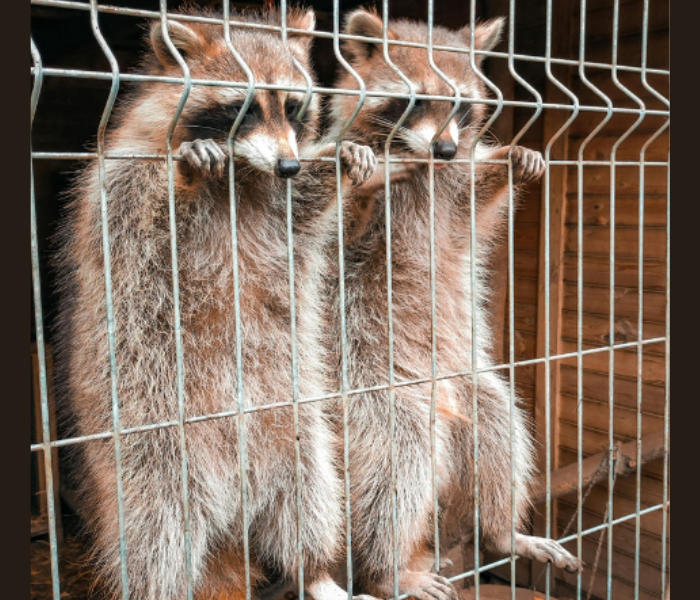
Captive Animals
We want you to have a greater ability to learn about some of the unpleasant animal issues in our world.
Captive Elephant Accident Prevention Act of 1999
STATEMENT OF BOB BARKER, HOLLYWOOD, CALIFORNIA
Mr. Barker. I would like to thank the members of the sub- committee on behalf of the thousands of dedicated people across the country who have been working for years to save captive elephants from the horrors of the circus and to protect unsuspecting humans from being injured or even killed by these frustrated, long suffering creatures. Your willingness to consider H.R. 2929 is noted and deeply appreciated by all of us who seek the passage of this very important bill.
It has been suggested that I present a film today that graphically depicts the danger to human life when elephants that have been subjected to deprivation and cruelty for countless miserable years finally reach the breaking point.Before we view this impressive film, allow me to point out that even if a circus had the best of intentions, authorities on elephant behavior charge that it is impossible for a circus to provide an acceptable existence for elephants.
According to experts, elephants have three basic needs. One is food. Elephants eat live vegetation. In their natural habitat, elephants graze up to 20 hours a day. A circus keeps an elephant in chains 90 percent of the time. A second basic need for elephants is extensive social relationships. In the wild, they form intricate, life-long relationships. In the circus, families and compatible individual elephants are separated without hesitation or consideration for the psychological effect on the elephants involved. The third basic need for elephants is freedom of movement. In the wild elephants walk 25 to 50 miles a day. In a circus, an elephant is reduced to a life in chains or confined to cramped quarters.
Is it any wonder that these tragic, captive elephants deprived of any semblance of the life intended for them by nature, mercilessly beaten, some of them daily, to force them to perform ridiculous tricks, robbed of every shred of dignity, is it any wonder that these magnificent, highly intelligent creatures finally rebel? And when they do, they pose an alarming threat to human life as you shall see in this film we have brought for you.
[Viewing of film.]
Mr. BARKER. Gentlemen, as you can see, when a circus featuring captive elephants comes to town, it is a tragedy waiting to happen. For the sake of adults and children whose lives are endangered by circuses exploiting captive elephants, please add your support to H.R. 2929….
STATEMENT OF TOM RIDER, FORMERLY OF RINGLING BROTHERS
AND BARNUM & BAILEY CIRCUS
Mr. RIDER. Good morning, Mr. Chairman and members of the committee.
I am Tom Rider, a former circus employee. I worked for the Clyde Beatty Cole Brothers Circus in 1997 as an elephant keeper and I loaded children for elephant rides. The elephant we used, named Petunia or nicknamed Pete, was considered to be a dangerous animal and we were cautioned not to go near her. Despite this, she was used for rides before the show and during the intermission carrying as many as ten children at a time on her back. She was surrounded by people waiting to ride. The only barrier between her and the public was a plastic net fence.
Typically during elephant rides, the handler walks in front of the elephant as she carries riders on the back. If the elephant decides to wander off, it would take at least a few minutes for her handler to regain control. Since the elephant is surrounded by people literally there would be no way to prevent serious injury if she decided to take off like the elephant in Florida. It never ceases to amaze me that the circus would tell people to put children on the backs of their elephants when they knew how dangerous the elephant was.
I left Clyde Beatty Cole Brothers in White Plains, New York. When Pete did not perform her act properly, she was taken down to the tent, laid down and five trainers beat her with a bull hook. Pete is now dead.
After I left Beatty Cole, I went to work for Ringling Brothers Circus in Austin, Texas. I was hired as a barnman’s assistant and 2 months later, I became the afternoon barnman. In that capacity, I was present during the majority of the performances.
During my 22 years of employment with the circus, I was slammed between two elephants while I was working in the stockcars. Even though the elephants were chained, they are capable of doing incredible damage and most of the staff had similar incidents. It was very common to be stepped on, hit by a tail or injured in other ways just because of the sheer size and power of the elephant. My experience has left me with considerable respect for the damage the elephants can do even unintentionally.
We had an elephant named Karen who we nicknamed Killer, yet she was kept on the road performing because she was a good performing elephant. Although she was the most dangerous elephant in the group, she is the one they used in the three ring adventure where the public is allowed to stand around the elephant with no safety net or other protection around her. Karen has a habit of knocking anyone who comes into range, slamming them into the ground and yet she is allowed to have contact with the audience.
While I was working for Ringling Brothers, I heard stories all the time about dangerous elephants and how they could kill you if you got too close. One of the top trainers for the circus had been killed by one of his elephants and a lot of handlers were hit while they were working. The gentleman I am referring to is Axel Gautier. I was injured in my eye when an elephant slammed me with her tail and I was slammed a few times while working around them.
After my 3 years working with elephants in the circus, I can tell you that they live in confinement and they are beaten all the time when they do not perform properly. This makes them dangerous and they want to get away. My first experience with an elephant running was in Tupelo, Mississippi when we were on an elephant walk returning to the train. A cattle truck had stopped to let us pass when Karen, who was in front, was startled by the cattle and she, Minnie and Mysoxe took off running straight down the road. Lucky it was at night and there were some police cars in their path which stopped them and the trainer was able to catch them. If this had occurred during the day with a lot of public around, it would have caused a lot of injuries to innocent people.
Another time in Ottawa, Canada last summer in the afternoon I was alone with the elephants when they were confined behind their electric fence. I was approximately 75 yards away cleaning when I heard an elephant scream. When I turned around, I saw three elephants fighting and two others were headed for the horse tent, having broken through the fence.
Since I was alone, I was unable to control the situation. It took about 5 minutes before I could get help and another 5 minutes before we could regain control. During this time, if the elephants had run in a different direction and not moved toward the horses, they would have been right in the middle of the public.
My experience with the circus has convinced me that because of the way they live and are trained, elephants are extremely dangerous and should not be around the public. I know firsthand that circuses keep the danger and the public exposure well hidden. We are cautioned never to let the public know if anything goes wrong. We could have lost our jobs had we reported it to the USDA or other incidents that put the public at risk.
When I became disturbed about the treatment of the elephants, the continual beating including Baby Benjamin, I was told that is discipline. On other occasions, I was confronted by my supervisor that I was overheard on the train saying I was going to report the beatings of Baby Benjamin to the USDA. It was common knowledge that I was the one who complained about the treatment of the elephants.
Whenever the USDA inspector inspected the circus, I always knew in advance that they were coming. We were always told to clean up, don’t hit the elephants when they come around. I know for a fact that any attempt by the USDA to regulate the circus or to enforce the laws is a joke. I was present at many inspections when the inspectors never saw the marks on the elephants from the bull hooks and the beatings, obviously they would not have been able to regulate the situation that they see only two or three times a year.
In closing, I would like to quote from the Ringling Brothers and Barnum & Bailey Animal Care Manual which was distributed to those of us on the animal crew. “Remember that exotic animals can be trained but not tamed and they can be dangerous to people and to each other.” Thank you very much for your time….
Captive Elephant Accident Prevention Act of 1999: Hearing before the Subcommittee on Crime of Committee on the Judiciary House of Representatives, One Hundred Sixth Congress, Second Session, on H.R. 2929, June 13, 2000. (Washington: G.P.O., 2000), pp. 9-10 and 20-22.
See: https://babel.hathitrust.org/cgi/pt?id=pur1.32754070178151&seq=1
Review of U.S. Department of Agriculture’s Enforcement of the Animal Welfare Act, Specifically of Animals Used in Exhibitions
STATEMENT OF ROGER A. CARAS, PRESIDENT, AMERICAN SOCIETY FOR THE PREVENTION OF CRUELTY TO ANIMALS
Mr. Caras. My name is Roger Caras, on behalf of the American Society for the Prevention of Cruelty to Animals, the first humane society in the western hemisphere, I want to thank you for the opportunity to testify today regarding the plight of animals used or more often misused for exhibition purposes. I want to thank Congressman Charlie Rose and Congressman Pat Roberts for conducting this hearing and Congressman Peter Kostmayer for sponsoring legislation to address the mistreatment of animals in entertainment and for the effort he has devoted to this issue.
As we see it at the ASPCA there are two major problems that should be addressed, the need of a specific and comprehensive law to regulate the use, handling, care and disposition of animals used for exhibition purposes, and, second, the need for far, far better enforcement of existing laws to protect animals and those new laws which ultimately may be enacted to regulate the care of these animals.As long as existing laws do not specifically prohibit trainers of animals from beating the animals in their care, as long as animals are being injured and killed for making films, not necessarily on the set or location where things are sanitized for the press, but in the preparation of those animals for their hour of glory, as long as the existing laws do not prohibit exhibitors from selling animals they no longer want to be shot at and killed by so-called sportsmen, as long as existing laws do not serve to prohibit substandard zoos from keeping their animals incarcerated in prison-type structures and as long as the Animal Plant Health Inspection Service of the U.S. Department of Agriculture continues to fail to enforce the Animal Welfare Act, which it does fail, and it is clearly specified regulations are promptly and effectively, immediate additional action needs to be taken to remedy this situation.
The Animal Welfare Act in the hands of APHIS is simply not enough given the overall mandate of the U.S. Department of Agriculture, ladies and gentlemen, we have made the goat the gardener. One needs only to look at the Animal Welfare Act and the regulations as they pertain to the handling of exhibition animals to see why they are inadequate to prevent abuse.
APHIS has a record of not properly enforcing clear standards. When the regulations themselves are not specific, APHIS does even less. In fact, it does virtually nothing.
For example, the regulations promulgated under the Animal Welfare Act state that physical abuse shall not be used to train, work or otherwise handle animals. What does physical abuse mean? Does the elephant trainer who strikes the elephants in his care with hooks, clubs or axe handles think that he is not acting abusively? Does the bear trainer who hits a bear in his care on the nose, a particularly sensitive part of the bear’s body, or strike bears with pipes think that this type of manipulation is justifiable, appropriate and nonabusive?
I haven’t made these examples up. They have all happened in the circuses and zoos of this country regularly, routinely in many places. Probably the most notorious case recently come to light of abusive training was that of Dunda, an elephant in the highly renowned San Diego Zoo, the last place you would go to find cruelty. She apparently didn’t follow her keeper’s commands so in order to make her tractable, her legs were chained and pulled apart. She was brought down with block and tackle and then she was beaten on her head with axe handles by five keepers. All of this demonstrated — actually as incredulous as it may seem, the zoo purportedly claimed this could be a standard practice. The zoos’ chief elephant keeper has been quoted as saying, she needed to be disciplined for her own welfare.
Not at all surprisingly, the USDA, APHIS, did not take action against the zoo. The reasons for that fact are complex, bewildering, and if nothing else, disgraceful. The causing of pain and suffering of animals in order to train them to perform or be obedient has also occurred as you have heard in the making of films. Although the Motion Picture Association of America has been widely quoted as abhorring cruelty to animals in motion pictures, this attitude has not served to stop some directors from purposely having animals harmed for the making of a film.
It has been reported that at least five horses were killed during the filming of “Heaven’s Gate,” and about a dozen chickens were decapitated and their blood used in some of the scenes in the movie. The orangutan who performed in “Any Which Way You Can” was reportedly beaten with a pipe. For the making of “Killing Fields,” a live ox was reportedly bled at the neck, in “Apocalypse Now,” a water buffalo was allegedly hatcheted to death.
Clearly, Mr. Chairman, the existing prohibitions in the Animal Welfare Act regulations against physical abuse is not enough. There must also be specific language in the law to ban the striking, tripping and kicking of animals and any act which would tend to injure or cause pain or suffering to animals as part of their training or other handling at circuses, zoos, animal shows, rodeos, aquariums and for the makings of films, television shows or commercials and more and more for special interest VCR tapes.
For that latter large and still rapidly growing field, the how to hunting tapes, thousands of animals have been killed, specifically for the making of those types with rifle, pistol and bow. And since many American films are made in other countries it is important for legislation to limit or eliminate animal abuse for the making of American films regardless of where these films are actually produced. No more running away to Mexico.
Before going any further I want to emphasize that my intention here today is not to imply that zoos or movie directors are villains. Some are, as indicated, but I do not intend to paint a picture with a big wide brush. There are a great many zoos firmly dedicated to preserving endangered and threatened species and which provide a worthwhile educational experience for human beings.
At the same time they provide the animals in their care with the surroundings that truly are appropriate for the animal’s physical, social and psychological well-being. I feel, though, only a small percent of zoos will be accredited with the American Association for Zoological Parks and Aquariums. Movies have been produced using large numbers of animals where concerted efforts have been made so that the animals would not be harmed, for example, $250,000 was spent to construct 23 mechanical buffalos for “Dances with Wolves.’
It can be done, but unless there are clear and specific standards in the law, the zoos, menageries, circuses and movie directors that are not concerned about the animals in their care will continue to mistreat animals any time they think they can get away with it, anywhere they can. People without consideration or compassion should not have access to feeding and handling animals.
Clearly that is so. The mistreatment of animals at rodeos also cannot go unmentioned here today. The use of an electrical prod and bucking straps can and do cause pain and stress and for what purpose? Amusement. Well, we are not amused.
Surely activities designed for entertainment but which are likely to harm animals or cause fear should not be condoned. If animals used at rodeos are not given any protection at all under the Animal Welfare Act as you know APHIS doesn’t go near them. The rodeos have big bucks and that buys them big banks. The animals be hanged.
Thus far I have emphasized that aspect of animal mistreatment which is largely physical in nature, the striking, the beating, the shocking. Equally important to any discussion is the handling of animals in a circus, zoos, aquariums, rodeos and for the making of films as the environment in which the animals live. Some animals have indeed done remarkable things in order to replicate an animal’s natural habitat as well as they can.
Other zoos unfortunately, including Ms. Basinger’s roadside menageries and even some municipal zoos, continue to be nothing more than prisons with zero educational value. Yes, the Animal Welfare Act contains provisions regarding housing for animals but animals need more than just space to turn around in. There needs to be legislation to require exhibitors to provide the appropriate environment for their animals which is responsive to the animal’s physical and psychological needs.
The exhibitors that do not accomplish this within a particular time frame should have their licenses revoked permanently. Displaying animals in settings that do not foster the animal’s well-being is not only not educational, it is cruel and serves absolutely no beneficial purpose except to the exhibitor who is making money by the mishandling of his animals.
Also very important is the way that exhibitors handle animals they no longer need. Programs to limit over breeding of exhibition animals should be in effect, but this is not intended to interfere with breeding programs in legitimate ASPCA approved facilities.
An animal should receive protection under the law to prohibit them from ever ending up, ever, under any circumstances, as targets in a shooting gallery. A safari jacket and a big gun does not a sportsman make and neither does a check book. No law or regulation, however, will have any positive effect on the plight of animals for exhibition unless the agency empowered to enforce the law and regulations does its job.
The Animal Plant Health Inspection Service of the U.S. Department of Agriculture is totally inept and ineffective in this regard. It is, to almost everyone who deals with them in the field, a joke.
Just to give you an example, in the course of my 30-year career as a television correspondent I visited numerous commercial dog breeding facilities more commonly called puppy mills. The condition I observed in all of those 30 years never — never showed 1 inch of improvement. Animals were kept in filthy conditions. Sick and diseased animals were left unattended. Food and water was filthy. Yet these people continue to get their licenses from the USDA and continue their gross mistreatment of the animals in their care.
The inspectors were either blind or totally oblivious to the deplorable conditions they were supposed to be inspecting. I purposefully visited monstrous facilities with APHIS permits signed the day before. In at least one case an APHIS inspector ran her own patently substandard puppy mill in her own backyard. There in her front yard was a car with an emblem on the door that said, “Protecting American Agriculture, USDA.” And there in the backyard was this filthy pigpen filled with suffering dogs.
When I personally took that to the APHIS regional office we met in Houston, Texas, and spoke with Dale Swinderman and Mr. Christiansen, whose first name I forgot. They looked at me and said, “We didn’t know about her.” I said, “Gentlemen, here is a complaint that was put on your desk 9 months ago and coincidentally here is another one put on your desk 9 years ago. You have known about her for nearly a decade. She still runs a puppy mill and still has a USDA car in the front yard, paid for by the taxpayers.”
A new bureau dedicated solely to enforcing standards for the care of animals used for exhibition and other purposes as well needs to be established, not APHIS. A bureau with knowledgeable, people who will see what is in front of them for what it is and take the necessary action to improve conditions. APHIS enforcement efforts have been so abysmal over such a long period of time that it is clear that drastic change is needed. They had their chance. You can’t make a dead man well, nor can a total failure improve by fiat or edict.
The ASPCA is hopeful that after today’s hearing you will recognize that the care, handling, use and disposition of animals used to entertain us must be addressed by legislation. We pride ourselves, after all, on being a civilized society. We need to see an end to the beating of animals; we need to take animals out of prison-like containments and give them some quality of life. That will only happen if you act.
The ASPCA and the millions of animals for whom it speaks pray that you will. Only then can we boast a higher status for our own species. We are, after all, only one among many — and at times we behave worse than most.
I don’t think any one can argue with the fact that we arrived at our present station of life on the back of animals. Horses, as well as ships, proved that the Earth was round, not flat. This country was unexplorable without horses. In other countries they use reindeer, camels and yaks, but we got here on the backs of animals. The manipulation of livestock would have been totally impossible without dogs. Ask them in Australia. They are still absolutely essential down there. We eat them. We wear them. They entertain us they keep our blood pressure down as pets. They are our hobbies. They are our passions. For goodness sakes, let’s pay some of the debt back. Let’s get APHIS out of it. Thank you very much, sir….
STATEMENT OF LUCILLE KAPLAN, LEGAL COUNSEL, RESEARCH AND INVESTIGATIONS DEPARTMENT, PEOPLE FOR THE ETHICAL TREATMENT OF ANIMALS
Ms. Kaplan. Mr. Chairman, members of the subcommittee, my name is Lucille Kaplan, and I am legal counsel to PETA’s research and investigations department.
Thank you for the opportunity to share with you today the serious concerns we have regarding the treatment of animals used in exhibitions and the manner in which USDA handles its responsibilities in relation to these animals. Many Americans, among them PETA’s 350,000 members, look forward to a day when pleasure will no longer be taken in the infliction of indignity on animals who never chose to become performers or living specimens.For the present, however, Americans who hold this vision, and others who simply prize compassion, share a commitment to ensuring that while animals continue to be exhibited as curiosities, and to be worked in entertainment settings, they be handled humanely and be afforded environments in which the punishment of their unnatural daily lives is minimized.
In October 1989, APHIS-REAC extended implementation of the Animal Welfare Act’s minimum requirements for the humane handling of exhibited animals to all species of animals covered by the act. It also amplified the protections intended by the act for exhibited animals. REAC did so, however, in theory, only.
Since the new handling standard was implemented, REAC’s record has reflected an almost cynical disregard for its duties to the public, to Congress, and to the animals. In the course of referring dozens of reports of mistreated exhibited animals annually to REAC for action, PETA has steadily encountered entrenched resistance, taking the form of blunt refusals to act in some cases, and indirect circumventions of duty, in others.
When REAC has opted to circumvent, rather than stonewall, its devices of choice have been reliance on truly implausible interpretations of Animal Welfare Act regulations, and the refusal to credit probative circumstantial evidence of violations. The case studies presented in our written testimony illustrate this state of affairs painfully.
Take the case of Mr. Jiggs, a female chimpanzee taken 27 years ago from the Congo. Trained by electric shock, she is now used in an act in which she is dressed in a tuxedo and made to serve cocktails while on roller skates. When National Geographic Magazine featured her plight, and observed that she wore an electric shock device on her back and had her jaws clamped shut during performances, troubled members of the public contacted PETA. We asked REAC to investigate.
REAC confirmed that Mr. Jiggs’ exhibitor maintains two working electric shock devices, one of which he triggered during REAC’s inspection. In its closing letter on the case, REAC also acknowledged that it has a directive banning the use of electric shock as a method of controlling primates. REAC refused, nonetheless, to take enforcement action in relation to Mr. Jiggs’ electric shock device. Why? Because the device had not actually been discharged on Mr. Jiggs during REAC’s inspection. Believe it or not, Mr. Chairman, REAC’s closing letter stated, for good measure, that since, “Agency policy currently prohibits the use of electrical shock to train or handle primates… [if the exhibitor] wishes to use this device, [he] will have to request permission to do so.”
As for Mr. Jiggs’ jaw clamp, REAC confirmed its use, but made no recommendation whatsoever regarding it.
In early 1990, REAC became aware of 15 Japanese snow monkeys who had escaped the confines of a small, private zoo in Missouri. Between February 14, 1990 and March 18 of this year, REAC inspectors visited the zoo at least five times. On almost all of these occasions, violations signified by the zoo operator’s continued failure to contain and shelter the monkeys were noted, as were a large assortment of other violations.
Throughout this period, no enforcement action was taken and no attempt was made by REAC to suspend the exhibitor’s license. Ultimately, the Missouri Health Department was compelled to shut the zoo down, simply in order to force the exhibitor to recapture the monkeys. One of the first monkeys caught and killed tested positive for simian herpes, a disease communicable to humans, and considered to be potentially fatal. Mr. Chairman, we will never know how many children and companion animals may have been put at risk as a result of REAC’s prolonged inaction in this case.
Another prime example of the lengths to which REAC seems willing to go in order to avoid enforcing standards is the sad case of Terrible Ted, a wrestling bear. In 1988, Ted’s exhibitor was charged with animal cruelty and animal baiting during a stint in a Greensboro, North Carolina bar. In late 1990, newspapers reported severe injuries suffered by drunken Missouri bar patrons who had engaged Terrible Ted in combat. At that point, REAC began an investigation.
In July 1991, REAC Sector Supervisor Dr. Joseph Walker recommended aggressive enforcement action and the assessment of dollar penalties against Ted’s exhibitor. In August, 1991, however, with an urgency seldom exerted on behalf of animals, REAC headquarters summarily overrode this recommendation. It asserted that while the applicable handling regulation requires distance or barriers between performing animals and the general viewing public, it does not apply to exhibitions in which members of the public actually participate in the exhibition.
The result of this nonsensical ruling? Humans and animals have less protection in situations involving direct physical contact than in situations involving no physical contact.
Another result of this ruling? The trashing of the handling regulation that specifically requires that publicly exhibited bears and other dangerous animals always be maintained under the direct control of a handler.
In the meantime, Terrible Ted’s exhibitor has been charged with cruelty once again, this time in Illinois, in February of this year.
REAC’s failure to enforce in cases like these cannot be defended on grounds of budgetary constraint, because in these cases, substantial REAC resources were not only spent, but wasted.
Keeping noncompliant exhibitors on the rolls is a costly proposition. How much might taxpayers be spared if REAC ceased engaging in needless license renewal reviews, needless and ineffectual repeat inspections of noncompliance sites, needless intra-agency disputes between enforcement-oriented sector staff and headquarter officials committed to inaction, and needless public relations mop-ups designed to defuse criticism from citizens and charitable organizations.
The impetus for change in REAC is clearly not going to come from within REAC or APHIS. If REAC is to do the job it was directed to do by Congress, and if REAC is to uphold the public trust, Congress will have to strengthen existing legislation and maintain ongoing oversight.
With regard to animals in exhibitions, specifically overdue are legislative provisions that would impose a time limit on the operation of noncompliant exhibitions after which enforcement action will be commenced, direct REAC that it is not free to ignore probative circumstantial evidence of violations, ban exhibitions, such as bear wrestling and mule diving, that are so inherently harmful to animals and/or the public that they are incapable of being conducted in accordance with human handling requirements, and on this point I would beg to differ very strenuously with REAC’s interpretation, this morning, of the definition of animals as not including mules engaged in mule diving exhibitions, and, finally, provisions that would bring within the scope of the Animal Welfare Act exhibition forms, such as rodeos, previously exempted for reasons that fail to reflect the harm to animals that they inherently entail.
In addition, PETA will support any efforts aimed at the development of housing, husbandry and transportation standards that, for the first time, would take into account the unique needs of animals, who, as performers, travel and experience venue changes constantly, or as specimens, spend the majority of their lives in confined and unchanging settings. I thank the Chair and every member of this subcommittee for your courtesy today, and look forward to your action….
STATEMENT OF PAT DERBY, PRESIDENT AND FOUNDER,
PERFORMING ANIMAL WELFARE SOCIETY
Ms. Derby. Good morning, Mr. Chairman, and members of the subcommittee. I am Pat Derby, the president and founder of the Performing Animal Welfare Society, and we are actually based in Galt, California. And I am sure you all know where Galt is.
I am very pleased to have this opportunity to testify before you today regarding the use of animals in entertainment. I feel eminently well qualified to do this, as I spent 22 years as a Hollywood animal trainer.
I would quickly add that I am categorized as a “failed animal trainer” to quote those who oppose my efforts to protect performing animals. However, I will say that I worked with Dr. Sedgwick at the San Diego Zoo in 1972.
I was the spokesperson for Lincoln-Mercury for over 15 years, and the official Lincoln-Mercury cougar, Christopher, is now 19 and retired, but he still shares my life, along with elephants, bears, tigers and various other abused and abandoned animals.
In 1985, I formed PAWS and established a sanctuary for these animals who were abandoned after they were used by trainers. My experiences as a trainer led me to the realization that more must be done to protect performing animals, and I became very active in policymaking in the California Legislature. And again, I must apologize to Mr. Bilbray: I helped write the regulations in California, and most of the problems you have in Nevada moved from California to Nevada. Since the animal protection community is regularly accused of caring more for animals than people, I note I am a proud member of Rotary International, a service organization that has helped eradicate polio in three-quarters of the world, and this year I am the first female president of the Galt Rotary Club. And it sometimes is a rodeo. And I am often called Mr. Pat Derby.
When the father of affection training, Ralph Helfer, was charged by the USDA with countless violations of the Animal Welfare Act, Joe Camp, one of his former trainers, testified regarding the treatment of Clyde, a orangutan who starred in a Clint Eastwood movie. Joe said Clyde had undergone years of neglect: “I believe that his whole life is what killed him. His diet, his terrible environment, and the neglect.” Clyde’s owner made millions as the largest supplier of animals to movies and television, yet his star orangutan died in squalor, and this is not the exception.
I can tell you most performing animals live in cramped quarters, with no mental or physical stimulation. They are robots trained to amuse and entertain, and they are inspected by the USDA frequently.
I will not belabor the issue. We have heard a lot of horror stories about training. My case files in your records have documentation of abusive treatment of animals, animals that have been choked, strangled, beaten, every kind of abuse there is. It is well document-ed in there.
We frequently file charges with the USDA and APHIS and complain, and many of these people are doing business as usual, ad infinitum. So I won’t continue with that.
I would like to address the issue that APHIS certainly can do something about and that is the care and the housing of these animals and what happens to them when they are no longer useful to their trainers.
The training is bad enough, but the way they live is terrible. And when they are no longer useful — I will give you an example: 14 mountain lions appeared in a movie called “Benji the Hunted.” When the movie was over, their trainer, Steve Martin, inserted an ad in a magazine for surplus animals. The ad read, “14 cougar cubs. Will accept any reasonable offer, Steve Martin” and his phone number.
Another orangutan from a Clint Eastwood movie was rescued just recently, taken to the Dallas Zoo in terrible condition. After extensive veterinary treatment, the animal was placed in Primarily Primates, a primate sanctuary in Texas.
Also the circus, circus animals, traveling animal shows create another nightmare of animals living in limited space. They are packed in trucks or railroad cars. They travel long hours in extreme of heat or cold. An example: When the Ringling Brothers Circus arrived in Sacramento, California, in 95 degree heat, with 10 elephants chained to the walls of an overcrowded railroad car, representatives from five humane societies asked the USDA inspector to check the temperature in the car after the elephants were off loaded.
The inspector, who wanted Gunther Gebel-Williams’ autograph, responded, “They look fine to me.” The elephants were videotaped by my staff standing in urine and feces, rocking and swaying in stereotypic fashion.
I would also like to respond to Dr. Crawford’s answer earlier. There was an animal trainer named Helen Carpenter who was stranded in Micronesia with elephants, bears, lions, tigers, every kind of wild animal. She came back. We helped get her back to the United States.
She landed on the docks in Oakland. USDA said, “She is fine, let her go.” She was supposed to go back to her, “winter quarters.”
One of our staff went there. There were no winter quarters. Those animals lived in those tiny little boxes all the time. That was where they lived.
I would also like to say that one of our investigators had to lead the Department of Agriculture veterinarians to a facility owned by Ringling Brothers in Florida, which they were not even aware existed and which had been there for some time, and had never been inspected, so obviously there are flaws in the system.
We also, for several years, have conducted an ongoing investigation of performing and exhibit elephants, and much as I like Dr. Sedgwick, I will tell you that elephants don’t need to be trained to give blood and do other medical treatment.
I have two elephants in California. They are not trained and they do give blood, and they do very nicely. We found most elephants are kept under extremely stressful conditions. Many are confined to small facilities.
Circus and other traveling elephants are either kept in the boxcars in which they are transported, or they are staked out on a picket line. A picket line is a long length of chain where they stand rocking and swaying. And the Animal Welfare Act says that abnormal behavioral patterns are one indication of inadequate space, a clear violation of the law.
An even bigger surprise to most is learning that the good zoos are not always immune to mismanaging elephants. We have heard about the Dunda incident. Just recently the LA Zoo botched a moving job and killed an elephant in a very inept way of moving him, and the litany goes on and on and on.
I am not going to take up your time with more stories, but I would like to say that we support legislation that would help these animals. I sort of support Roger Caras’ idea that perhaps we do need another agency.
We would also like to recommend the following: (1) There must be a limit on the violations. (2) There must be language to clarify USDA’s authority to deny or revoke licenses and to deny renewals if an exhibitor is out of compliance.
(3) The act must specify that traveling cages may not be used as permanent housing and must define permanent housing as any enclosure to which an animal is confined for extended periods of time. (4) And given our experience in California, I am convinced that it is necessary to specify minimum cage sizes. I will give you an example.
Currently under USDA, given what they accept as OK in housing, 70 full-grown tigers could live in your living room, a 2,500- square-foot home could hold 200 tigers, 86 orangutans or 10 elephants. Obviously, that is not enough space.
We feel that minimum caging requirements, while not ideal, will also help the USDA, because if they can say, “This size and no smaller,” it is easier to say what is and what is not in compliance.
(5) It must be made clear that the requirement that sufficient distance or barriers between the animals and the viewing public outlaws such inherently dangerous public contact with wild animals as elephant rides, boxing kangaroos, wrestling bears, photo- ops with lions and the like.
(6) The standards must explicitly provide for environmental and behavioral enrichment for exhibit animals, and (7) USDA must regulate the disposition of exhibit animals after they are no longer useful.
We recognize that changes in the act will have to be carefully considered and will not happen overnight. In the meantime, then, it is crucial that Congress insist upon USDA’s enforcing this law vigorously and effectively, remembering that the idea is to protect the animals, not to facilitate their abuse….
STATEMENT OF JOHN W. GRANDY, VICE PRESIDENT, WILDLIFE AND HABITAT PROTECTION, HUMANE SOCIETY OF THE UNITED STATES
Mr. Grandy. Thank you, Mr. Chairman.
My name is John Grandy. I am vice president for wildlife and habitat protection of the Humane Society of the United States. Mr. Chairman, I am pleased to appear today on behalf of more than 1.5 million members and constituents to present our concerns about animals used in exhibition and the Federal Government’s failure to protect them under the Animal Welfare Act.
The HSUS is this Nation’s largest animal protection organization with more than 1.5 million members, 10 regional offices, an educational division, a team of investigators, legislative experts, animal control academy and programs focusing on the humane stewardship of all animals, including those we are considering today.
Initially, I would like to thank you, Mr. Chairman, and this subcommittee for your leadership on and continued sensitivity on issues relevant to animal protection. This is a historic hearing and you deserve praise for having called it.
The HSUS firmly believes that under most circumstances wild animals should exist undisturbed in their natural environments and that the exhibition of wild animals frequently results in animal abuse, neglect, suffering and death. However, despite our ethical concerns about animals in exhibitions, exhibitions do exist and continue. The animals incarcerated in them deserve proper care.
This paradox is the ultimate dilemma for the HSUS. While we believe the great majority of these animal exhibitions should be closed, as does Mr. Caras and others who you have heard from today, we are committed to doing everything we can to insure the humane treatment of animals maintained in them.
The Animal Welfare Act is the Nation’s most comprehensive Federal legislation protecting animals. And its spirit and intent were presumably designed to safeguard many species used in potentially abusive situations. The Congress made a firm commitment when the Animal Welfare Act was amended in 1970 to protect these animals. And although the regulations have been subject to further amendments, we are called here today to address the continued suffering and egregious exploitation of animals in exhibition.
The HSUS believes strongly that this ongoing tragedy is significantly due to the Animal Welfare Acts nebulous regulations and APHIS’ lax approach to enforcement and implementation.
Indeed, the spirit and intent of the Animal Welfare Act provides a sound basis for humane treatment and ethical care of exhibition animals. However, it has not been effective because it has not been enforced. This lack of effective enforcement is due in large, if not total part, to APHIS’ remiss attitude toward protecting animals.
In a recently released report that you mentioned in your opening statement, the USDA’s Office of Inspector General discussed its audit of APHIS’ enforcement and confirmed our long-standing suspicions. The act is simply not being enforced, and violators who are uncovered are treated with kid gloves. We attach to our testimony, which I am summarizing for you, a detailed copy of the OIG report.
Mr. Chairman, I will not repeat the egregious conclusions of that report which you repeated in your opening statement. Suffice it to say, however, that those factors and those findings which you mentioned so well prove conclusively that APHIS simply does not have the desire or the will to enforce this law.
It is one thing to come before this subcommittee and talk about money and lack of personnel and those are important things that should be addressed.
However, at the core of the agency’s failure, as emphasized by Roger Caras and by others, is the lack of the will of this agency and this administration to enforce this.
There are problems with regulations and standards. These problems actually compound the negative attitude of the agency toward enforcements. I provided a great deal of detail in my statement on these matters; licensing regulations are faulty, handling, veterinarian care, employee training, space requirements and transportation.
For the sake of brevity I will discuss two specific Animal Welfare Act regulations, that is licensing and handling, which have proven to be grossly ineffective in protecting animals.
Licensing: The regulations governing the licensing of exhibitors state that the applicant, “Must demonstrate compliance with the regulations and standards and be available for inspection.”
However, this regulation is poorly worded. It does not implicitly require an applicant to fully comply with all regulations. In fact, the exotic animal exhibitor, TIGERS, actually received numerous licenses despite a long history of violations and an APHIS inspector’s strong recommendations against licensing.
Equally startling, the USDA Office of General Counsel actually had pending actions against this exhibitor when the licenses were issued. Handling regulations: These regulations require exhibitors to handle animals,”. . . expeditiously and carefully so as not to cause trauma, overheating, excessive cooling, behavioral stress, physical harm or unnecessary discomfort,” and state that, “Physical abuse shall not be used to train, work, or otherwise handle.”
We believe it is incomprehensible APHIS considers training techniques such as the use of whips, electric prods and hooks as standard animal handling and training procedures.
We are distressed that this has contributed to the number of instances involved in physical abuse in exhibition animals….
At that point I was talking about the problems with handling animals and training them and the use of whips and electric prods and so forth. The point I wanted to make there is first of all APHIS routinely allows those things. Either their regs are so lax those things aren’t considered the cruel and inhumane treatment that we all know them to be, or the agency is so lax about enforcement that it simply ignores them.
Roger Caras brought up the problem with Dunda, the elephant. There are dozens of other elephants around this country. Lota, an elephant formerly of the Milwaukee Zoo, a case that we are in court on, was subject to terribly abusive equipment. APHIS was given films of that. They found no problems at all, even though the animal took 3 hours to be loaded into a van and was very seriously injured.
Mr. Rose.
Let me interrupt you and ask you a question. Do you think what is defective is the Animal Welfare Act itself or the enforcement of it? Have you studied the act to have an opinion as to whether or not the Department could be more aggressive in its enforcement based upon the legislation?
Mr. Grandy. The Department certainly could be more aggressive than it is. That is without question. The Department’s attitude, I think, is best summarized by an event most people in this room know about very well, which is the Department’s continued opposition to covering birds and other animals under the Animal Welfare Act. That speaks of an absolute attitude on the part of the administration to let the status quo remain and do as little as possible. You can fix some things in the act — and I have a series of suggestions which I will get to in a minute. The problem Roger Caras brought up about this agency and the people in it is the key to this.
The HSUS is also concerned that APHIS only seriously responds to violations when situations reach a crisis such as the injury or death of an animal or a person. For example, in response to a complaint filed by the HSUS regarding bear wrestling APHIS stated, “Unless we can prove that the animal was actually harmed, we can take no legal actions against the licensee. Unfortunately, this means taking action after the fact has happened.” Moreover, when penalties are assessed they are often so minimal there is no assurance of compliance.
In summary, Mr. Chairman, we have the following specific suggestions based on our long 25-year investigatory history of this issue and our lengthy history with the Animal Welfare Act in APHIS.
First of all, we want to begin by commending the start that has been made with H.R. 3252. This bill is a good step forward. It needs to be refined. It needs to be strengthened, but the people who introduced it deserve all of our commendations and support.
Second, I want to endorse the suggestion made by Roger Caras earlier. As a practical matter I normally take the position, as does the HSUS, that it is not our job to tell Government which agency to rest responsibility in, but it is our job and the Congress’ job to tell Government what should be done.
In this case APHIS, as I said a moment ago, has such an awful history of enforcement, I think strong consideration should be given to removing this particular responsibility from APHIS and putting it into another agency within or without USDA. What these animals need is an advocate. They do not need an apologist.
We recommend the establishment of a permanent blue ribbon advisory committee which contains substantial representation from the animal protection community. This committee can serve as the mechanism to review and develop improvements in regulation.
The standards for licensing must be made far more stringent. After being cited for a violation, the permittee should have no more than 60 days to comply and be subject to a mandatory reinspection. A second violation would carry a 2-year minimum revocation of a permit. A third violation, the revocation would be permanent.
These measures sound Draconian, Mr. Chairman, but case, after case, after case has shown that what happens is time after time, after time and these things are attached to my testimony — the agency does nothing more than go back and find new violations. They tell the zoo or whatever it is to clean them up. The zoo cleans them up, they come back a month later and there are four new violations. Each of those violations represents animal brutality, animal cruelty and animal suffering, and this act should prohibit it.
Specific definitions must be developed for critical sections of the standards such as veterinary care and employee training. Criteria establishing minimal standards should be developed and implemented.
We have cases cited in my testimony where what goes on. People who know nothing about elephants are put in charge of elephant management. As the Dunda case proves all too well, all to often that means clubbing with a 2 by 4 or a baseball bat.
There are three other specific suggestions which I will allude to.
In total, Mr. Chairman, I simply want to summarize by saying this situation, the situation that we have heard so much about today and you will hear about more, is appalling. Historically the USDA has fought against greater animal protection. This is best exemplified, as I said earlier, by the administration and USDA’s continued opposition to adding birds and other animals to protection under the Animal Welfare Act. Animals are brutalized and they are dying.
The safety of visitors is compromised. Enforcement is poor or nonexistent and regulations are no more than ambiguous loopholes. The agency does little more than apologize and blame Congress. Congressman Rose, this situation cries out for your leadership. You must insist that regulations and policies which are created to protect exhibition animals no longer be permissive of animal suffering and insure the recommendations we have made are implemented into an effective animal protection system. In doing so, Mr. Chairman, we believe that you can put real meaning into the promise of the Animal Welfare Act.
Thank you…
Testimony of Dr. John Grandy
Vice President of Wildlife and Habitat Protection
On Behalf of The Humane Society of the United States
Before the House Agriculture Subcommittee on Department Operations,
Research, and Foreign Agriculture
TREATMENT OF EXHIBITION ANIMALS
July 8, 1992
The Humane Society of the United States
2100 L Street, NW,
Washington, DC 20037
(202) 452-1100 FAX (202) 778-6132
Good morning. I am Dr. John Grandy, Vice President for Wildlife and Habitat Protection of The Humane Society of the United States (HSUS). I would like to thank Chairman Rose for his leadership on, and continued sensitivity toward, issues relevant to animal protection. Chairman Rose, I am pleased to appear today, on behalf of our more than 1.5 million members and constituents, to present our concerns about animals used in exhibition and the failure of the federal government to protect them under the Animal Welfare Act (AWA).
The HSUS is this nation’s largest animal protection organization, with ten regional offices, an educational division, a team of investigators, legislative experts, and an animal control academy. We have substantial programs focused on providing humane stewardship for companion animals, farm animals, and laboratory animals, and wildlife, including captive wildlife. The HSUS firmly believes that under most circumstances wild animals should exist undisturbed in their natural environments and that the exhibition of wild animals frequently results in animal abuse, neglect, suffering, and death.However, we recognize that some zoos serve a demonstrable purpose for the long-term benefit of animals such as professionally managed programs focused on the conservation of endangered and threatened species and public education. We strongly believe that all exhibition animals must be maintained in conditions simulating their natural habitats, and treated with the highest degree of humaneness, care, and professionalism. Unfortunately, it has become increasingly evident that very few zoos, including some of the more reputable zoos in the country, actually meet these criteria. Even more despicable are roadside zoos and menageries where one can find thousands of exotic animals, including endangered species, languishing in cramped, sterile cages barely getting the minimal amount of food, water, and shelter needed to remain alive.
Additionally, countless numbers of animals condemned to live in circuses and other traveling shows, spend every day suffering in tractor-trailers only to perform tricks for the sake of human entertainment and economic gain. Indeed, the recognition of the widespread problems endured by captive wildlife has resulted in the HSUS reevaluating the implementation of our policy and subsequently adapting a stronger position regarding these so-called educational institutions.
However, despite the ethical concerns about animals in exhibition, the fact remains that zoos, aquaria, and circuses do exist and a portion of the American public, although diminishing, continues to support the public display industry. Indeed, this provides the ultimate dilemma for The HSUS: while we believe that the great majority of zoos should close, we are committed to do everything we can to ensure the humane treatment of animals incarcerated in these facilities. Thus, our focus is to promote the humane treatment of all animals currently held by the more than 1,411 exhibitors licensed and registered with the United States Department of Agriculture (USDA).
These exhibitors are required to meet the federal regulations and standards established by the Animal Welfare Act (AWA) for the humane treatment, transport, care, and handling for most warm-blooded mammals, nonhuman primates, and marine mammals used in exhibition. The AWA is administered by the Secretary of the Department of Agriculture (USDA) and enforced by the Animal and Plant Health Inspection Service (APHIS), an agency of the USDA.
The AWA is the nation’s most comprehensive federal legislation protecting animals, and its spirit and intent were presumably designed to safeguard many species used in potentially abusive situations such as zoos and circuses. The HSUS believes that Congress made a firm commitment to the protection of exhibition animals in 1970, when the AWA was amended to protect exhibition animals. However, based on the HSUS’s four decades of dealing with the exhibition animal issue, it remains clear that the inadequate regulations and standards and enforcement measures of the AWA have failed to ensure the well-being of animals exhibited in zoos, aquaria, circuses, and animal acts.
Regulations and Standards
Licensing.
The regulations which stipulate the requirements for obtaining an exhibitors license (Part 2, Subpart A, Section 2.3(a)), state that the applicant “must demonstrate compliance with the regulations and standards… and be available for inspection.” We believe that this regulation is poorly worded, and does not require an applicant to fully comply with all regulations. Further, the term “demonstrate” does not specifically direct APHIS to conduct an on-site inspection of the exhibitor for an initial pre-license inspection of the facilities. For example, the language is so vague that it allows marine mammal facilities under construction to obtain a license based on examination of blueprints alone.
In another case, despite a history of violations, an exotic animal exhibitor, T.I.G.E.R.S., has been repeatedly issued licenses. During three separate pre-license inspections, APHIS inspectors found serious violations of the regulations and made very clear recommendations not to issue this facility a license until it could demonstrate full compliance. However, USDA issued a license on each occasion, despite serious inadequacies in veterinary care, shelter, and general construction. In fact, USDA’s Office of General Council had several pending actions against the owner when his exhibitor’s license was issued. An APHIS employee has stated to The HSUS that “pending violations do not preclude issuing a license.”
Additionally, the current language does not require the applicant to demonstrate full compliance for a license renewal (Part 2, Section 2.5(b)). This loophole enables facilities with violations of the AWA to continue to operate, business as usual, even though animals may be living in substandard conditions and receiving inadequate care.
Veterinary Care.
The majority of exhibits feature exotic (non-native to North America) species, such as elephants, tigers, primates, dolphins, and whales. Frequently, the attending veterinarians for many facilities are not able to provide appropriate care for these animals. We believe that this is partially due to the failure of the regulations governing veterinary care for animals used in exhibition (Subpart D, Section 2.40(a)) to contain specific criteria for the qualifications an attending veterinarian. Many veterinarians are required to care for and treat exotic animals, and even marine mammals, utilizing only the experience gained from basic veterinary schooling and private practices which primarily treat dogs, cats, and farm animals. Further, it is highly unlikely that circuses and traveling animal acts could employ the appropriate veterinarian to handle general and emergency veterinary care at each location throughout a touring season.
Employees.
The AWA standards regarding employees (Subpart F, Section 3.134) are ambiguous and do not define an “adequately trained employee.” The HSUS believes that any individual working with exotic or wild animals should have extensive background and experience with captive animal care and husbandry. Based on interviews with zoo employees, including keepers and trainers, the HSUS has discovered that very often little or no formal training is given, and no specialized experience working with animals is required. In fact, during an investigation at the Pet-A-Pet Farm in Reston, Virginia, in November of 1991, an employee placed in charge of training the exhibitor’s newly acquired female elephant, allegedly stated that he knew nothing about training an elephant until the animal was delivered in her crate. Clearly, this is unacceptable, and poses serious health and safety risks for the animals as well as the employees.
For example, the death of a male African elephant, “Hannibal,” at the Los Angeles Zoo on March 20, 1992, was partially due to inadequately trained personnel. Hannibal was heavily sedated with tranquilizers in order to prepare him for transport to a new facility. However, he experienced an adverse reaction to the drug and fell in his transportation crate. The elephant had a history of similar reactions to tranquilizers, yet the staff was not able to handle this emergency. After being allowed to remain lying on his sternum for at least 4 hours, the animal died of cardiopulmonary collapse.
Space Requirements.
The most visible and extensive problem plaguing exhibition animals is the lack of appropriate living space; exhibits rarely resemble the animals’ natural habitat, and are barely big enough for the animal to turn around in.
The regulations pertaining to space requirements (Subpart F, Section 3.128) for animals used in exhibition state that “enclosures should be constructed and maintained so as to provide sufficient space to allow each animal to make normal postural and social adjustment with adequate freedom of movement.” Again, the regulations fail to define key terms: “normal postural and social adjustment” are often subjectively interpreted by exhibitors to mean the minimal amount of space necessary for an animal to stand or lie down. The HSUS strongly believes that very few animal exhibits provide the adequate amount of space necessary for an animal to exhibit normal behaviors such as foraging, climbing, swinging, or swimming. Space requirements should be species specific to enable every animal to express its full range of behaviors and normal social groupings.
Additionally, the regulations state that “inadequate space may be indicated by evidence of malnutrition, poor condition, debility, stress, or abnormal behavior.” Stereotypic behavior, such as head-bobbing and pacing, are abnormal behaviors developed in response to continued confinement and are frequently present even in animals exhibited in cages that meet the minimal cage size requirements set by APHIS. This demonstrates the need for major revisions in the enforcement of these regulations.
For example, in August, 1989, during a killer whale show at the Sea World park in San Diego, California, “Kandu,” a female killer whale with a young calf, was killed in a peculiar social altercation with another female whale, “Corky”. Such an aggressive encounter has never been documented among wild killer whale pods. We believe that this incident occurred because the inherent inadequacies of captivity can meet neither the psychological nor physical needs of these highly social, intelligent and complex predators. Existing day after day in an unnatural, sterile environment, in an abnormal social grouping, unable to express normal behaviors causes constant stress and frustration that can result in stereotypic or unusual aggressive behaviors, such as the encounter that left Kandu dead and Baby Shamu an orphan.
Handling.
The standards for handling animals in exhibition (Section 3.135 (a)(1) (2) require exhibitors to handle animals “expeditiously and carefully….so as to not cause trauma, overheating, excessive cooling, behavioral stress, physical harm, or unnecessary discomfort.” The regulations also state that “physical abuse shall not be used to train, work or otherwise handle.” Yet, circuses and traveling animals acts use violent methods such as whips, electric prods, and hooks in attempt to force animals into performing tricks.
It is incomprehensible that APHIS considers these training techniques standard handling procedures. We are distressed that this has contributed to the number of incidents involving physical abuse of exhibition animals. The regulations must make a clear distinction between excessive force and standard animal handling.
For example, after 36 years in the Milwaukee Zoo, “Lota,” a wild caught Asian elephant, was given to the Hawthorne Corporation to be trained for circus performances and rides. The transport of Lota to Hawthorne’s facilities was a disaster. Elephants frighten easily and must be gradually taught unnatural behaviors, such as boarding a truck. Lota exhibited signs of severe stress, but instead of working calmly with the frightened elephant, keepers beat and prodded her with the pointed end of an elephant hook. Lota was beaten so severely that blood was drawn and the metal hook used to “coax” her into the truck was bent. She continued to receive blows even as she made her way into the truck and subsequently fell out of the truck onto her head. Both of her legs were trapped beneath her, so all of her weight was on her head and trunk. She was finally able to right herself, only to fall again. It took three hours to load Lota onto the truck which would bring her to her new life as a “trained” circus elephant. Certainly this treatment represents excessive force.
The HSUS is also disturbed by the standards regulating public contact with animals in exhibition. The regulations state that handling must be done with “minimal risk of harm to the animal and to the public, with sufficient distance and/or barriers between animals and general viewing public.” This appears to be a clear prohibition of direct contact between any animal and the public. Yet, the USDA continues to allow elephant rides and pubic feeding of animals to remain major attractions at most circuses and zoos. Injuries occur and could be prevented if the animals were prohibited from direct contact with the public.
The incident involving the Great American Circus elephant is an excellent example. In February, 1992, a female Asian elephant was being used to give elephant rides in a traveling circus stopped at Palm Bay, Florida. She became increasingly aggressive, and eventually went berserk while a mother and three children were on her back. The children were rescued unharmed, but twelve people were hurt. She was subsequently shot to death; tranquilizers were unavailable. Employees had allegedly stated that the elephant was becoming increasingly aggressive and difficult to handle prior to the incident, but allowed her to be used for rides because of her ability to attract paying customers.
The standards also state that “young or immature animals shall not be exposed to rough or excessive public handling.” Under the guise of education, Endangered Species, Inc., a traveling menagerie which has come under intense scrutiny by the HSUS and the public over the years, allows public handling and photo sessions with various species of exotic animals, including endangered felines. It is ludicrous that such a clearly exploitative operation, which makes no contribution to environmental education or the conservation of endangered species, is legal. If the AWA is to truly safeguard animals, including endangered species, public handling and commercial exploitation of young and immature animals must be prohibited.
Humane Handling, Care, Treatment and Transportation.
The standards for the humane handling, care, treatment, and transportation of animals set minimal requirements for the general structure and operation of facilities and the guidelines for health care and husbandry of exhibition animals (Part 3, Subpart F). However, the language of the standards is so ambivalent that basic needs, such as shelter, food and water, are left to the discretion of the exhibitor under the assumption of knowledge about the needs of the exhibited animals. It is not uncommon to find that food and water are provided only when convenient for the keepers. For example, sanitation of permanent enclosures is prescribed “as often as necessary,” thus creating a loophole for abuse. The language needs to be more directive and require specific schedules for daily care of exhibition animals.
Attached to our testimony is a summary, prepared by an HSUS Regional Investigator, documenting the various violations and deficiencies found at the Claws and Paws Zoo, an animal exhibitor in Ariel, Pennsylvania, from February 1988 to July of 1991. The HSUS has, on several occasions, requested additional inspections of this facility because of egregious violations of the regulations and standards. The HSUS handles cases daily involving what we believe to be indisputable violations of the AWA; however, we are often prevented from pursuing these cases further due to the roadblocks in the language of the regulations. Furthermore, we have found that complaints and requests for investigations from third parties are often disregarded and simply filed.
Enforcement.
The HSUS believes that the spirit and intent of the AWA provides a sound basis for the humane and ethical care of exhibition animals; however, for it to be truly effective, it must be rigorously enforced. Unfortunately, this is not currently occurring. This lack of effective enforcement is partially due to APHIS’s lax attitude toward protecting exhibition animals.
The USDA’s Office of Inspector General (OIG), recently released a report discussing its audit of APHIS’ enforcement of the AWA; the USDA audit covered the variety of facilities in this country which are supposed to be inspected and regulated by APHIS.
The OIG confirmed what the HSUS has suspected for years: that the Act is simply not being enforced, and the violators who are uncovered are treated with kid gloves. Several summary statements in the audit are particularly revealing:
“Our audit concluded that APHIS cannot ensure the humane care and treatment of animals at all dealer facilities as required by the act. APHIS did not inspect dealer facilities with a reliable frequency, and it did not enforce timely correction of violations found during inspections.”
It stated that: “APHIS does not have an effective inspection monitoring system, and it does not have formal procedures which set the frequency of inspections or of follow-up inspections when regulatory violations are disclosed.”
Most shocking was the revelation that APHIS repeatedly and routinely issues license renewals to facilities known by them to be in violation of the Act. The report stated that “[F]or the 284 facility inspection reports reviewed, 49 facility licenses were renewed by APHIS when the facilities were known to be in violation of the act.” It went on to note that “APHIS regulations do not require that facilities be in compliance with the Act to obtain license renewals”.
A brief review of some of the audit’s major findings will give you some understanding of the scope of the problem:
Of 30 facilities visited, 26, or 87 %, were found to be in violation of the Act. 7, or 23%, had repeat violations which had been previously identified but still existed. These included reports of inadequate veterinary care and insufficient living space which, in the words of the Office of Inspector General, “jeopardized the health and well being of the animals.”
Of 284 facilities reviewed, 46 or 16.2 percent had received no annual inspection.
Of 156 randomly chosen facilities which had been found to be in violation of the Act, 126 or 80.8 % had received no follow-up inspections in the time period required by the Act.
APHIS had not penalized facilities found to be repeatedly violating the Act in a timely fashion. Of 30 violating facilities reviewed, 7 had not corrected violations which had been identified during 3 or more inspections. These facilities were allowed to retain their licenses.
Of 284 facility inspection reports reviewed, 49 facility licenses were renewed even though the facilities were known by APHIS to be in violation of the Act.
The issue of inspections has historically been an area of opposition between the HSUS and APHIS. A 1987 memorandum from APHIS states that “the frequency of reinspection is a judgmental decision” and that individual inspectors may exercise their own discretion in deciding what to do with a case. One clear problem with traveling exhibits is that different inspectors see the same exhibit in different places. It is very difficult for an inspector to ensure that the daily operations of such a business are in compliance; therefore, many traveling exhibitors can easily escape from the more stringent requirements regarding sanitation, feeding, watering, and handling, if the animals are not in direct danger.
The case of the Wonder Garden Zoo clearly illustrates this dilemma. After receiving countless complaints from our members, the HSUS began investigating this traveling menagerie in 1986. Despite several violations documented by APHIS inspectors, The Wonder Zoo continued to operate. Finally, in 1988, it was reported that The Wonder Zoo had abandoned several donkeys at a shopping mall, was exhibiting a very ill baby elephant, and had beaten and injured several animals. Later that year, nearly fifty animals owned by The Wonder Zoo were found packed into two truck trailers in a shopping center during 102 degree temperatures. A third truck holding an elephant, a rhinoceros, a hyena, and a tiger was abandoned on a highway.
All involved animals were confiscated by state animal control authorities; however, APHIS only suspended the owner’s license for 21 days, the maximum allowed by the AWA pending an inquiry into whether the violations warranted that charges be filed. Although his animals were seized, the owner’s license was reinstated after twenty-one days. Today, he can legally exhibit animals.
The HSUS believes that many cases similar to The Wonder Zoo still exist and is deeply concerned that animals continue to suffer from abuse and neglect due to APHIS’s failure to enforce the true spirit and intent of the AWA.
Furthermore, we are concerned that APHIS only charges an exhibitor with a violation when the situation has reached a crisis, such as the injury or death of an animal, or a person, as a result of inadequate care, treatment, handling, or transportation. For example, in response to a compliant filed by the HSUS regarding bear wrestling, APHIS stated that “unless we [can] prove that the animal was actually harmed, we [can] take no legal action against the licensee. Unfortunately, this means taking action after the fact has happened.”
Further, even when penalties are assessed they are often so minimal that there is no assurance of compliance. For example, if a licensed individual has violated the regulations or standards of the AWA and is issued a penalty of $10,000 and a three month suspension from exhibition, the exhibitor may assume business after the three months have passed whether or not they have paid the fine. We believe that APHIS enforcement needs to punish violators to set precedent and create a deterrent..
For example, the Great American Circus has a distressing history of non-compliance, yet they have been given minimal retribution by APHIS. In January of 1992, one month prior to the incident involving the estranged elephant, Great American Circus was assessed a $1,500 fine and a cease and desist order for nine different violations of the AWA. These violations included failing to handle animals during public exhibition in a manner so there is minimal risk of harm to the animals and the public. This finding was in reference to an incident in which a leopard attacked a small child during a performance.
Despite the minimal fine and the order, the Great American Circus continued to operate business as usual. In response to the tragic death of the elephant one month later, the HSUS formally requested the USDA to conduct a complete investigation of the Great American Circus…. The USDA ignored our request for an investigation into the elephant’s state of health. Eventually, APHIS concluded that the circus employees acted within their duties and used reasonable measures to bring the animal under control and cited the incident as a “freak accident.”
Many animal exhibitors suffer from budget constraints which limit the capacity to improve their general operation in compliance with the AWA standards. The HSUS has been working closely with community members and Slater Park Zoo officials in Pawtucket, R.I. to close the zoo because it cannot provide adequate housing and care for the animals, including an Asian elephant, primates, bears, and wild birds. An HSUS investigation of the zoo revealed several areas on AWA non-compliance, including inadequate diets, insufficient barriers between the public and the animals, substandard indoor and outdoor enclosures for a singly housed elephant, overcrowding of hoofed stock, and the lack of stimuli to enhance the psychological well-being of primates.
The zoo and the local government recognized that it is beyond their budgetary limits to renovate Slater Park Zoo into a professional zoological park, and have, therefore, begun to work with the HSUS to find humane, ecologically and environmentally sound alternatives to exhibiting exotic animals. Here is an instance where the public will not tolerate substandard treatment of exhibition animals and has made the decision to close a facility. The HSUS hopes that the current trend in environmental awareness will continue to influence communities to seek such appropriate responses to these situations.
In summary, we have the following specific suggestions, based on our analysis:
- We recommend the establishment of a permanent blue-ribbon advisory committee, which contains substantial representation from the animal protection community. This committee can serve as the mechanism to review and develop improvements in the regulatory deficiencies identified.
- The standards for licensing must be made more stringent. It should be impossible to renew or obtain a new license if the applicant has three or more previous violations of the AWA. After being cited for a violation, the permittee would have sixty days to comply and be subject to mandatory reinspection. Α second violation would carry a two (2) year revocation of the permit. A license applicant must be subject to an on-site inspection of his/her facilities before being issued a license.
- Specific definitions must be developed for critical sections of the standards, such as veterinary care and employees. Criteria establishing minimum allowable standards must be developed and implemented as part of the regulatory process.
- Species specific space requirements must be developed, implemented and enforced. The concept of naturalistic enclosures must be clearly defined and required. Requirements for psychological well-being and stimulation must be developed for all species, including marine mammals.
- Distinctions between excessive and standard handling techniques must be developed, and applied; subsequent enforcement must be rigorous.
- Clear and specific guidelines governing the husbandry of exhibition animals must be developed and implemented. The minimum standards must be of such quality and specificity to avoid inadequate and inconsistent care of animals among various facilities.
In total, Mr. Chairman the situation is appalling. Animals are brutalized and dying; the safety of visitors is compromised; enforcement is poor to non-existent; and regulations are no more than ambiguous loopholes. The agency does little more than apologize and blame Congress. Congressman Rose, this situation cries out for Congressional leadership. We urge you to correct the deficiencies we have noted and fulfill the promise of the AWA.
Thank you for this opportunity to express our views. We are prepared to assist in anyway to improve this critical situation.
Review of U.S. Department of Agriculture’s Enforcement of the Animal Welfare Act, Specifically of Animals Used in Exhibitions: Hearing before the Senate Subcommittee on Department Operations, Research, and Foreign Agriculture, House of Representatives, One Hundred Second Congress, Second Session, July 8, 1992. (Washington, G.P.O., 1992), pp. 117-121, 122-125, 141-147, and 219-230. All images are from: https://www.pexels.com/. The lead images is by Gihans and the lower images are by: Vincent Ma Janssen, Kriandeep Singh, Tage, Thiagho, Chris Wade Ntezicimpa, Botand Czapp, Brett Sayles, and Kelly.
See: https://babel.hathitrust.org/cgi/pt?id=uva.x002183663&seq=1