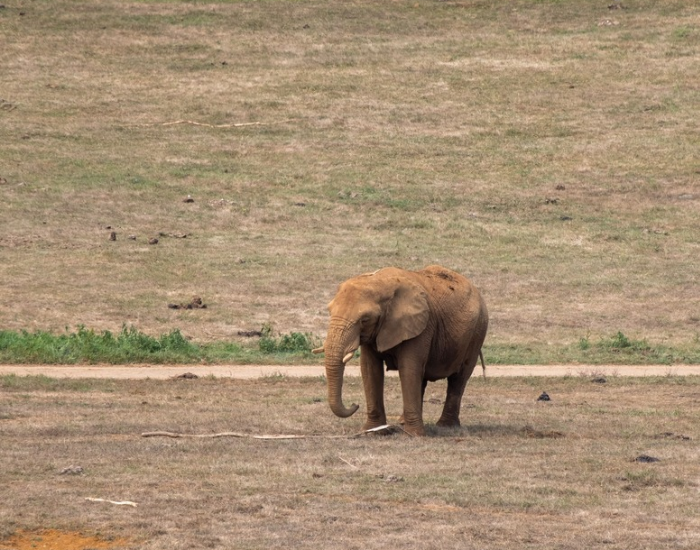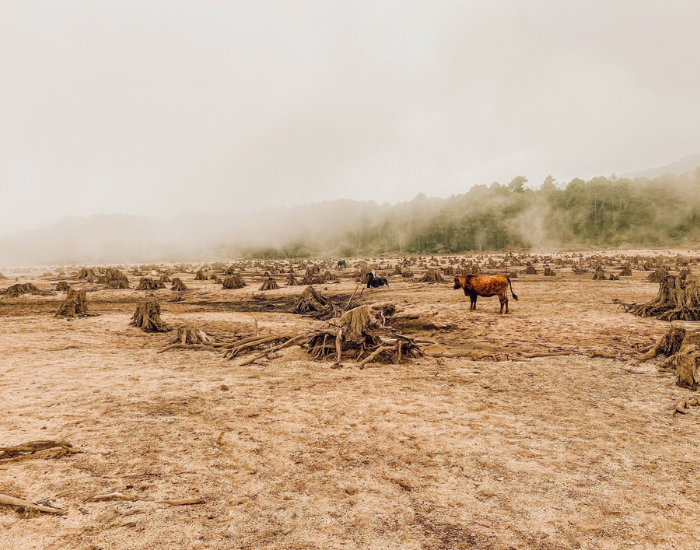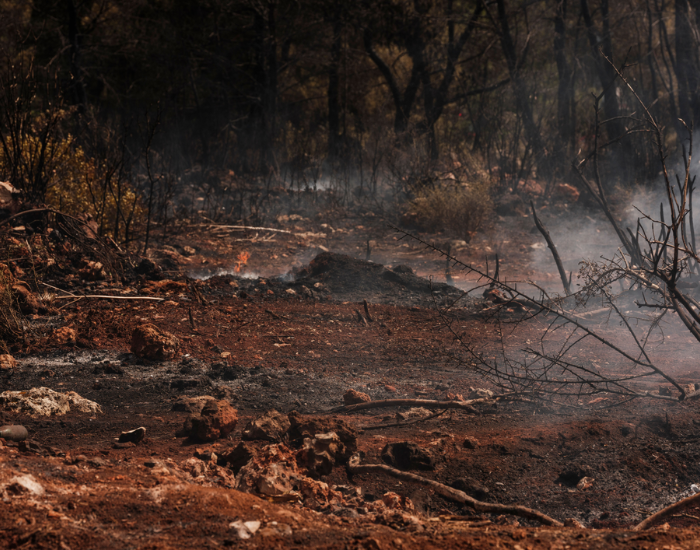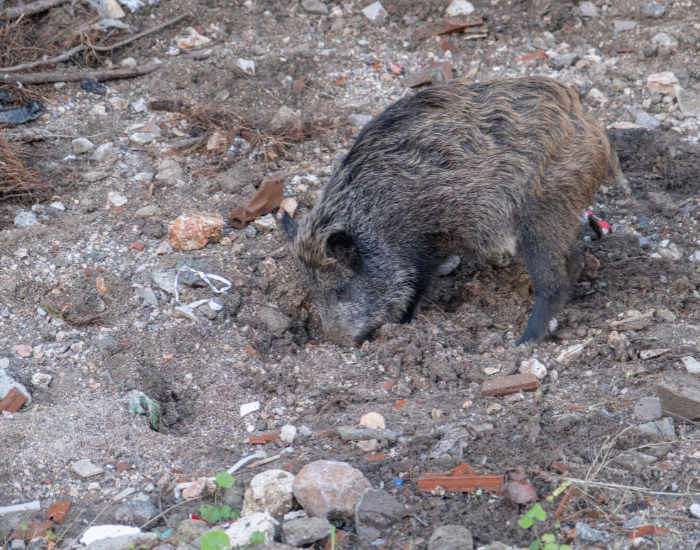
Habitat Loss

We want you to have a greater ability to learn about some of the unpleasant animal issues in our world.
Endangered Species Act:
Critical Habitat Issues
STATEMENT OF JOHN F. KOSTYACK,
SENIOR COUNSEL, ΝΑΤΙΟΝAL WILDLIFE FEDERATION
Mr. Kostyack. Good morning, Mr. Chairman. Thank you for the opportunity to testify today.
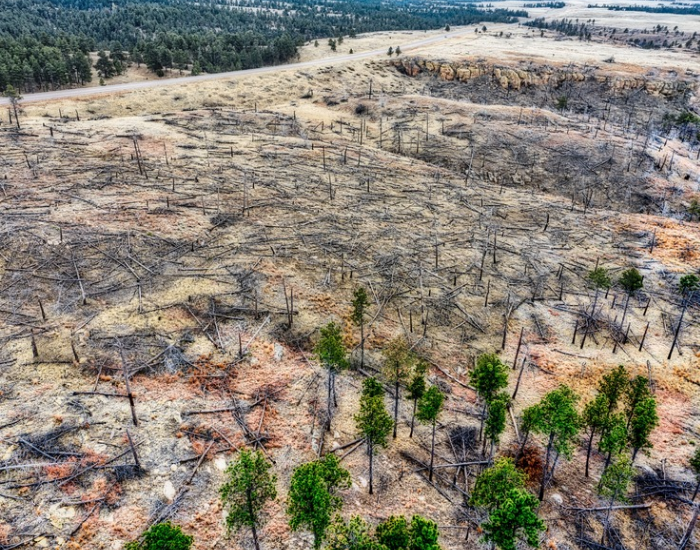
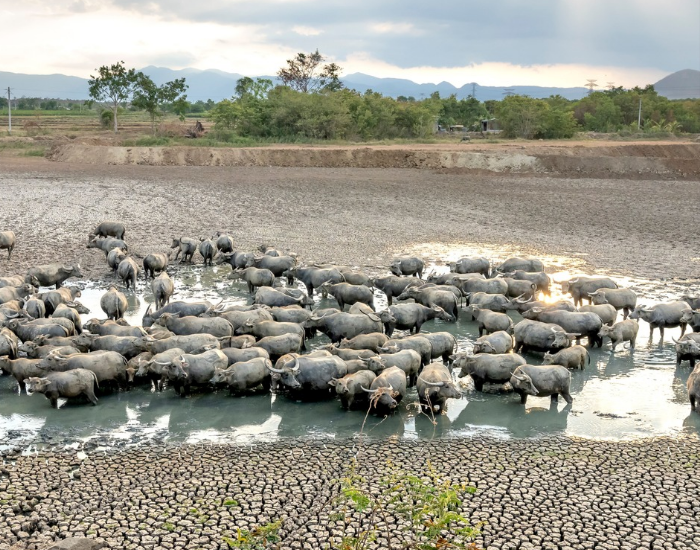
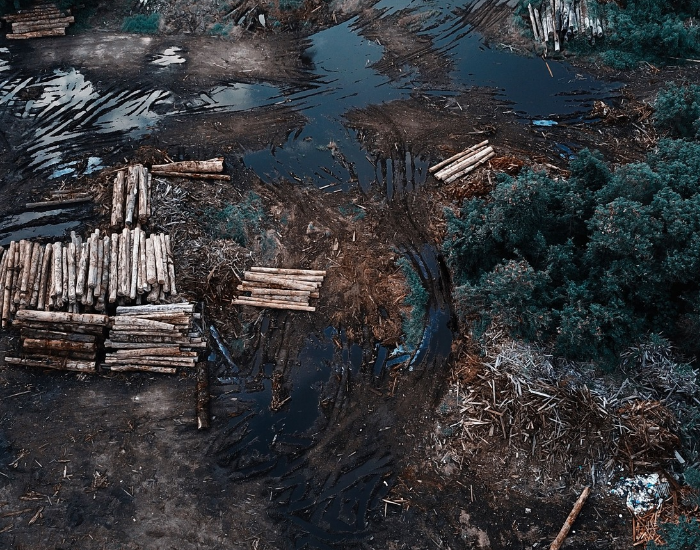
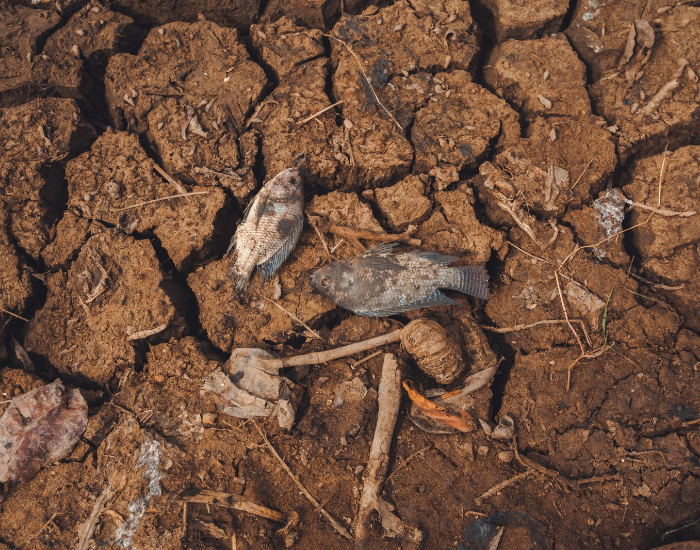
I would like you to know at the outset we’re at the 30th anniversary year now of the Endangered Species Act. We have a lot to celebrate. Many species that were plummeting toward extinction today have been stabilized and many others are on the path to recovery.Yet at the same time, there are species, too many species, that are not yet on the path to recovery. Scientists tell us the No. 1 reason for that is habitat, habitat loss, fragmentation, degradation. We need to do a better job of protecting habitat.
Critical habitat is one of the most important features of the Endangered Species Act to address the habitat issue. In my written testimony I go into much more depth than I will have time for right now to lay out the various reasons why critical habitat is so important. Real briefly, it serves an important educational function. It protects habitats that otherwise would not be protected by other features of the Endangered Species Act. And it has a clear mandate for the Federal agencies.
Now, I would be the last to argue that implementation of critical habitat has gone well over the years. We’ve had a lot of problems. I just recently co-authored a law review article to get into this. So I’ve been following it pretty closely. I’d like to walk through about seven suggestions for how we can improve the process.
First, the services have to do a better job of defining which lands and waters are essential to species conservation. The Act sets forth a three step process for designating critical habitat. The first step is the inclusion process, where habitats essential to the conservation of species are identified. The second part is the economic impact analysis. And the third part is the exclusion process where you can look at the economic impacts and determine if the benefits of exclusion outweigh the benefits of inclusion.
Unfortunately, the services have short-circuited that process and have excluded many, many millions of acres of important habitat in the first step. The one example I can give you is the Mexican spotted owl situation, where the Fish and Wildlife Service excluded over 90 percent of known owl locations from critical habitat, in the definitional process of what is critical habitat, the first step. These are areas where the logging industry held sway, where protection was needed. There was never any cost benefit analysis of that.
So that needs to be fixed. There needs to be new guidance and the services need to be directed to make that key determination, inform the public which habitats are essential for the conservation of the species.
Second is, change the timing of the designations. I would agree with the comments that have been made up to now that we can get better science into the designation of critical habitat if the timing were changed to align with the preparation of the recovery plan. I was around during the discussions over S. 1100, in fact, I testified back then. At the time when the bill was first introduced, we made some suggestions of how to improve the bill.
The committee was actually quite helpful in bringing all the interest groups together and making some key changes. And in the end, it was a bill that we could support. And in essence, it provides for deadlines for both recovery plans and critical habitat, and aligned those deadlines. Perhaps equally important, it provided for the cleanup of the backlog of critical habitat designations. So a similarly targeted approach to improving the process would be welcome today.
Third, there needs to be guidance on the economic impact analysis. We’ve had major problems, particularly with the Administration’s adoption of the controversial New Mexico Cattle Growers ruling out of the Tenth Circuit. That ruling, inconsistent with the Endangered Species Act, has expanded the economic impact analysis to go way beyond looking at the impacts of critical habitat. Looking at the impacts of critical habitat alone are costly enough. Expanding the process even further is a major mistake.
And to add insult to injury, during the reevaluation of all these economic impacts, the Administration has pulled back on protection of species. And that is causing major problems for our listed species. At a minimum, the Administration should begin a rule-making process to discuss how to do economic impact analysis.
Fourth, there needs to be some kind of limit on the exclusions from critical habitat. The Administration has signaled that it is embarking on a major expansion of this third step in the critical habitat process where habitats that have already been deemed to be essential to the conservation of the species are excluded from the critical habitat designation. It’s extremely misguided, in our opinion, to be pushing for all the Department of Defense lands to be excluded from critical habitat. The INRMPs are not an adequate substitute. In fact, we have an inspector general report out of the Defense Department that says we don’t even have data on whether or not these INRMPs are being implemented.
So it’s a worrisome trend on the part of the Administration to basically open the doors wide and to exclude all kinds of habitat from the critical habitat designation without setting any standards. We need some standards to be set.
Fifth, the adverse modification definition in the regulations needs to be revised. The Sierra Club v. Fish and Wildlife Service case was quite eloquent in laying out the reasons. In the past, under this regulation, adverse modification has been limited only to situations where an action would affect both recovery and the short term survival of species. That’s not what the Act says. Critical habitat is to deal with situations where the recovery of the species by itself is impacted, and the Administration 2 years after the issuance of that ruling, over 2 years, still has not responded. It needs to fix this problem.
Sixth, the public needs to be educated better about critical habitat. There is so much confusion about this aspect of the law. I would cite a New York Times article, March 17th, 2003, where developers claim that the proposed habitat designation for the pygmy owl in southern Arizona would effectively bar development of 1.2 million acres of private, developable land in the Tucson area. This assertion, unfortunately pretty typical in the critical habitat debate, is way out of line with reality.
There is no effect of a critical habitat designation on private land unless a Federal permit or Federal funding is involved. And even in those cases where there is a Federal action on private land, it doesn’t mean that the development is stopped. It means that a consultation happens.
So these kinds of statements in the media essentially claiming that the world is going to come to an end as a result of critical habitat need to be responded to. The Administration has an obligation to build public support for the Endangered Species Act, not to allow the Act to be undermined.
Seventh, I guess I’ll make this my final recommendation, perhaps the most important one. The funding situation does need to be addressed. So many of these problems can be avoided, the train wrecks can be avoided if the Congress would simply appropriate sufficient money to designate critical habitat and carry out the other basic functions of the Act….
STATEMENT OF JOHN F. KOSTYACK,
SENIOR COUNSEL, NATIONAL WILDLIFE FEDERATION
Good morning, Chairman Crapo and members of the subcommittee. My name is John Kostyack, and I am here to speak on behalf of the National Wildlife Federation, the nation’s largest member-supported conservation education and advocacy organization.
I greatly appreciate the opportunity to testify today regarding critical habitat protections under the Endangered Species Act (ESA). I have been working on ESA issues for nearly 10 years, serving as a litigating attorney, a policy analyst and commentator, and most recently, as manager of NWF’s Species Conservation program. Based on this experience, I have developed an ever-increasing recognition of the importance of critical habitat. At the same time, I have come to recognize that significant changes are needed in how the two Federal wildlife agencies designate and protect critical habitat. My testimony explains why critical habitat is important and suggests measures that could be taken to make it work better.THE IMPORTANCE OF CRITICAL HABITAT
The ESA reaches its 30th anniversary this year, and there is much to celebrate. Hundreds of species that were once heading toward extinction are now either recovering or at least stabilized. Across the country, people recognize the ESA as a vitally important law for protecting the nation’s precious biological heritage.
Yet many of the species on the ESA’s list of threatened and endangered species are not yet on the path to recovery. Scientists tell us that the chief reason why so many of our animal and plant species are declining toward extinction is habitat loss, fragmentation and degradation. We need to do a better job protecting, managing and restoring habitats. We cannot hope to save endangered species until we come to grips with the continual, piecemeal loss of their habitats, even after their listing under the ESA. It hardly matters what else we do for an endangered species if we fail to protect its habitat. Congress itself recognized this essential point when it enacted the ESA in 1973, stating at the outset its that its purpose was to conserve “the ecosystems upon which endangered species and threatened species depend.”
Congress and the Administration should now focus on improving implementation of each of the ESA provisions that conserve habitats. Looking first at the critical habitat provision, as this subcommittee is doing today, makes sense. For at least three reasons, the ESA’s requirement to designate and protect a listed species’ critical habitat is among the most important of the ESA’s habitat protection provisions.
First, Section 4 of the ESA requires that, with few exceptions, critical habitat be designated for every species listed as either endangered or threatened. The ESA’s implementing regulations require that when designating critical habitat, the U.S. Fish and Wildlife Service or National Marine Fisheries Service (“Services”) must produce maps delineating all designated critical habitat. Drawing lines on a map gives clear guidance to the public about which lands and waters are particularly valuable to listed species. This helps educate people about the natural world they inhabit, and, more importantly, helps to ensure that key habitats are not destroyed out of sheer ignorance. As the U.S. Fish and Wildlife Service stated in connection with its designation of critical habitat for the northern spotted owl:
“[C]ritical habitat serves to preserve options for a species’ eventual recovery [It] helps focus conservation activities by identifying areas that contain essential habitat features (primary constituent elements) regardless of whether or not they are currently occupied by the listed species, thus alerting the public to the importance of an area in the conservation of a listed species.” 57 FR 1796 (emphasis added).
Second, Section 3 of the ESA defines critical habitat as encompassing all areas “essential for the conservation of the species,” and defines conservation as those methods and procedures needed to achieve species recovery. Thus, the critical habitat provisions are designed to protect more than just the habitat occupied by the species in its depleted state; they ensure that all habitats needed for recovery are taken into account.
Third, once a species’ critical habitat is established, Section 7 of the ESA prohibits Federal agencies from carrying out, funding or permitting any action that is likely to result in the “destruction or adverse modification” of critical habitat. Thus, Section 7 gives Federal agencies a clear mandate to protect the habitat essential for species recovery.
MAKING THE CRITICAL HABITAT PROVISIONS WORK BETTER
Seven steps by the Administration and/or Congress would make the ESA’s critical habitat provisions work better for both people and wildlife.
Define Which Lands And Waters Are “Essential” to Conservation.
Critical habitat designation is essentially a three-step process:
• First, the Services must define what habitat areas, whether occupied by the species or not, are “essential to the conservation of the species,” and what habitat areas occupied by the species “may require special management considerations or protection.” 16 U.S.C. §1532(5).
• Second, the Services must consider “the economic impact, and any other relevant impact, of specifying any particular area as critical habitat.” 16 U.S.C. §1533(b)(2).
• Third, the Services “may exclude any area from critical habitat” if they determine “that the benefits of such exclusion outweigh the benefits of specifying such area,” unless they find that a failure to designate a particular area “will result in the extinction of the species.” Id.
Unfortunately, the Services often have excluded lands from critical habitat in the first step of this process despite the fact that the lands are “essential to the conservation of the species.” This approach has undermined the vital role that critical habitat plays in species recovery. Only by defining which lands and waters are essential to conservation can the public be informed about which habitats are needed and empowered to begin devising measures for saving those habitats. Any exclusions from critical habitat should be handled in the third step of the designation process, not the first.
The Services have sometimes justified the exclusion of lands essential to the conservation of a species on the ground that they are protected by other regulatory mechanisms and thus may be receiving “special management considerations or protection” within the meaning of ESA §3(5). However, this justification reflects a fundamental misunderstanding of ESA §3(5) and the purpose of critical habitat. Under ESA §3(5), the fact that a particular area is protected through a habitat conservation plan or as a park argues for its status as critical habitat, not against. Although a listed species may already be receiving “special management considerations or protection” on certain parcels of land, it would receive important additional benefits from a critical habitat designation on those parcels. For example, such a designation educates land managers and others about the importance of maintaining and enforcing those management considerations or protections. It also provides a “safety net” of protection in the event those management considerations or protections are removed.
In Center for Biological Diversity v. Norton, 240 F. Supp. 2d 1090 (D. Ariz. 2003), a Federal court struck down the Services’ interpretation of ESA §3(5)’s “special management considerations or protection” language. The court explained that this interpretation which limits the number of allowable protections to a listed species’ habitat is not only “unsupported by the English language, but runs contrary to one of the enunciated policies of the ESA.”
The Services should issue new regulations defining “special management consideration or protection.” The new definition should recognize that the existence of special management considerations in an area does not operate as a basis for excluding habitat there from designation. To the contrary, it should lead the Services to presume that such an area is, in fact, critical habitat.
A consistent methodology for drawing critical habitat maps is also needed. No commonly accepted methodology has been developed to date. In some circumstances, the Services have taken short cuts such as drawing lines around entire regions, encircling both habitat areas and developed areas. The Service should solicit public and scientific input on alternative approaches to map drawing, with the ultimate goal of achieving a uniform methodology that is both cost-effective and scientifically rigorous.
Change the Timing of Designations.
To ensure that designation of critical habitat is based on carefully developed science, Congress must change the deadlines for critical habitat designations. Under current law, which requires designation at the time of listing or at most 1 year thereafter, the Services have little time to gather the best scientific thinking on a species recovery needs. In this general time period, the Services are focused on the challenges of making the listing determination and on the threats contributing to species decline, not on what is needed to ensure species recovery. Initial designations should be postponed to coincide with development of the recovery plan, so that the recovery team’s thinking helps to inform the decision on the scope of critical habitat. Similarly, the decision on critical habitat can help inform the recovery plan.
Because the ESA does not currently impose deadlines for completion of recovery plans, Congress should impose deadlines of 3 years from the date of listing for both critical habitat designations and recovery plans. This was the approach taken in S. 1100, a bill introduced in 1999 by the late Senator Chafee (R-RI), Senator Crapo (R-ID) and Senator Domenici (R-NM). The bill was approved by the Senate Environment and Public Works Committee and won the support of conservationists, industry groups and the Clinton Administration. It also established a reasonable and enforceable schedule for clearing up the critical habitat backlog. A similarly targeted approach to improving the critical habitat process would be welcome today.
Issue Guidance on Economic Impact Analysis.
In New Mexico Cattle Growers Ass’n v. U.S. Fish & Wildlife Service, 248 F.3d 1277 (10th Cir. 2001), the court upheld an industry challenge to the ESA §4(b)(2) economic impact analysis of the southwest willow flycatcher’s critical habitat. Without soliciting public comment, the Administration elected to adopt this controversial ruling as its national policy, rather than to fix the underlying problems that led to the lawsuit. As discussed below, this decision is wreaking serious havoc with the entire critical habitat program. New guidance on ESA §4(b)(2) economic impact analyses is needed to minimize the damage caused by the Administration’s wrong-headed approach.
In New Mexico Cattle Growers, the industry plaintiffs targeted the U.S. Fish and Wildlife Service’s economic analysis of the southwestern willow flycatcher’s critical habitat designation, which concluded that there would be no costs associated with the designation. This no-cost conclusion was arrived at through use of the Services’ baseline method, which called for analysis only of the impacts of the critical habitat designation, not of the impacts of other ESA protections (such as jeopardy and takings) that follow automatically from listing. Applying the baseline method, the Service found that critical habitat designation alone has no costs. Underlying this finding was the Service’s controversial view that critical habitat designations duplicate the protections provided by the ESA’s jeopardy provision. However, the Tenth Circuit did not question this controversial view of critical habitat. Instead, it overturned the Service’s baseline method, finding that “Congress intended that the FWS conduct a full analysis of all of the economic impacts of a critical habitat designation, regardless of whether those impacts are attributable co-extensively to other causes.Without soliciting public comment or waiting for the judgment of any other Circuit Court, and without revisiting its controversial assertions about the redundancy of critical habitat, the Bush Administration has quietly adopted the New Mexico Cattle Growers holding as Administration policy. This decision increases the risk to imperiled species in several ways.
First, virtually all of the critical habitat designations across the country will now likely need to be redone, draining precious resources away from imperiled species awaiting listing, and delaying critical habitat protections for species that have never had a designation in the first place.
Second, because the Administration has refused to keep critical habitat protections in place during the remand periods, habitat already designated as important for species recovery will lose vital protection for years while new economic analyses are performed.
Third, because the Administration will now begin evaluating the economic impacts of listing, the difficulty of getting new species listed will increase. Meanwhile, the longstanding ESA principle that listing determinations be made based solely on science will be in jeopardy.
Fourth, as Administration officials have suggested in comments to the media, the extensive re-write of critical habitat rules will ultimately lead to smaller areas covered by the critical habitat designations, as the Services begin to use the ESA §4(b) (2) exclusion authority in unprecedented ways.
To ensure that vital species protections are not lost, a rule making is needed on how to perform an ESA §4(b)(2) economic analysis. Whether to follow New Mexico Cattle Growers or whether to reinstate the baseline approach is an important policy question that should be answered only after a full public airing of alternatives. The Administration should begin this process by issuing an advanced notice of proposed rule making (ANPR) concerning procedural and substantive standards for implementing Section 4(b)(2). Although an ANPR is not required for such a rule making, it would allow the public to weigh in with the Administration before its views become locked in.
In an ANPR, and the proposed and final regulation that follows, the Administration should pay close attention to two issues.
First, any methodology must be cost-effective and time-sensitive, so that overall ESA implementation is not undermined by the costs and delays of the Section 4(b)(2) process. This is a strong argument for reinstating the baseline approach and not following New Mexico Cattle Growers. It is extremely wasteful to analyze the impacts of ESA protections other than critical habitat when the sole purpose of the ESA §4(b)(2) process is to decide the scope of critical habitat protection.
Second, any methodology must give a fair accounting to the ecological benefits of designating critical habitat and the costs of not protecting species and ecosystems. Too often, economic studies have failed to take into account the ecological limits of economic activity. Input from experts in the rapidly growing field of ecological economics should be solicited to ensure that a truly balanced methodology for economic analysis is developed.
Set Limits on Exclusions from Critical Habitat.
In various ways, the current Administration has signaled that a major expansion of the ESA §4(b)(2) process for excluding lands from critical habitat is underway. A random sampling of recent critical habitat designations shows that this Administration has begun using ESA §4(b)(2) to exclude sizable parcels of land from critical habitat designations. In a New York Times article dated March 17, 2003, Assistant Interior Secretary Manson acknowledged that “we in this Administration have been looking at [this exclusion provision] quite a bit more robustly than has been done in the past.” In testimony before this committee last week, Mr. Manson stated that entire Defense Department installations should be excluded from critical habitat designations simply upon a showing that a Sikes Act management plan has been completed. This pronouncement was made despite findings by the Defense Department’s Inspector General that there is no documented evidence of implementation of those management plans.
What the Administration has not said about the ESA §4(b)(2) exclusion process is where are the limits. Lands and waters deemed by the Services to be “essential” for species conservation should not arbitrarily be denied protection. Policy guidance setting parameters for the ESA §4(b)(2) exclusion process is needed now, before a host of critical habitat designations are finalized, to ensure that the letter and spirit of the ESA’s critical habitat provisions are not undermined by ESA §4(b)(2) exclusions.
Revise “Adverse Modification” Regulation.
Two years ago, the court in Sierra Club v. U.S. Fish and Wildlife Service, 245 F.3d 434 (5th Cir. 2001), held that critical habitat serves the goal of species recovery, and comes into play even when species survival is not immediately affected. For this reason, the court struck down the 1986 regulation defining “adverse modification” of critical habitat, which limited the application of critical habitat to actions affecting both recovery and survival.
To date, the Administration still has not responded to this court ruling. In fact, despite its extensive behind-the-scenes policy making on species-specific critical habitat determinations, it has never enunciated and sought public comment on its overall approach to critical habitat. To date, its species-specific actions have moved in a direction opposite from what the court in Sierra Club suggested was necessary. Rather than using critical habitat in a manner that furthers species recovery, it has weakened critical habitat protections.
Regulatory action is needed now to redefine “adverse modification” of critical habitat consistent with the Fifth Circuit’s decision in Sierra Club. If the Administration believes that critical habitat means something other than habitat essential to a species recovery, then it is obliged to state what that meaning is, and explain how the ESA would achieve its recovery goal in the absence of the critical habitat tool.
In addition to furthering the conservation of listed species, revising the “adverse modification” regulation would also help the Administration avoid wasting precious resources in ESA §4(b)(2) economic analyses. The New Mexico Cattle Growers ruling calling for expanded economic analyses stemmed from the Service’s rationale that the “adverse modification” definition is redundant with jeopardy. If the Administration were to fix its “adverse modification” definition, then the Services would be free to return to the less costly baseline approach to ESA §4(b)(2) economic analyses without violating New Mexico Cattle Growers. The baseline approach would lead consistently to findings of both positive and negative impacts of critical habitat designation, and thus the basis for the prohibition against this approach in New Mexico Cattle Growers would disappear.
Educate the Public.
In the March 17, 2003, New York Times article discussed above, developers argued that that any benefit of the proposed critical habitat designation for the endangered pygmy-owl in Arizona would be outweighed “by the economic costs of effectively barring development in 1.2 million acres, or two-thirds of the privately held, developable land in the area.” This assertion, which was not rebutted elsewhere in the article or in any subsequent statements by the Administration, is not remotely connected with the truth. As discussed earlier, a critical habitat designation only affects actions carried out, permitted or funded by the Federal Government. In other words, most private land development is completely unaffected. Moreover, even where a Federal action is contemplated, the designation of critical habitat does not mean that the action is terminated. It simply means that a consultation must take place with one of the Services to ensure that the action does not cause adverse modification of the critical habitat.
Unfortunately, the kind of alarmism about critical habitat voiced in the New York Times article is frequently employed by individuals seeking to undermine public support for the ESA, with the ultimate goal of evading their own responsibilities under the law. This is not surprising. What is disappointing, however, is the failure of the Services to clarify for the public what critical habitat does and does not do.
Critical habitat is a key provision in one of the nation’s most important environmental laws. It is time for the agencies charged with implementing this provision to launch a public education campaign to explain the meaning and purpose of critical habitat and to build the necessary public support for its protection.
Provide Adequate Funding.
The Services’ budgets for ESA implementation has never been adequate. In fact, the chronic budget shortfalls for listing and critical habitat determinations have become worse in recent years as more species have joined the threatened and endangered lists and as the Services have embarked upon a massive reevaluation of their economic analyses. To make the critical habitat program succeed, the Administration must request, and Congress must appropriate, the funds needed to remedy this growing budgetary gap. The nation’s goal of recovering and delisting species can be achieved only if this essential habitat protection program is properly funded….
STATEMENT OF WILLIAM J. SNAPE, III,
VICE PRESIDENT AND GENERAL COUNSEL, DEFENDERS OF WILDLIFE
Mr. Snape. Thank you, Mr. Chairman.
As you have heard this morning, Mr. Chairman, there are so many issues that emanate from a discussion of the critical habitat provisions in the Endangered Species Act. And as I begin my remarks, I’m going to try to concentrate on three main issues, given the time constraints.
I think overall, I have good news. And that is, for the most part, with a couple of significant exceptions, I have agreed with what has been said on this particular panel. If there is bad news, it is that I think there are some significant omissions and clarifications that I would like to make. I’ll talk about those in my three points. And I want to thank particularly John Kostyack who gave very sound testimony, and it makes my job easier.On the benefits of critical habitat, I guess ultimately I just fundamentally disagree that there are no benefits to critical habitat. That doesn’t mean that critical habitat helps each species equally. I don’t believe that either. For example, we’re very involved with pygmy owl conservation in southern Arizona. What has happened in southern Arizona is that pygmy owl habitat protection has become in many ways, not totally, but in many ways a catalyst, a surrogate, almost, for a much broader conservation plan that protects upwards of 100 species.
Thus when you talk about the benefits and the costs of protecting the pygmy owl and its critical habitat, I think you’ve got to talk about all the benefits. I think Mr. Sunding only really had it half correct. The reality is that the pygmy owl critical habitat in southern Arizona helps protect open space, which drives property values up near that open space, and it saves localities significant infrastructure costs from new fire houses, new roads, new utilities. And it helps a lot with water conservation in limiting out of control growth in southern Arizona, which is, as you know, quite dry.
There have been economic studies that bear these economic benefits out, and I think the Senator would be very much helped by taking a look at some of these different studies. Because I think what you’re really hearing on the issue of ecological economics and economic analysis under the critical habitat provision is that ecological economics is a growing discipline, and there is a lot of good thinking going on right now, but I’m not sure that we have all the calculations down pat. I appreciated Mr. Manson’s comments that, indeed, they’re working on that.
So, point No. 1 is that I think, for at least some species, critical habitat unquestionably helps listed species, and indeed may help the local economics as well. Many local officials in southern Arizona support strong pygmy owl conservation.
The second point I want to make is that I think the New Mexico Cattle Growers’ Association judgment is wrongly decided, and I think it’s wrongly decided in a way that will harm the very economic interests that are now supporting it. The fundamental reason I think it is incorrectly decided is that it creates a second baseline of economic analysis that goes against even OMB’s recitation of how these types of economic studies should be undertaken. Because what it now does is say, “Don’t just look at the cost of critical habitat; look at the cost of critical habitat and listing in doing these economic analyses.” I think that’s the wrong way to go.
I think the confusion, and the reason why the court decided the case the way they did is that the Federal Government has been deciding these critical habitat decisions under the wrong standard. They have basically said that jeopardy and adverse modification are the same standard. Therefore, if you’re treating them as the same standard, the economic analysis is going to show no appreciable impact.
So I think the problem with Cattle Growers is the standard that was being used to differentiate between jeopardy and adverse modification. The solution, I think, went overboard and I think is going to harm everybody. In fact, I think we’re going to waste a lot of time and money doing complicated economic analyses that will really help no one in the real world. That is my take on what’s going to happen as a result of Cattle Growers. And we’re already beginning to see it right now.
I have 1 minute to go to make my third point, and that is, giving two more examples of species that could very much benefit by critical habitat, and that right now do not have critical habitat protection. One is the Sonoran pronghorn in southern Arizona. Less than 20 individuals, or about 20 individuals are left on the U.S. side of the border. We may see the extirpation of this species within the next several years.
And the other species, Senator, I picked from your home State, Idaho. That’s the woodland caribou. As you may know, there are less than 20 woodland caribou on the U.S. side of the border. The woodland caribou clearly needs all the help it can get. It is an old growth forest [that] obligate species.
The point I want to end with on woodland caribou and the sort of creative thinking and “outside-the-box thinking” I think we need to do in critical habitat. I think the woodland caribou protection in the United States is very relevant to an issue that you may not think has a lot to do with critical habitat [in] the U.S./Canada Softwood Lumber Agreement. The reality is that Canada is cutting down its its forests in woodland caribou habitat at a rate that is harming U.S. efforts to protect this species.
The only way, in my opinion, that you’re going to deal with that economic dispute that’s now underway is to have some sort of commonality with regard to the conservation baseline that the two countries are undertaking, and perhaps as outlandish as it might initially seem, a bi-national critical habitat proposal for this type of species, which would solve both economic and environmental problems. On that sort of dream note, I will end my testimony. I thank you, Mr. Chairman.
Senator Crapo. Thank you, Mr. Snape. I’m sure you saw me smiling when you brought up the soft wood lumber agreement. I’ve just been appointed by the majority leader to be the co-chairman on the Senate side of the Canada-U.S. interparliamentary group or whatever it is which will be meeting this year to deal with a number of issues, not the least of which will be the Canadian soft wood lumber agreement. If your suggestion can help us resolve that issue, I’m going to look at it very hard.
Let me just toss out, I want to try to get into a couple of specific questions with each of you, but I also would like to get some interplay between the members of the panel on the overall issues here. But let me throw out a question at the outset to see whether we have some consensus building here. There’s a lot of issues, obviously. But the core issue for the timing question of the designation of critical habitat it seems to me is one, from what I’ve heard, may not be one in which there’s a lot of conflict. Is there any disagreement among the panelists as to whether it would be beneficial to allow the Service discretion in the timing of the designation of critical habitat? Would anyone disagree with a statutory change allowing that? Mr. Snape?
Mr. Snape. Mr. Chairman, like some of the groups that have already spoken, we also supported S. 1100 at the time it was introduced and discussed by this committee. The only point I would make about that particular bill and on the issue of timing is that the “deal” that we struck there was very closely negotiated. So if we were indeed going to go back to that, every word and semicolon mattered.
But with that caveat, no, I think that would be a rational and helpful change.
Senator Crapo. Mr. Kostyack?
Mr. Kostyack. Two comments. One is, part of the deal, the package, was to deal with the backlog. Because one thing you don’t want is to create a set of deadlines for critical habitat where the newly listed species actually leapfrog ahead of all those other species that have been waiting attention. That’s a subtlety that will need to be dealt with.
The other comment I would make is that although we certainly support pushing back the deadline, giving the Service complete discretion on when to designate would be problematic. In fact, the deadlines were put in the Act in 1978, 5 years after the initial enactment of the Endangered Species Act, because for the first 5 years, there were no deadlines and virtually no critical habitat was being designated.
I think we know what happens when there are no deadlines whatsoever, we just need to adjust them and give the Service a little more time to get the science together.
Senator Crapo. Thank you. Anybody else want to pitch in on that?
Mr. Snape. We agree with that.
Senator Crapo. OK, thank you. I don’t want to complicate matters, but I do want to — maybe it’s just my curiosity wants to explore something. Mr. Kostyack, you actually brought up in the hearing we had three or 4 years ago. And you may recall in your testimony back in May 1999 that you referenced the concept of survival habitat, which was a notion that had come up, I don’t know where it originated with it, but I associate it with the National Academy of Sciences National Research Council, which had studied this issue and had come up with the notion that — I’m probably going to do a bad job of characterizing the issue.
But if I understand what they were saying, it was that there were some benefits to critical habitat designation. There were also some serious problems with the timing and the way it was being done. And that perhaps we could create another concept called survival habitat, which would be more narrowly defined at an earlier stage and would identify sort of the core areas protected for survival, as opposed to what we are dealing with now in the critical habitat arena.
I know at that time you were kind of positive about that concept, Mr. Kostyack. Would you like to discuss that today and tell us whether we should leave that alone and go with what we’ve got, or the consensus we’re building, or whether that’s something we ought to look at?
Mr. Kostyack. I think it is something we ought to look at, if we can build consensus around it. The notion of survival habitat is, it does take several years after the listing of a species, which by the way is really not a listing [that] is not focused on recovery. A listing is focused on threats, how threatened is the species, do we need to give it immediate attention. So there is a lot of scientific work that needs to be done after the listing of a species. And I would argue, two or 3 years during the process of recovery planning is also the time to figuring out what habitats are going to be needed for recovery.
Now, in that interim period, what we don’t want to have is major setbacks for the species, so basically we’re boxing ourselves into a corner and limiting our options. So what can we do about protecting the habitat where there is broad scientific consensus, just to keep the species at its status quo, to prevent further slippage? Can we at least all get a consensus around this sort of core, basic habitat that there is no dispute about?
And then the tougher questions the scientists will need to resolve over that, say, 3 year period is, all right, [is] to achieve true recovery, for which many species means restoring it to habitats where they’re not found today [since] they’re in a severely depleted state, oftentimes, by the time they’re listed the tougher questions the scientists will have to wrestle with over the 3 year period is, what are going to be the recovery habitats. The survival habitats are a narrower concept I think you can get more immediate scientific consensus around….
STATEMENT OF WILLIAM J. SNAPE III,
DEFENDERS OF WILDLIFE
Introduction.
Thank you, Mr. Chairman and Ranking Member of the Subcommittee on Fisheries, Wildlife, and Water. On behalf of Defenders of Wildlife (Defenders), where I am vice-president and chief counsel, as well as our approximately one million members & supporters, I appreciate the opportunity to address the value of critical habitat under the Endangered Species Act (“ESA” or “Act”), 16 U.S.C. Sections 1531 et seq., particularly pursuant to Section 4 and 7 of the Act. 16 U.S.C. §§1533, 1536. I am also chairman of the Endangered Species Coalition Board.
Legal Benefits.
The tangible benefit of critical habitat is reflected in at least two basic ways under the ESA. First, the definition of the term critical habitat says that it is the “specific areas” that are “essential to the conservation of the species.” 16 U.S.C. §1532(5) (emphasis added). See also 16 U.S.C. §1532(3) (“conservation” means to use “all methods and procedures which are necessary to bring any endangered species or threatened species to the point at which the measures provided pursuant to this Act are no longer necessary.”). Thus, critical habitat is a fundamental tool in recovering listed species, the goal and mandate of the Act. Second, the ESA Section 7 standards governing “consultations” between the Services (either the Fish and Wildlife Service, FWS, or the National Marine Fisheries Service, NMFS) and a Federal action agency (e.g., Forest Service, Department of Transportation or Army Corps of Engineers) are distinctly different depending upon whether a listed species possesses critical habitat or not. See, e.g., Sierra Club v. U.S. FWS, 245 F.3d 434 (5th Cir. 2001) (discussing and differentiating, inter alia, the “jeopardy” and “adverse modification” standards in ESA Section 7(a)(2)).
No species’ ecosystem better illustrates the conservation benefit of critical habitat in this context than the endangered cactus ferruginous pygmy owl of southern Arizona’s Sonoran Desert. See, e.g., Defenders of Wildlife v. Ballard, 73 F.Supp.2d 1094 (D. Ariz. 1999) (holding several Federal agency actions illegal based upon lack of adequate Section 7 consultation in an area defined by critical habitat for the pygmy owl). Here, critical habitat for the owl, which the Administration has voluntarily agreed to vacate as it redoes its economic analysis for the designation, has not only spurred the successful and collaborative Sonoran Desert Conservation Plan, but it has also tempered many potentially inappropriate developments in a region that is still thriving with growth. In fact, the temporary lifting of the critical habitat designation has had the negative result of green lighting several troublesome projects opposed by local officials.
Scientific Benefits.
As confirmed in a definitive study by Dr. David Wilcove of Princeton University and others, by far the leading contributor to wildlife species imperilment is habitat loss. Not surprisingly, many ESA recovery plans reflect this biological reality. This, of course, is the whole policy point behind the critical habitat provisions in the Act. See, e.g., House Committee on Merchant Marine and Fisheries, H.R. Rep. No. 887 (94th Cong., 2d Sess. at 3). The leading purpose of the ESA is “to provide a means whereby the ecosystems upon which endangered species and threatened species depend may be conserved.” 16 U.S.C. §1532(b). Ecosystems largely consist of habitat.
The piping plover is a good example of a species that undeniably needs habitat protection, as specified clearly, both in its recovery plans and in all leading scientific literature. Yet, the final rules designating critical habitat for the piping plover are under attack by interests either ignorant of or hostile to the goals of conservation. With only 72 adults left in the Great Lakes breeding ecosystem, this species needs all the help it can get in Michigan, Wisconsin and Minnesota, as well as in its wintering range that includes States such as North Carolina, Florida, and Louisiana. Even more challenging for this species is the fact that its habitat-beaches influenced by ocean or river tides can change from year to year. Unfortunately, the Administration illegally and unwisely excluded vital areas such as Padre Island National Seashore in its final rule for the piping plover’s wintering habitat. See, e.g., Center for Biological Diversity v. Norton, 240 F.Supp.2d 1090 (D. Ariz.2003) (holding critical habitat designation for Mexican spotted owl to be illegal because it improperly evaluated benefits of critical habitat protection).
Economic Benefits.
The process of designating critical habitat under the ESA requires the Federal Government to assess important economic information about the species’ habitat area. See 16 U.S.C. §1533(b)(2). However, a combination of: 1) severe budgetary constraints; and 2) significant legal confusion regarding the scope of the Act’s economic analysis requirement, have hampered implementation of this ESA provision. Perhaps the most glaring present problem is New Mexico Cattle Growers Ass’n v. U.S. FWS, 248 F.3d 1277 (10th Cir. 2001), which held that the FWS must create a second economic baseline to take into account the economic impacts of listing in addition to impacts due to critical habitat alone. The FWS is wasting time and resources complying with this order throughout the entire country, not only because the decision was wrongly decided, but also because it represents bad economics.
No ecosystem better captures the economic centrality of habitat than the Colorado River, one of the most heavily managed and allocated rivers in the world. Like a ribbon of life flowing throughout the arid U.S. West, the mighty Colorado is a whimpering trickle by the time it reaches Mexico, sucked almost dry by the millions of humans dependent upon it. Spurred by the critical habitat designation of large native river fish such as the Colorado squawfish, bonytail chub, and razorback sucker, the Federal agencies have finally initiated a rational plan to serve regional people and wildlife protection known as the Lower Colorado River Multi-Species Conservation Plan (MSCP). Although this MSCP presently possesses several key flaws, it is an improvement over the do-nothing past and can be directly attributed to the critical habitat provision in the ESA. See, e.g., Charles Bergman, Red Delta (Fulcrum Press, 2002).
Social Benefits.
The Endangered Species Coalition (ESC), of which Defenders and over 400 other citizen groups across the country are a part, understands that there are frequently misperceptions and sometimes even fear over the critical habitat provisions in the ESA. We think these attitudes are misplaced, but we respect the feelings of those who hold them. We believe the answer includes better public education by the Services, a repudiation of the Cattle Growers case (which we don’t think even serves the Cattle Growers themselves), and better linking of critical habitat with the recovery objectives in the Act. It should be remembered that the only direct benefit of critical habitat under the ESA occurs only when a Federal agency action impacts a listed species with critical habitat.
Two highly imperiled species reinforce our recommendations for increased attention to critical habitat protection. First is the Sonoran pronghorn, North America’s fastest land mammal, which is down to as few as 20 individuals in the United States, largely as a result of uneconomic and subsidized grazing on Bureau of Land Management (BLM) lands in southern Arizona. Second is the equally endangered woodland caribou in northern Idaho national forests (i.e., Idaho Panhandle NF), which possesses as few as 12 individuals in the U.S., again as a result of severe habitat loss, in this case old-growth forests. Neither one of these species has the protection of Section 4(b)(2) of the ESA because they were listed before the critical habitat provision became mandatory in 1978. Both species need and deserve critical habitat protection immediately.
Conclusion.
For many inter-related reasons, some plainly obvious and others more nuanced, critical habitat is a central aspect of the ESA. Its fate in the coming months and years deserves serious discussion. We support proposals that would strengthen both the ecological and economic implementation of critical habitat for threatened and endangered species. In this regard, we stand with our professional colleagues at the National Wildlife Federation, which is also testifying on this important topic this morning. Thank you for your attention.
ATTACHMENT: CRITICAL HABITAT WORKS FOR ENDANGERED SPECIES,
CENTER FOR BIOLOGICAL DIVERSITY (2003).
Critical Habitat is Essential to Ecosystem Protection.
The Endangered Species Act (ESA) relies on two broad strategies: the listing of species as threatened or endangered, and the designation of critical habitat areas. The listing of species requires that private citizens, States, and Federal agencies not “jeopardize” endangered species and that they attempt to mitigate any harm (i.e. “take”) done to them. The ESA’s take limitations only apply to the small areas where the species still exist. It does not apply to the much larger area where the species used to live, and where it must reestablish itself if it is to recover. Listing, in and of itself, has proven an effective shield against extinction, but is not sufficient to recover and delist species.
In adding the critical habitat provision to the ESA, Congress clearly saw that species-based conservation efforts must be augmented with habitat-based measures: “It is the committee’s view that classifying a species as endangered or threatened is only the first step in insuring its survival. Of equal or more importance is the determination of the habitat necessary for that species’ continued existence If the protection of endangered and threatened species depends in large measure on the preservation of the species’ habitat, then the ultimate effectiveness of the Endangered Species Act will depend on the designation of critical habitat.”
Critical habitat contains “all areas essential [for] the conservation of the species” where “conservation” is defined as full recovery. They contain most or all of the places where the species still persists, but more importantly, they contain areas where the species used to live and where it must reestablish itself in order to recover. Federal agencies are not permitted to “adversely modify” critical habitat areas. They must instead manage them for the recovery of the species and the ecosystem upon which it depends. Critical habitat does not affect private lands unless their development requires Federal permits.
Critical Habitat Works.
In 1994 and 1996, the U.S. Fish and Wildlife Service assessed the status of all threatened and endangered species under its jurisdiction. Of the 560 species with a known status in 1994, those with critical habitat were 11 percent less likely to be declining and 14 percent more likely to be stable than species without critical habitat. Of the 697 species with a known status in 1996, those with critical habitat were 11 percent more likely to be improving and 13 percent less likely to be declining than those without critical habitat. The benefits of critical habitat accrue over time: those with critical habitat for over 5 years were in better shape than those with critical habitat for 5 years or less.
The following examples show how critical habitat designation makes real, on-the-ground improvement for ecosystems and species.Peninsular Bighorn Sheep. The Peninsular bighorn sheep inhabits the foothills of Southern California’s Peninsular Mountain Ranges. It has declined by 77 percent due to diseases spread by livestock, overgrazing by livestock, ORVs, roads, and urban sprawl. Though the Fish and Wildlife Service first announced in 1985 that it may be endangered, and listed it as an endangered species in 1998, little was done to protect its habitat. By 2000, there were just 334 animals left, leaving more golf courses in the Palm Springs area than bighorn sheep.
In 2001, the U.S. Fish and Wildlife Service designated 845,000 acres of critical habitat. Suddenly, land management began to change. The Bureau of Land Management removed livestock from all 226,026 acres of critical habitat under its jurisdiction, closed illegal roads, and instituted seasonal road closures in critical lambing areas. These protections were not offered to areas outside critical habitat. The U.S. Forest Service likewise removed livestock from all 17,982 acres of critical habitat under its jurisdiction. Local cities have enacted growth decisions to protect portions of the bighorn’s critical habitat.
Desert Tortoise. Desert tortoises in the Mojave Desert have declined by 90 percent since the 1930’s due to livestock overgrazing, car collisions and respiratory disease. Though biologists first warned of its possible extinction in 1970 and the U.S. Fish and Wildlife Service listed it as an endangered species in 1994, few proactive steps were taken to protect its habitat. In response to complaints that its critical habitat areas were being degraded, the Bureau of Land Management issue decisions in 2000 and 2001 prohibiting new or expanded mining operations on 3.4 million acres of the critical habitat, prohibiting or limiting livestock grazing on 2.2 million acres of critical habitat, closing approximately 4,500 miles of illegal roads, and prohibiting off-road vehicles on approximately 500,000 acres of the critical habitat. Tortoise habitat outside designated critical habitat zones were not given these protections.
Steller Sea Lion. In western Alaska, Steller sea lion populations have plummeted by up to 90 percent since the 1970’s, due in part to a massive increase in large-scale commercial fishing. The National Marine Fisheries Service listed the sea-lion as a threatened species in 1990, designated critical habitat in 1993, and upgraded it to endangered status in 1997. In response to complaints about over-fishing within critical habitat zones, the National Marine Fisheries Service closed or limited specific commercial fisheries within the sea-lion’s critical habitat. High levels of fishing still occur outside the critical habitat areas.
Agency Resistance Reflects Illegal Reagan Era Policy. [Figure 1 deleted.]
Since habitat loss is the primary cause of endangerment for 84 percent of all listed species, Congress stipulated that barring rare circumstances, all species should have critical habitat areas. Prior to 1987, the U.S. Fish and Wildlife Service regularly implemented this portion of the ESA…. After 1987 the U.S. Fish and Wildlife Service rarely designated critical habitat. The shift came in response to a policy enacted by the Reagan Administration eliminating recovery as the standard for critical habitat management. Instead, Reagan required that critical habitat be managed under the much narrower extinction avoidance standard. In this emasculated form, critical habitat added little to the protections which automatically ensue with species listing. As University of Virginia School of Law professor E. Perry Hicks wrote:
“Historically this protection [critical habitat] has had enormous practical consequences, but subsequent to the Department of Interior’s 1986 amendments to regulations implementing section 7 of the ESA, it is doubtful that critical habitat has any practical value.”
In the late 1990’s, endangered species advocates won a series of lawsuits putting critical habitat designation back on track. In 2001, the 5th circuit court of appeals struck down the Reagan policy, affirming that critical habitat must be managed at the higher recovery standard. In 2001, a similar decision was rendered in the 9th circuit. Thus the stage has been set for improved ecosystem management through critical habitat designation.
Bush Administration Slashing Critical Habitat Designations.
The Bush Administration has adopted an illegal policy prohibiting final critical habitat rules from expanding upon proposed rules, even if such expansion is called for by scientific peer reviewers. Between the proposed and final decisions, it decreased the size of 75 percent of the 32 critical habitats it designated in 2001 and 2002. It did not increase the size of any. Cumulatively, the proposed designations were reduced by 51 percent, thus depriving almost 39 million acres of habitat protection.
In the case of the San Bernardino kangaroo rat, the administration reduced the proposed rule by 22,113 acres, contradicting all six peer reviewers. In the case of the Mexican spotted owl, it reduced the critical habitat proposal by 8.9 million acres over the objections of agency biologists. A Federal judge struck down the decision in January 2003, calling the designation “nonsensical” because it excluded over 90 percent of all known owl locations and virtually all lands under actual threat of logging.
Budget Being Used as a Weapon Against Critical Habitat and Listing.
Ignoring the fact that species with critical habitat are recovering faster than those without, ignoring the many examples of critical habitats being managed better than non-critical habitat areas, and ignoring the court orders striking down the 1986 Reagan policy, the Bush Administration continues to insist that critical habitat protection should be limited to avoiding extinction and is thus duplicative of the protections that ensue with listing. Thus the Bush Administration attempts to justify its refusal to protect endangered species’ habitats.
Unable to sway the courts or environmentalists, the Bush Administration is using its budget authority as a weapon to limit both the designation of critical habitat and the listing of endangered species. While the U.S. Fish and Wildlife Service says it needs $137 million to address the backlog of critical habitats and listings, the Bush Administration asked Congress for just $9 million in fiscal year 2003 and $12.3 million for fiscal year 2004. The requests are so inadequate that the Fish and Wildlife Service has announced that it will not be able to list any species or designate critical habitats in fiscal year 2003 other than those already ordered by the courts. It is no wonder that in 2001 and 2002, the Bush Administration listed fewer species under the ESA than any 2 year period since Reagan in 1982-1983.
While all other USFWS ESA line items have increased at least 1,319 percent since 1979, the listing and critical habitat budget increased just 406 percent. Accounting for inflation, it has remained nearly static since 1979.… [Figure2 deleted.]
Endangered Species Act: Critical Habitat Issues: Hearing before the Subcommittee on Fisheries, Wildlife, and Water of the Committee on Environment and Public Works, United States Senate, One Hundred Eighth Congress, First Session on to Review Federal Regulations with Respect to Critical Habitat Designations under the Endangered Species Act, April 10, 2003 (Washington, DC: U.S. Government Printing Office, 2004), pp. 18-20, 2-28, 61-66, 72-76. Footnoted have been deleted. All images can be found at: https://www.pexels.com/. The lead picture is by Matthias Behr. The first row: Tom Fisk, Sabine Freiberger, Quang Nguyen, and Pok Rie. Second row: Mao Tuizhutuzi, Joostvano, and Pascal R. Third row: Agence Mald, Engin Akyurt, It Feels Like Film, and Izafi.
See: https://babel.hathitrust.org/cgi/pt?id=uc1.b5139300&seq=1