Factory Farming
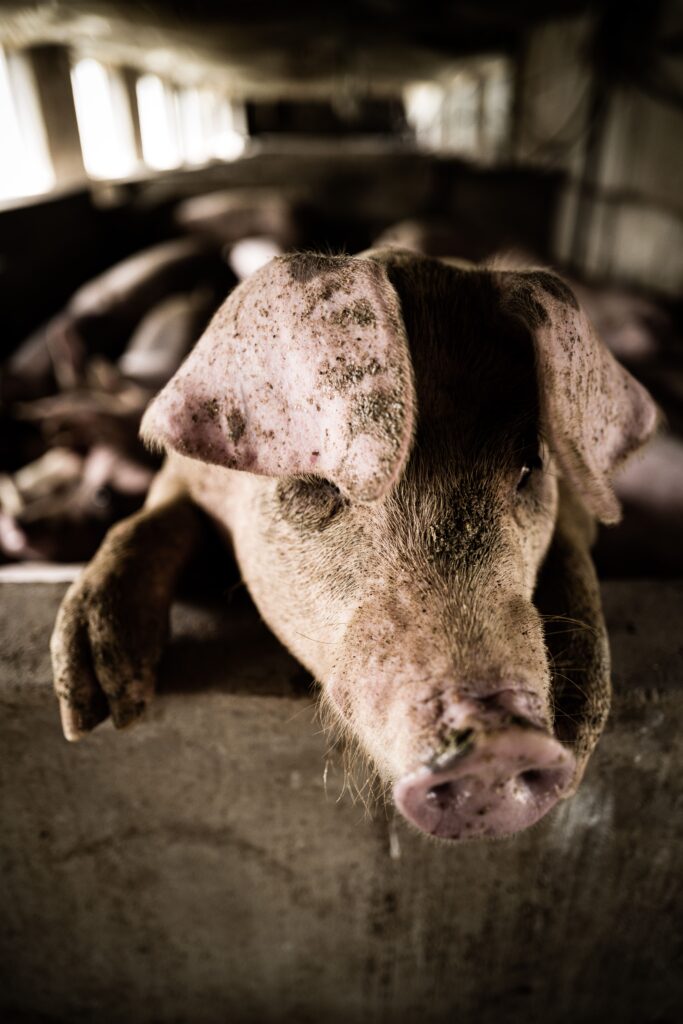
We want you to have a greater ability to learn about some of the unpleasant animal issues in our world.
The Downed Animal Protection Act, etc.
STATEMENT OF ERIC SAKACH,
INVESTIGATOR, WEST COAST REGIONAL OFFICE,
HUMANE SOCIETY OF THE UNITED STATES,
ACCOMPANIED BY MELANIE ADCOCK,
DIRECTOR, FARM ANIMALS
Mr. Sakach. Thank you. Mr. Chairman and members of the sub-committee, my name is Eric Sakach, and I am an investigator with the Humane Society of the United States. I am accompanied today by Dr. Melanie Adcock, director of farm animals at the HSUS.
The HSUS is the Nation’s largest animal protection organization, with nearly 2 million members and constituents. We are here today to express our concern for the continuing suffering of downed animals at stockyards and to provide an update on the situation. We appreciate this opportunity to speak before you today.
When we last appeared before this subcommittee in March 1992, we reported on the results of a national survey of livestock markets conducted in 1991 by HSUS investigators. We testified that the mistreatment of downed livestock was continuing nationwide and could be found even in brief, random visits to livestock markets.
We would urge the members of this subcommittee to review the information presented in the previous hearing. The sad and disturbing fact is that despite the best of intentions and excellent policies and statements that have been issued by certain segments of the livestock industry, the problem has not been resolved.
In 1993, through mid 1994, investigators from the HSUS visited livestock markets across the country to again observe and document the treatment of animals at stockyards and to determine if downed animal abuse was continuing. Our survey included random visits to livestock markets in eight States. Although this is an ongoing study, I am able to report that downed animals were observed being mishandled at 14 of 33 of the auctions visited to date.
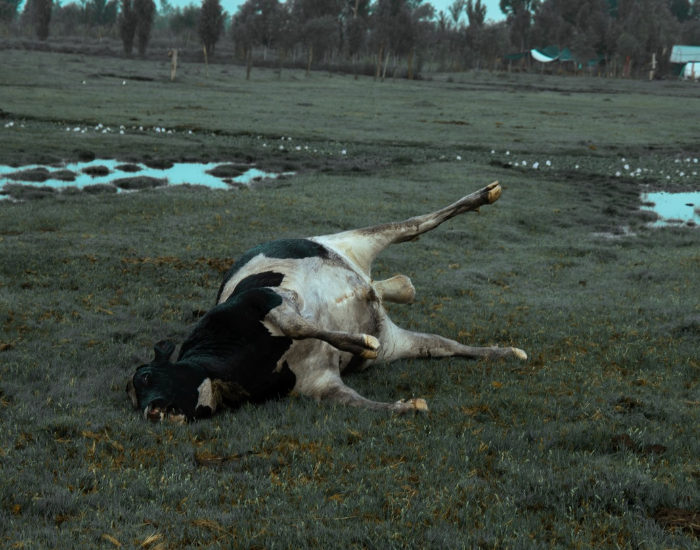
Examples of documented abuse included a downed dairy cow who was kicked, dragged out of a truck with a rope tied around one rear leg and was repeatedly shocked in the face with an electric prod; a live calf being run over by a truck; a calf dragged by a rope tied around its neck; and young, downed calves being dragged and thrown into a double-deck trailer. These examples represent only a sampling of the abuses that have been witnessed by our investigators.
I have repeatedly witnessed frustrated auction workers leave these animals where they lie without shelter, food or water after unsuccessfully trying to move them. I have watched as they have been repeatedly kicked and given a hot shot, and then with workers attempting to drag them away with a tractor by a chain around one leg or to scoop a downed cow with a front loader with a bucket that was entirely too small.
Why a no-downer policy? First, a no-downer policy will address the fact that handling and caring for downed animals at livestock markets is extremely difficult, if not impossible. As stated by the Minnesota Livestock Marketing Association, “…it is nearly impossible to unload and/or move downed or severely distressed animals in a humane manner without first euthanizing them.”
Second, according to industry sources, 75 to 90 percent of downed animals are preventable. A no-downer policy would encourage prevention as the primary focus by shifting the emphasis to better management practices on farms that ship downed animals to market. It also promotes greater care during loading and transport.
Gail Tritle, president of United Stockyards Corporation, stated that the purpose of adopting a no-downer policy was, “to shift the issue of what to do with these animals to not having them.” After 2 years of having a policy in place, Mr. Tritle stressed that the policy has had broad acceptance among producers.
Third, a no-downer policy would send an important message to the public about the industry’s commitment to humane handling practices and to eliminating unnecessary food safety risks. When United Stockyards announced their no-downer policy, the livestock organizations present for the announcement greeted the new policy as an important step in expanding their quality assurance programs.
Fourth, fewer Federal dollars would be needed to monitor a no-downer policy than would be required by instituting, monitoring, and enforcing guidelines for moving downed animals through livestock markets. A no-downer policy would also resolve legal, economic, and other problems livestock markets currently encounter with these animals and a Federal solution would set a uniform standard across the States, removing any potential for unfair advantages between stockyards.
The abusive handling of downed animals has never been considered acceptable by responsible producers and conscientious livestock market managers. Everyone is in agreement that this problem must be resolved.
Numerous livestock industry groups, as well as the American Veterinary Medical Association, have policy statements agreeing that downed animals should not be sent through intermediate markets.
Some State livestock organizations have taken the position that downed animals should not even be permitted to leave the farm. The downed-animal issue is one that finds the HSUS in agreement with many industry voices.
Unfortunately, some of the largest and most respected markets have violated their own voluntary no-downer policies, and some others appear to be devoting their energies to better methods of keeping their practices from public view rather than solving the problem by adopting and enforcing a no-downer policy. The continuing problems with abusive handling of downed animals has been clearly established to be a pattern and not simply a series of isolated incidents.
We applaud the efforts of those in the livestock industry that have taken a strong stand on this issue, and who have taken swift action to correct the problem.
Unfortunately, despite the progressive steps that have been taken by some, other segments of industry have not demonstrated the same degree of concern. A concrete industry-wide plan for self-regulation is not in place and it is now painfully clear that an enforcement mechanism must be part of any solution to the downed-animal problem.
We appreciate that industry might want additional time to self- regulate. However, while it is true that the public only became aware of this issue 3 years ago, the industry has been attempting to deal with this problem for more than a decade. And it is worth noting that when public comments were requested on the Packers and Stockyards Act in the Federal Register, over 1,300 comments were received that recommended amending regulation 201.82 to prohibit the sale of downed animals at stockyards. Eight comments were submitted by animal protection organizations, representing millions more of their members in requesting a no-downer policy.
We urge the subcommittee to approve H.R. 559. It is an important and necessary piece of legislation that addresses public concerns for the humane handling of animals and food safety. Thank you very much….
STATEMENT OF GENE BAUSTON,
EXECUTIVE DIRECTOR, FARM SANCTUARY
Mr. Bauston. Mr. Chairman and members of the committee, thank you for holding this hearing today. My name is Gene Bauston, and I am testifying on behalf of Farm Sanctuary, a national animal protection organization which works to prevent farm animal suffering.
I very much appreciate the opportunity to be here. Starting in 1986, Farm Sanctuary has conducted approximately 1,000 visits to U.S. livestock markets. We have found downed animals, animals too sick even to walk, subjected to mistreatment and neglect across the country. These problems are well documented. Many of you have seen the videotapes and the pictures.
Many within the livestock industry agree with us that downed animals should not be sent to stockyards. In Illinois, the State department of agriculture, as well as pork producers and the Beef Association lobbied to pass legislation prohibiting the acceptance of downed animals at stockyards.
Downed animals represent a very small percentage of all livestock sold through livestock markets. There is no debate about that fact. In 1992, when I testified before the committee I stated that, and I am stating that here again today. I will also say that the number of downed animals currently being sent to stockyards has not been significantly reduced since 1992.
Now, not only is the number of downed animals being sent to stockyards extremely small, but the vast majority of these downed animals can be prevented. Empirical evidence points to the effectiveness of prevention. In 1993, the issue of downed animals was high on the agenda in California. There was statewide media coverage as well as legislation introduced.
Responsible farmers and veterinarians worked to prevent downed animals. Dairy veterinarian Dr. Jim Reynolds, testified in support of the California Downed Animal Protection Act and described his experience with prevention. He explained in his testimony:
One client has built a special pen with milking facilities to treat young cows injured at calving and has recovered three of the last four that would have been sold as downers. The owners and I have become more involved with strategies to prevent downed cows, reducing overcrowding, sanitation of the corrals and loafing areas, improving nutrition, and assistance at calving are some of the things my clients and I have been addressing.
I spoke with Dr. Reynolds last month and he verified that approximately 80 percent of the downed cows currently being sent to stockyards now can be prevented. Unfortunately, not everybody has acted as responsibly as Dr. Reynolds and his clients, and that is who H.R. 559 is intended to affect.
During 1993, Farm Sanctuary conducted a study of 16 California stockyards. Again, this is at a time when downed animals are high on the agenda of industry. We found downed animals at 8 of the 16 stockyards we visited, and we witnessed inexcusable cruelty and neglect.
A copy of a summary of the study is attached to my testimony if you want any additional details about it. Nationally, the issue of downed animal suffering has aired on several news programs, and many stockyards now purport to have implemented no-downer policies, whereby they refuse to accept downed animals.
I am sorry to say that these policies have been ineffective. In 1991, United Stockyards Corporation in Minnesota responded to negative news coverage and publicly announced that it would no longer accept downed animals at any of its seven Midwestern stockyards. However, when United was revisited by Farm Sanctuary in 1992, downers were found at three of its seven facilities. Now, these were one-time visits. We did not camp out at their stockyards and wait for a downer to occur. We went there and on the day we went there was a downed animal.
United’s President, Gail Tritle admitted that these animals were not treated properly. I would like to submit a videotape copy of a news report which demonstrates United’s inability to enforce its own no-downer policy.
[The videotape is on file with the Committee.]
Last year, in 1993, Lancaster stockyards in Pennsylvania, the first major stockyard to publicly respond to animal welfare concerns and adopt a no-downer policy was convicted of cruelty to animals for neglecting a downed cow. I have included an article from the Intelligencer Journal in Lancaster, Pennsylvania, which indicates this fact.
Just last week I went to the Empire Livestock Market in Dryden, New York, and although this stockyard also has a policy against accepting downed animals, there was a downed baby calf in the unloading dock. While the livestock industry has shown an increased awareness over the mistreatment of downed animals and has taken some steps to resolve the problem, it is clear that industry cannot police itself and that legislation is needed.
The Downed Animal Protection Act prescribes an appropriate standardized solution to this unnecessary problem. It provides incentives for preventing downed animals in the first place and it provides an appropriate remedy to the problem when it does occur. This legislation will prevent animal suffering without adversely impacting the livestock industry. In fact, the Downed Animal Protection Act will benefit the livestock industry by promoting improved husbandry practices on the farm and in transportation, and enhancing consumer confidence in the quality of its products.
Consumers don’t like the idea of eating downed animals. Preliminary findings from research being conducted at Texas A&M University indicate that the general public overwhelmingly supports the Downed Animal Protection Act, while a slight majority of livestock producers also support this bill. The legislation provides an appropriate solution to an unnecessary problem, and I urge the committee to act favorably on H.R. 559. Thank you very much….
STATEMENT OF EUGENE UNDERWOOD, JR.,
SENIOR VICE PRESIDENT AND GENERAL COUNSEL,
AMERICAN SOCIETY FOR THE PREVENTION OF CRUELTY TO ANIMALS, ACCOMPANIED BY DEBORAH WEINER,
DIRECTOR, NATIONAL LEGISLATIVE OFFICE;
AND JAMES DELANEY, ASSOCIATE DIRECTOR
Mr. Underwood. Thank you, Mr. Chairman. I should note for the record that I am accompanied by Deborah Weiner, the director of our national legislative office, and James Delaney, the associate director. My name is Eugene Underwood, Jr., I am senior vice president and general counsel of the American Society for the Prevention of Cruelty to Animals, the ASPCA.
The ASPCA is the Nation’s first humane society. We are pleased to have this opportunity to comment on the proposals before this subcommittee that would ensure safe and humane handling of downers or non-ambulatory livestock. First, the ASPCA recognizes the role of farm animals in a humane and socially responsible agriculture. We have a long history of leadership in efforts to promote better standards and practices in the production of animals for food.
We applaud the livestock farming community’s interest in improving these standards and practices. We welcome them to the growing concern for animals, the environment, and the quality of human life on our planet. We trust that they share one of our organization’s primary goals — that of a humane, ecologically sound, economically viable, safe and healthy food production system.
Second, the ASPCA is a law enforcement agency with considerable experience in both law enforcement and legislation governing the care and treatment of livestock. For 128 years, we have enforced the anti-cruelty laws throughout the State of New York, whose dairy industry ranks third in the Nation after California and Wisconsin.
We regularly discuss humane law enforcement problems with sister humane organizations in other agricultural States. From this extensive experience, we can tell you that existing State and Federal laws are not doing, and are not adequate to do, the job of ensuring that the care and handling of downers will be humane to animals, safe to workers, and protective of the wholesomeness of our food supply.
Let me be specific. The conceptual framework for most existing State humane laws is over a century old. In general, these laws have not kept in step with the dramatic changes in agriculture, transportation, and marketing that have occurred in this century, let alone those of the last few decades. This old system of State humane laws arose to prevent malicious and sadistic abuses of animals. It was not designed to prevent the casual and careless sort of abuses that are, unfortunately, bound to occur in any industry that routinely handles large numbers of animals.
Moreover, many of these State humane laws specifically exempt farm and food animals from protection. Even where there are no such exemptions, the prevailing law enforcement attitude is that the State’s humane laws do not apply to farm animals and livestock production practices.
As public records will show, the various States’ humane laws are rarely, if ever, used to prevent cruel and unsafe handling of downer or non-ambulatory livestock. Therefore, we need specific Federal legislation to stop these routine, but preventable cruelties.
Third, I want to emphasize the words “preventable cruelty” to the committee so that they will ring in your ears. We believe with Gandhi, “that the greatness of a nation can be measured by its treatment of animals.” American citizens and public interest organizations such as ours work with our Government to try to make ours the greatest Nation in the world. Accordingly, we Americans must establish and enforce the highest reasonable standards for the care and treatment of animals — in this case downer, crippled, or non-ambulatory livestock.
Because this is a preventable problem, this is an unacceptable problem. Surely, it is reasonable to ask this committee to recommend the same standards and reforms that are now being recommended by livestock industry leaders. They know that the overwhelming majority of downer animals could be prevented through better management.
Specifically, Pennsylvania State University, a top agricultural college in a leading agricultural State, has produced a video and a slide presentation with script called “Preventing Non-ambulatory Animals for presentation to farmers, truckers, and auction personnel.”
We commend this to your attention. It notes that most ambulatory problems can be prevented through proper nutrition, housing, veterinary care, and culling practices. The guide emphasizes the priorities: Eliminate non-ambulatory animals from the farm and the marketplace by keeping the entire herd in top health.
In closing, the ASPCA recognizes that, in spite of the best intentions, standards, and practices in livestock industries, there will be those cases where accidents occur and animals will become downers. In those cases, we believe that the public interest in humaneness, worker safety, and food safety are best served by immediate euthanasia of the downed animal and its complete removal from the food product system. Therefore, the ASPCA supports H.R. 559, the Downed Animal Protection Act, introduced by Congressman Gary Ackerman….
Arizona Lobby For Animals
P. O. Box 26238 Phoenix, Arizona 85068-6238
(602) 392-2424 Date: September 26, 1994
To: U. S. House of Representatives Agriculture Committee, Subcommittee on Livestock.
From: Arizona Lobby for Animals Arizona, Society for the Prevention of Cruelty to Animals [and] Arizona Humane Society.
Subject: H.R. 559, The Downed Animal Protection Act of 1993.
Arizona Lobby for Animals (ALFA) is a nonprofit, nonpartisan, volunteer organization dedicated to lobbying for animal protection. During the summer and fall of 1993, a survey of Arizona livestock markets was conducted by ALFA, the Arizona Society for the Prevention of Cruelty to Animals, and the Arizona Humane Society. Volunteer and staff from the three organizations observed the treatment of farm animals at seven licensed livestock markets throughout the state. A total of 36 visits were made to the markets between August and December 1993.
The purpose of the market visits was to observe various aspects of livestock handling including transportation to and from markets, methods used to drive animals, provision of shelter, food, and water, and the disposition of diseased and injured livestock. We were particularly interested in determining whether sick and disabled animals were being accepted for market and how these animals were being treated during the auction process. Whenever a downed or obviously ill animal was identified, return visits were made on a daily basis until the animal died or was moved. In addition to documenting observations, we discussed animal treatment at the markets with market employees, Arizona Department of Agriculture Livestock Inspectors, farmers, and visitors to the markets.
The most serious problems encountered during the survey were acceptance of weak, diseased, and disabled animals at the markets and the lack of prompt disposition of downed animals. A total of 20 live downers were observed during the 36 visits. This number includes ten calves, five dairy cows, four beef cattle, and one horse. The actual number of downed cows and cattle was probably considerably higher since on several occasions dead animals were found in pens where only live, standing animals had been noted the day before. In addition, many dead animals with market numbers (indicating that they had been accepted for auction) were observed in rendering piles.
Young, weak calves, sometimes less than 24 hours old, were observed at 23 market visits. We often observed calves being dragged or carried off trucks into the market, because they were too weak to walk. Some of the calves in the auction pens couldn’t stand or walk in a steady manner; the smallest ones were often stepped on by older calves and sheep. They were subjected to temperatures above 100 degrees, crowded pens, and no nutrition for hours at a time. Although water was usually available, most of the calves were too young to drink from the containers.
Judging from their comments, farmers and other visitors to the markets recognized the unfit condition of the calves and their limited chances of survival. On one occasion, we talked with two farmers who were discussing a group of five calves whose ear tags showed them to between two and eleven days old. “These are the discards,” one of the farmers said. “The eleven day old one is the sickest of all. There ought to be a law against selling these sick animals. They get them on their feet to walk through the arena; then, you get them home and they die on you.”
At another market visit, we observed a young man purchasing a calf which was unable to stand or walk. The new owner, who paid $3 for the animal, carried it to his vehicle. Several weeks later, the man was again encountered at the market. When asked about the calf he had bought previously, he said that despite “pumping it full of antibiotics and fluids,” it died after three days. “A dollar a day,” he remarked. During a visit to a calf rearing ranch, a worker made the following comment about the calves taken to livestock markets: “The scrap calves are taken to the auction — the ones that aren’t going to make it. You can doctor them up so they look OK to sell, but they’re all sick.”
We also observed downed mature animals in market pens, in aisles, and in the back of markets. None of the downed animals was observed receiving any food, water, or veterinary care. We were told by market employees that downed animals were left to die. In some instances, we observed downed animals survive for as long as four or five days before finally dying. We observed one downed horse which showed evidence of having been dragged to a spot at the back of an auction. The horse was having great difficulty breathing and eventually experienced seizures and died. Downed dairy cows were often trampled by other animals in a common pen.
On one market visit, we observed a downed Holstein lying on her side in a pen surrounded by standing dairy cows. A wide depression could be seen in the dirt where she had used her front legs in an attempt to rise. An hour later, we found a second cow down in a similar position nearly on top of the first cow. When we asked the market worker about the cows, she told us that the animals arrived downed on trucks and were dragged off and placed in the pen. When asked what would happen to the animals, the employee said that most downed animals “die on their own…; it’s hard, but they usually only last a few days. It would be nice if we could just shoot them.” We found that many market employees were uncertain about whether the market or the owners had responsibility for the downed animals.
Several alternatives are available for dealing with the issue of diseased, disabled, and dying animals at livestock markets. Up to now, the livestock industry has preferred to address the problem by issuing statements and voluntary guidelines encouraging a “no downer” policy. Unfortunately, this approach has been unsuccessful in eliminating the presence of sick animals at auctions. In Arizona, one of the markets which displays the Livestock Marketing Association handling guidelines in its arena area was observed on several occasions to have downers in its pens or in the back of the market. State animal cruelty laws aren’t a solution; many are vague, and livestock are often exempted from protection.
We believe one approach to solving this problem would be an amendment of the Packers and Stockyards Act to make it unlawful for markets to transfer or sell non-ambulatory livestock. We encourage the House of Representatives’ Agriculture Committee to approve H.R. 559, the Downed Animal Protection Act of 1993.
Respectfully submitted,
Dena Jones Jolma, MS
Vice President, Arizona Lobby for Animals
The Downed Animal Protection Act; Humane Methods of Poultry Slaughter Act; the Meat and Poultry Products Inspection Amendments of 1993: Hearing before the Subcommittee on Livestock of the Committee on Agriculture, House of Representatives, One Hundred Third Congress, Second Session, on H.R. 559, H.R. 649, H.R. 3646, September 28, 1994 (Washington, DC: United States Government Printing Office), pp. 52-58 and 252-254
See: https://babel.hathitrust.org/cgi/pt?id=umn.31951p00428012s&seq=1
A Look at Missouri Feeder Pig Factories
Charles P. Wilken, James Kliebenstein, and Leroy F. Rottmann
Summary
In March of 1977 there were about ten feeder pig factories in Missouri. A feeder pig factory is where feeder pig production is accomplished in a factory-like process. The survey showed that of those ten only two were operating prior to 1975. Thus there was a heavy relative increase in feeder pig factories between 1975 and 1977.
Feeder pig factory ownership patterns indicated that most owners (80%) were full-time farmers. They were investing in the factory as a source of high quality dependable feeder pigs. This also would allow them to discontinue their own farrowing operation thus allowing them to further specialize in other phases of their farm. Few owners had non-farm occupations where they were looking upon the feeder pig factory as a profit center by itself.
Initial sow herds were purchased primarily from special herds bred for confinement. Demands for these special breeding herds will likely continue to expand.
According to records supplied by the feeder pig factories, production costs were $32.32 per pig, $.81 per pound for a 40 pound pig. Feed costs were 60 percent of total costs. Depreciation and interest averaged $6.66 per 40-pound pig.
Methods of selling and establishing prices varied among the factories. Some factories adjusted selling prices as often as weekly while others did so less often. Most prices were established based on specified market or actual cost of production. Most pigs were purchased by factory members and finished on their respective farms. Most feeder pig factories had two levels of management. Boards of directors made long-run decisions regarding types of facilities and how the sow herds were to be acquired, etc., while salaried managers made daily decisions. The majority of the factories either hired a manager or contracted with a consulting company to perform daily management duties. Under the latter method the consulting company then contracted with an individual to manage the particular unit.
If more of these units are built, the demand for qualified people to manage the facilities will increase. Some factories have already indicated that it is extremely difficult to locate qualified managers.
The average investment per factory per sow capacity was $1,273, or $529,542 per factory. All but one of the factories purchased feed, equipment, and supplies from local suppliers. Thus, these factories do not appear to have had an adverse economic impact on local communities. If an operation increases the production base in an area it could strengthen the economic base of the area. Credit also was obtained in part from local lenders as the primary lender for most factories was the local Production Credit Association.
The major reason given for investing in a feeder pig factory was to provide a constant supply of high quality feeder pigs. Another reason was the lack of qualified labor. To lessen the labor problem, producers in effect pool their resources and hire one manager. Major problems encountered were: facilities not being ready for production on time, training a manager, adequate water supplies, credit, and disease.
Implications
A continued trend toward larger swine production units will have implications for the swine industry. The problem of insufficient qualified factory managers may become acute. Highly specialized individuals are required to manage feeder pig factories. They must be excellent hogmen and be able to spot disease or stress symptoms and react to them quickly. In many respects the success of feeder pig factories is tied to the manager. This management is specialized and needs to be of a high quality.
Feeder pig factories are capital intensive. Thus, a reliable and continuous source of adequate financing is very important. These facilities may need to be financed over ten or more years for them to meet all cash flow obligations. The facilities are usually highly specialized and pork will be produced in them unless pork prices dip drastically or feed costs increase quite sharply. Shut-down costs can be very great.
Feeder pig factories will have an impact on the hog cycle. Due to the fixed capital and physical plant commitments, production levels cannot be adjusted rapidly. The highs and lows in the hog cycle may be lessened resulting in a more even flow of pork available for the consumer.
Pollution control methods also will become more important in the future and will have a larger impact on the swine industry. Survey respondents did not indicate any pollution control problems. However, recent articles in popular magazines indicate that this is a nationwide problem, one that should be carefully analyzed and solved before facility construction begins. If not there may be severe problems to be overcome during or after construction.
Introduction
A small but growing number of feed grain and swine producers in the United States is transferring production technology common to broiler production to feeder pig production. The concept has been referred to as a “feeder pig factory,” a “sow complex,” or a “sow cooperative”. Most of these factories are totally confined and were designed specifically for feeder pig production. By their very nature feeder pig factories are capital intensive and require highly skilled labor and management on a 24-hour basis.
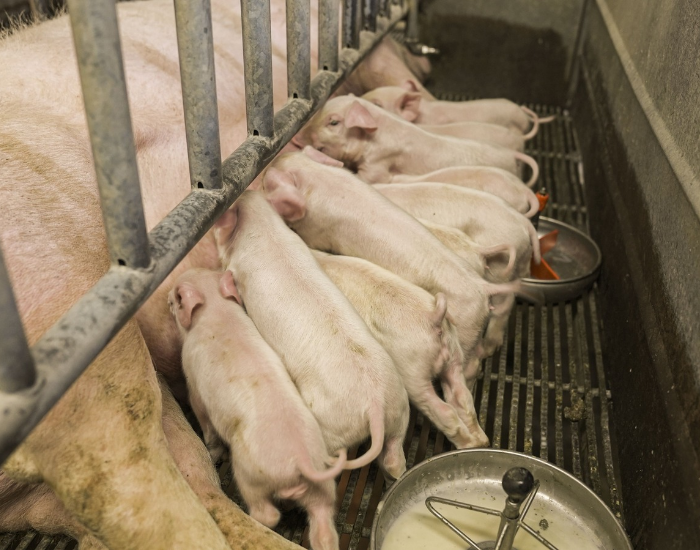
Feeder pigs are produced in a factory assembly sequence continuously on a year-round basis. The factories practice twelve-day weaning and year-round farrowing while striving for more than two litters annually per sow. Pigs weigh 30 to 40 pounds when sold.
The feeder pig factory concept has brought:
• New technology in disease control.
• Capital intensive confinement systems.
• Employment of full-time, highly skilled workers and managers, and
• New marketing methods to move feeder pigs.
High prices for finished hogs compared with cash prices for feed grains during the mid 1970’s aided in development of feeder pig factories. It is an extremely attractive alternative for corn producers to increase profits from corn production by selling corn and other feed grains through finished hogs. Many feed grain producers do not want nor have the capital or facilities for feeder pig production.
The nature of ownership of the feeder pig factories itself, is an innovation. Most appear to be corporations; very few are single proprietorships or partnerships. The number of owners is typically small — two or more. This evidently is to limit communication problems.
Most units have a sow capacity ranging from 200 to over 1,000 on acreages varying from 10 to 40 or more acres. Types of occupations of the owners varied from farmers to non-farm businessmen. Pig factories hire highly skilled managers to provide both labor and management. The manager makes the day-to-day decisions and may in turn hire highly skilled labor.
In 1976 there were about 300 feeder pig factories in the United States producing between 2 and 3 percent of the total pigs farrowed. The majority of these units were located in the western edge of the corn belt and in the wheat belt. Nebraska had the largest number of factories, 69, and Iowa was second with 66. Illinois, Kansas, North Carolina and Georgia had between 10 and 15 units each.
In 1976 13% of all pigs farrowed in Nebraska were farrowed in feeder pig factories. That was nearly double the 1974 figure of 7%. While data is quite limited for predicting any national trends, the swine industry could undergo some sharp structural adjustments should these conditions continue.
One explanation for the rapid increase in feeder pig factories is that hog producers want a given quantity of top quality feeder pigs from a known source. This suggests that specialized corn and feed grain farmers may be looking for a reliable source of feeder pigs. They use the feeder pigs as the method to market their corn. Other feeder pig factory owners have indicated that they are relatively short on skilled labor and have formed a factory and hired a manager to do their farrowing.
The strong feed grain prices relative to livestock prices encouraged feed grain producers to be more intensive in producing corn. Moreover a large share of their capital has had to go into larger equipment, better equipment and higher priced variable inputs. With concurrent shortages of labor some farmers have found that they could not split their time between raising feed grain crops and raising pigs. Thus, the feeder pig factory becomes an attractive way to remain in swine production and cut their labor demands. This suggests a further and higher degree of specialization and division of labor in feed grain production and in feeder pig production and particularly in finished hog production. Some members of pig factories have become involved strictly for a profit and not necessarily as a part of their total farming operation. They view the factory more from the investment standpoint and their overall tax and profit picture.
Objectives
Objectives of the study were:
1. To determine the number of feeder pig factories in Missouri as of March 1, 1977.
2. To obtain information on the primary occupation of these feeder pig factory owners.
3. To identify agencies that have supplied financing.
4. To obtain initial building construction costs.
5. To procure production data including costs and returns.
6. To document major problems of feeder pig factories.
This study was conducted to gain specific information and data leading to improved efficiency of feed grain and swine production in Missouri. Advantages and disadvantages of each were explored. From this information, cash flow feasibility studies can be completed using selected interest, equity and production levels.
Methodology
The University of Missouri area extension farm management specialists co-operated in the study. They were asked to identify such pig factories and their owners’ names. The combined list was used to contact the owners by telephone to see if they qualified as a feeder pig factory as defined earlier in this report. The feeder pig factory owners were personally surveyed to obtain information on the physical facilities, ownership patterns, structure of the organization, production patterns and efficiencies, production costs, investments, and any startup problems that were encountered.
In addition a representative feeder pig factory was selected to conduct a feasibility study using its costs and returns. The unit selected for the analysis was considered typical of those surveyed. For the feasibility study, the factory’s ability to meet debt retirement commitments along with other production expenses will be analyzed under varying equity and feeder pig production levels in a following study.
Survey Results
Ownership Patterns
For the ten Missouri feeder pig factories found to be operating on March 1, 1977, the number of owners ranged from four to ten with an average of 6.6 members each….
Of the owners, 80 percent were farmers. Only one did not have farmers controlling the group. Individuals involved in feed handling and feed processing operations made up 10 percent of the owners while bulldozer operators, a county sheriff, and several real estate brokers made up the remaining ten percent. Only two factories had been in operation for more than two years, while three were being built when the survey was conducted two factories were just being organized and insufficient information was available for reporting. Thus, eight factories were reporting. All but one factory was organized as a subchapter S corporation — that one was a regular corporation. None of the factories were organized as cooperatives.
Sow herd sizes have increased since the initial establishment of feeder pig factories in Missouri…. The first factory, (Factory A), had 200 sows while the more recently organized ones ranged from 300 to 500 sows per unit. All factories owned the sows; most initial sow herds were purchased from special herds bred for total confinement. All replacement animals were selected from the herd. The two factories that were operating long enough to establish a replacement pattern indicated that sows were farrowed for five or six litters before being replaced. Respondents indicated they planned for an average of 2.14 litters per sow per year.
Farrowing Performance
Performance for the six sow herds in production long enough to have production records indicated a relationship between pigs born per litter and years in production…. Number of pigs born per litter was the highest in factories A and B, the oldest units, while production was eight pigs per litter in the newest facility (Factory F). An average of two pigs per litter died, distributed over different ages as follows: .53 were born dead; 1.26 died in the farrowing house, and .22 died in the nursery. The greatest variation in losses among the factories occurred in the farrowing phase. The units averaged selling eight pigs per litter with a range of 7.5 to 8.3. Pigs were weaned when they were between ten days and two weeks old.
The feeder pig factories sold an average of 6,540 feeder pigs per year. By omitting the smaller factory (Factory A) the average would increase by 1,000 pigs per year per unit. Among the factories there was not a consistent weight at which feeder pigs were sold. The differences in weights seemed to relate to the facility and the number of pigs weaned during a production cycle. Two factories sold at thirty pounds, two at forty pounds while the remaining two factories sold at 57.5 pounds and 80 pounds respectively. Among all factories the average feeder pig weighed 46 pounds.
Production Costs and Prices Received
The average cost of producing a 40 pound feeder pig at four factories was $32.32 or $.81 per pound…. Feed cost was 60 percent of total production costs, $.50 per pound or $20.25 per pig. The feed bill represented all feed consumed in the factory. Other variable expenses encountered in producing a feeder pig were $2.05 per pig for labor (hired), $1.19 per pig for utilities, and miscellaneous costs (primarily medicine) of $2.38 per pig. These variable expenses accounted for 79 percent of total production costs.
Fixed costs — buildings, equipment and interest were $6.66 per pig. Depreciation was based on the straight-line method with 10 years of useful life and ranged from $2.85 to $5.50 per pig. The average depreciation charge was $4.30 per pig. Interest was based on an 8% annual charge on outstanding debt. This resulted in a range of $1.50 to $5.00 per pig with an average charge of $2.36 per pig.
The method of selling or pricing pigs from the feeder pig factory was unique to most factories. The number of pigs received by a member was usually based on the initial capital contribution by the member. Factories B, C, and D based the selling price on the cost of production and evaluated the price after each member had received his allotted share of pigs in a given distribution round. At that time, the price was adjusted to more clearly reflect current market prices and production costs and was held there for the next distribution round. Factory E adjusted the selling price weekly based on current average of St. Joseph feeder pig auction prices for the prior two weeks. Factory F sold all its pigs to a finishing facility at current local market prices. Factory A was the only one that sold pigs to non-members; it used the latest MFA Tel-o-auction price as the base for establishing price.
During 1976-1977, only one factory’s production costs exceeded the feeder pig purchase price. That factory’s average production costs were $21.25 per hundredweight more than the market purchase price, while the other units had production costs from $24.38 to $13.98 per hundredweight below the market purchase price. The average cost of production per hundredweight produced at all factories was $9.22 below the market cost or about $4.00 per 40 pound pig.
Management
Two levels of management existed in most of the feeder pig factories studied. The board of directors provided the first level of management. In most cases, this management level made investment decisions and implemented major plans of the factory.
Level two management was hired and made daily decisions in the feeder pig factory. Among the respondents, there were three types of level two management structures. With the first type the factory member performed daily tasks for a salary. With the second and third type an individual with no initial ownership interests in the factory performed the daily decision-making chores. With the second type the manager was hired by the board of directors and with the third type the manager was provided by a contracting firm. The contracted manager differed from the hired manager in the manner in which he was employed. The hired steam cleaning farrowing house manager was an employee of the board of directors whereas the contracted manager was under a contract to raise pigs, usually on a commission basis. The contracted manager was responsible for hiring all additional labor while the hired manager was provided additional labor through direct hire by the factory.
Labor hired by the factory was paid by the hour or by the month. Hourly wages varied from $2.30 to $4.00. Monthly wages varied from $675 to $800, plus incentives. Incentives were usually based on achieving a preselected per litter weaning average. Hired employees were considered permanent at Factories C and D. With Factories B and F all tasks were provided by the husband and wife. If they needed additional labor, it was their responsibility to hire and pay for it.
The respondents indicated that competition for a good manager was high. Some had an incentive plan built into the management salary. Therefore, total compensation levels were difficult to obtain. Depending on production levels and incentives, the estimated range of typical salaries was $10,000 to $30,000….
Feed and Supply Purchases
Most of the Missouri feeder pig factories surveyed purchased feed supplies and equipment from local suppliers at local market prices. Only one unit purchased feed on contract direct from the processor. The major difference in purchasing feed, supplies and equipment was the payment method. Three factories used a revolving loan from PCA to handle the expenses while the remaining three used charge accounts at the local supplier and paid for them from current receipts.
Investments
The average total investment of the feeder pig factories surveyed was $529,542. This investment included buildings, equipment, land, livestock, manager housing (for one factory), and other miscellaneous expenses…. Given an average capacity of 416 sows, the investment per sow was $1,273.
The $308,421 investment in buildings and equipment included all permanent buildings, feeders and farrowing crates, pens, and feed storage areas. These costs were influenced by structural design and convenience factors as indicated by the range in values. In all cases but one, the design for the facility was provided by a consulting company which in turn subcontracted the construction.
Land charges were based on current land market conditions and averaged $19,167 per facility. The smallest land area was 10 acres with the largest, 40 acres. Investment in livestock averaged $62,425 per factory or $180 per sow capacity.
Investments included in the “other” category were such items as capital needed to operate the factory until production was under way, feed mills, power generators, landscaping, and lagoons.
Beginning equity levels ranged from 30% to 60% for the operations. With the exception of Factory A all factories borrowed money from the Production Credit Association (PCA). Factory A, the lowest investment and oldest facility, borrowed from a commercial bank. In one case the PCA restricted the feeder pig price, the board of directors could not set a price below the specified level without the PCA’s consent.
Reasons for Feeder Pig Factories
The primary reason given for investing in a feeder pig factory was to obtain a constant supply of high quality feeder pigs. Members wanted to continue finishing market hogs but elected not to rely on uncertain quality feeder pigs at a local market nor did they want to provide their own farrowing facilities. All respondents were satisfied with the constant supply of high quality feeder pigs they had received from the factory.
Another reason listed for forming a feeder pig factory was the unavailability of quality labor for farrowing.
The factories provided members with the alternative of marketing their grain through hogs rather than on the open market. This would allow them to specialize further in grain production and finish out hogs. They were allowing someone else to specialize in farrowing hogs.
Problems Encountered
Respondents indicated one of their biggest initial problems was not having facilities finished at the time specified by the contractor. This set the facilities entire operation back and further compounded the coordination during the critical start-up phase. For some factories, the facilities were not completed when the breeding stock arrived. Another operation’s nursery was not completed when their first pigs were weaned. Thus, the respondents advice was to leave plenty of lead time when starting the operation.
For some factories a major hurdle was training a manager who was ready to manage the operation when the breeding stock arrived. Other problems encountered were locating the combination of members and managers that could work harmoniously as a team in selecting a factory location, in operating the farrowing facility, obtaining adequate water supplies, and in locating adequate sources of credit.
Problems encountered after production was started were primarily disease related. Examples of such diseases were TGE, rhinonitis and pseudo rabies. Frozen water lines and insufficient water supply were other problems mentioned.
All respondents indicated that a good manager along with competent consultants were critical in keeping problems to a minimum in the future. Realistic planning is also needed; some respondents found that they were overly optimistic in their planning projections. They cautioned that those not familiar with confinement pork production should try it initially on a small scale.
Charles P. Wilken, James Kliebenstein, and Leroy F. Rottmann, A Look at Missouri Feeder Pig Factories, Special Report (Columbia, MO: University of Missouri Agricultural Experiment Station, n.d.). Footnotes,Tables, and Bibliography have been deleted. All images can be found at: https://www.pexels.com/. The lead picture is by Ken Chua. For the top row the photographers are: Framesbyeline, Mark Stebniki, Yakup Polat, and Mark Stebniki. For the bottom row: Nadin, Gerardo Manzano, Art House Studio, and Aureliijusu.
See: https://babel.hathitrust.org/cgi/pt?id=umn.31951d020741699&seq=1