Wolves
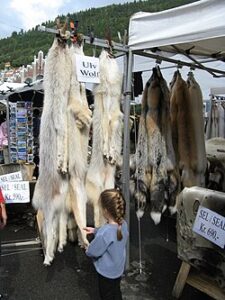
We want you to have a greater ability to learn about some of the unpleasant animal issues in our world.
British Animals Extinct within Historic Times
James E. Harting
THE WOLF.
Canis lupus.
Of the five species which come within the scope of the present work, the Wolf was the last to disappear. On this account, partly, the materials for its history as a British animal are more complete than is the case with any of the others.
The vast tracts of unreclaimed forest land which formerly existed in these realms, the magnificent remnants of which in many parts still strike the beholder with awe and admiration, afforded for centuries an impenetrable retreat for these animals, from which it was well-nigh impossible to drive them. It was not, indeed, until all legitimate modes of hunting and trapping had proved in vain, until large prices set upon the heads of old and young had alike failed to compass their entire destruction, that by cutting down or burning whole tracts of the forests which harboured them, they were at length effectually extirpated.
In the course of the following remarks it is proposed to deal, first, with the geological evidence of the former existence and distribution of Wolves in the British Islands; secondly, with the historical evidence of their survival and gradual extinction.
Under the latter head it will be convenient to arrange the evidence separately for England and Wales, Scotland, and Ireland: and, as regards England and Wales, to subdivide the subject chronologically into (1) the Ancient British Period; (2) the Anglo-Saxon Period; and (3) the period intervening between the Norman Conquest and the reign of Henry VII.
In this reign, it is believed, the last trace of the Wolf in England disappeared, since history thereafter is silent on the subject. In Scotland and Ireland, however, this was by no means the case, as, later on, we shall be able to show….
…To sum up. So far as can be now ascertained, it appears that the Wolf became extinct in England during the reign of Henry VII.; that it survived in Scotland until 1743; and that the last of these animals was killed in Ireland, according to Richardson, in 1770, or, according to Sir James Emerson Tennent, subsequently to 1766.
In the foregoing observations, no reference has been made to “Were-wolves,” nor has any matter been introduced touching the fabulous or superstitious aspect of the Wolf’s history in the British Islands. All such allusions have been purposely avoided, in order to confine the subject within reasonable limits.
Before concluding, however, we may perhaps be excused for citing so respectable an authority as Sir Thomas Browne, who, in his “Enquiries into Vulgar and Common Errors,” has alluded to the popular notion that Wolves cannot live in England.
In vol. iii. p. 344, of his “Works” (Wilkin’s edition), he says:—“Thus because there are no Wolves in England, nor have been observed for divers generations (1646), common people have proceeded into opinions, and some wise men into affirmations, that they will not live therein, although brought from other countries.”
He also notices the popular belief that “a Wolf first seeing a man begets a dumbness in him,” a notion as old as the time of Pliny, who wrote: “In Italia, ut creditur, luporum visus est noxius, vocemque homini, quem prius contemplatur adimere.” In France, when anyone becomes hoarse, the say “Jl a vu le loup”
“The ground or occasional original thereof,” says Sir Thomas Browne,“ was probably the amazement and sudden silence the unexpected appearance of Wolves doth often put upon travellers, not by a supposed vapour or venomous emanation, but a vehement fear, which naturally produceth obmutescence, and sometimes irrecoverable silence.”
A critic, adverting to this passage, has somewhat wittily remarked: “Dr. Browne did unadvisedly reckon this among his vulgar errors, for I believe he would find this no error if he were suddenly surprised by a wolf, having no means to escape or save himself!”
James E. Harting, British Animals Extinct within Historic Times; with Some Account of British Wild White Cattle (Boston: J.R. Osgood, 1880), pp. 115-117 and 204-205. Footnotes have been deleted.
See: https://babel.hathitrust.org/cgi/pt?id=coo.31924024779203&seq=1
Extinct and Vanishing Animals of the Western Hemisphere
Glover M. Allen
THE AMERICAN WOLVES.
Wolves are of boreal distribution in both the Old World and the New, originally ranging without interruption from western Europe eastward to the Pacific Ocean in the former and from Alaska to the Atlantic coast of eastern North America in the latter area. (Pocock, 1935) in a recent paper regards them as of a single species with local races, which appears to be a logical course, since all are much alike. Even the narrow Bering Straits, closed by ice during part of the year, probably form no insuperable barrier to an occasional crossing.
It is often said that the European wolf is the ancestor of the domestic dog, but the evidence for this is merely inferential. Usually wolves of any race may be distinguished from even the largest dogs by their proportionally larger teeth, shorter ears, and less elevated forehead due to the smaller development of the frontal sinuses. In dogs the length of the lower first molar or carnassial tooth is usually less (and in medium-sized and smaller breeds much less) than 22 mm., whereas in wolves it is in excess of this measurement. In their general proportions and a certain “plumpness,” however, the teeth of wolves are exceedingly like those of domestic dogs and differ from the narrower more blade-like teeth of coyotes, which some have thought ancestral to dogs.
Everywhere in North America that wolves have come into competition with white men, in settlements or in agricultural communities, they have been regarded as a common enemy and killed whenever possible. The inevitable result has been their greater or less reduction in the thinly settled regions and complete extermination from larger areas where white population is denser or agricultural and pastoral use of the land makes it impossible to tolerate their presence on account of their depredations against livestock. While this is more or less to be deplored, it is unavoidable, for the rancher can not be expected to view with complacency the resulting loss.
The outlook for the preservation of a remnant of this interesting species is therefore bright only in the wilder and more inaccessible regions or in large public reservations where the numbers can be controlled and where, conceivably, a small number of wolves might serve a useful purpose not only in preventing too great an increase in wild deer or mountain sheep but also in actually improving or keeping up a standard of quality by eliminating sickly or stupid individuals.
It is remarkable that even in parts of Europe to this day as in Spain and France a few wolves have remained in spite of long occupation by white races. Furthermore, if one may believe the mass of published accounts, wolves under the stress of hunger have been known to pursue and kill human beings in Europe and Asia, whereas at least in eastern North America there seem to be few or no authentic cases of such bold actions on the part of wolves here in early days, although there are instances of wolves having followed and frightened many of our early settlers.
Like other large carnivores, wolves require food in larger amounts, so that in addition to what smaller game they may pick up, it is the larger ungulates that they specially hunt. In the North the caribou, and on the plains the mule deer, and even the young or sickly bison were objects of pursuit, while in the wooded regions of eastern North America the white-tailed deer was a staple food species. In the case of the last-named the wolf in areas of deep winter snows was doubtless a main factor in preventing the spread of this deer to the northward into regions where now it is abundant.
In recent years a more intensive campaign has been carried on under the U.S. Biological Survey to eliminate the wolf entirely from stock-raising regions of the West. This has resulted in the accumulation by the Survey of sufficient specimens to “afford a fairly satisfactory basis for determining specific and subspecific relationships” of the American races, as worked out in Goldman’s (1937) paper.
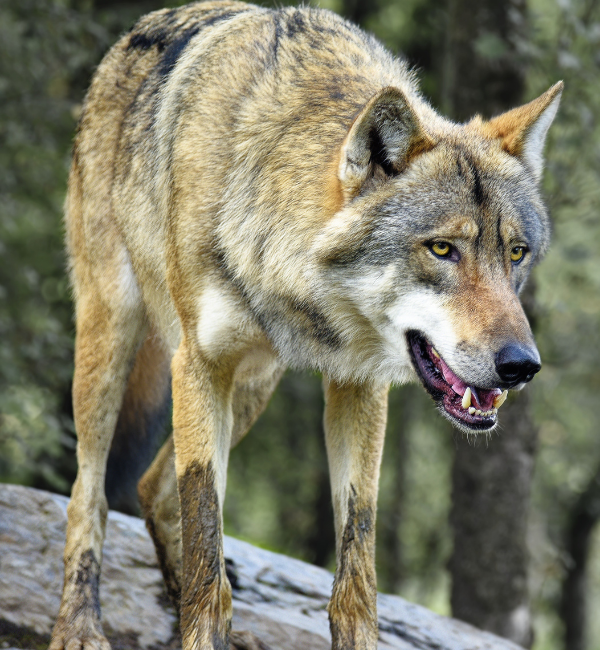
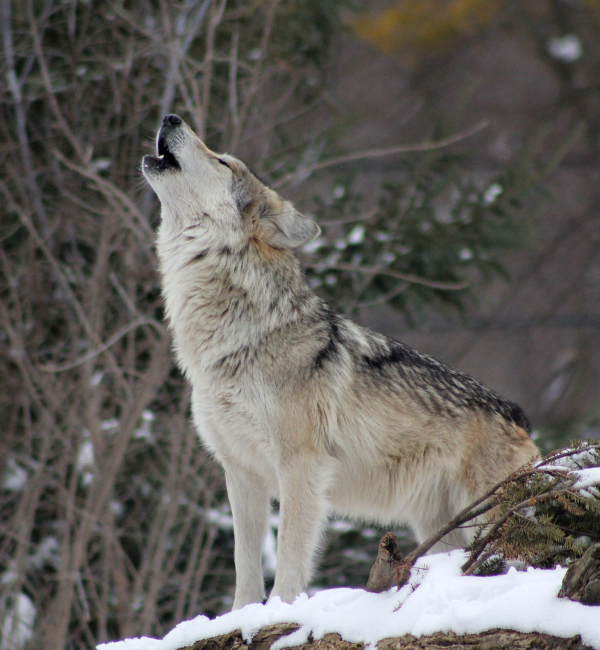
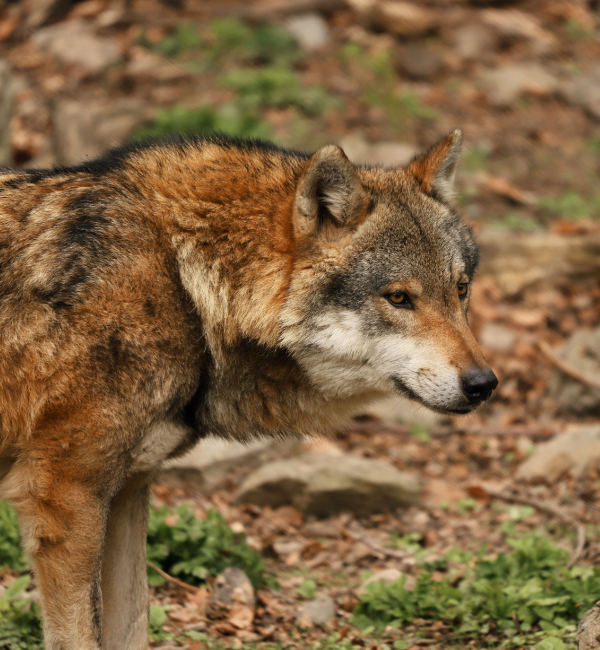
Some of these are already extinct, others nearly so. In the following brief survey, the races are taken up alphabetically, giving a condensed statement of the general status so far as at present known. A final account of the genus and its natural history is to be desired. In a general way, the various races of wolves are much alike, about the size of a modern “police dog” but shaggier, with short ears and bushy tail, carried usually with a slight hump near the root. The usual color is a mixed black, white, and gray, giving a grizzled appearance. The long hairs of the coat are usually white for the greater part of their length, with more or less black tipping or white, producing this mixed appearance. Often the white portion of the hairs is greater than the black tipping, resulting in a pale coat, and in the Arctic parts of the range the black may be eliminated almost altogether, so that the pelage is white. On the other hand, black may predominate and the pelage in that case is blackish to entirely black.
This wide variation may occur within the same family group of animals, so that color characters are often of little avail for the separation of geographic races. These are therefore in large part based on cranial characters and on size differences where they are significant. While wolves must often travel over considerable areas in their hunting, and thus tend to segregate less than more sedentary species, they must nevertheless keep to more or less definite regions where under varying conditions of environment slight differences have developed. Intergradation through individual variation often makes the exact definition of races difficult, and series are needed in working out the status of animals from different parts of the range.
According to a useful pamphlet by Vernon Bailey (1907) wolves enter very little into the national forests of the western United States but favor foothill regions for breeding and hunting. In some areas there is evidence of a certain amount of seasonal migration, in the course of which the wolves of a district follow the cattle herds into the mountains in spring, and again in autumn accompany them into lowland areas, much as in former times they followed the bison. The same paper has some account of the abundance of wolves in the West and South up to the early years of this century, with instructions for trapping and poisoning.
Glover M. Allen, Extinct and Vanishing Animals of the Western Hemisphere with the Marine Species of All the Oceans (New York: American Committee for International Wild Life Protection, 1942), pp. 199-202
See: https://babel.hathitrust.org/cgi/pt?id=mdp.39015023915989&seq=1
Status Summary: The Red Wolf
(Canis rufus)
Curtis J. Carley
Introduction
The red wolf (Canis rufus) is a little-known North American canine that once ranged over the southeastern United States, from the Atlantic Ocean to central Texas, and from the Gulf of Mexico to central Missouri and southern Illinois. It was first described by Bartram (1791) in the 18th century; however, until recently little factual information has been available on the species. It is known that the eastern subspecies (C. r. floridanus) became extinct early in this century (Young and Goldman, 1944). The western subspecies (C. r. rufus), thought by McCarley (1962) to be a hybrid form resulting from breeding between the coyote C. latrans and C. r. gregoryi and therefore not a valid taxon, is believed to have recently become extinct (Carley, 1975). Recent findings indicate that the only extant subspecies (C. r. gregoryi), once occurring from eastern Texas to eastern Mississippi, for all practical purposes is extinct in the wild (McCarley and Carley, 1979).
The initial decline of the species is believed to have been caused by increases in the human population, changes in land use during the early 1900’s, and predator control activities. As the species declined coyotes rapidly moved into western portions of the red wolf’s range. In areas where some red wolves survived, reproductive isolation between the red wolf and coyote broke down and led to hybridization between the two species. This in turn led to the establishment of a hybrid swarm which invaded the final range of the red wolf in southeast Texas and southwest Louisiana.
Hybridization between the red wolf and coyote led to difficulties in identifying specimens and resulted in a questioning of the validity of the red wolf as a species. The subject was a major point of discussion among canine taxonomists for nearly ten years; however, the red wolf was eventually determined to be a valid taxon with the variance between it and the coyote being greater than differences between various coyote subspecies (Paradiso and Nowak, 1971; Nowak, 1973). The identity of individual live specimens was further confused in some areas of the remaining red wolf range by hybridization with dogs (C. familiaris) (Carley, unpub. data).
Although Young and Goldman (1944) mentioned the possibility of hybridization in the red wolf, it was assumed until the early 1960’s that populations of C. r. rufus and C. r. gregoryi were still viable. “Wolf” reports were numerous throughout Texas, Oklahoma, Missouri, Arkansas, Louisiana, and Mississippi. However, McCarley (1962), based on his inability to locate wolf-like specimens in east Texas and west Louisiana, concluded that the red wolf no longer inhabited much of its former range. An examination of Canis from that area soon confirmed McCarley’s findings and the red wolf was listed as a Federally endangered species on March 11, 1967. In the meantime, Paradiso (1965, 1968) and Pimlott and Joslin (1968) discovered what were believed to be viable red wolf populations on the Gulf Coast in southeast Texas and southwest Louisiana. Their reports were soon verified through the capture of several canines that conformed to accepted museum specimens of the species.
Current Recovery Efforts
Although a limited Red Wolf Recovery Program was established in 1967, it was not until the passage of the Endangered Species Act of 1973 (Public Law 93-205; 87 Stat. 884) that the red wolf was selected for priority treatment. At that time an expanded program to save the species was initiated by the U.S. Fish and Wildlife Service in cooperation with the Louisiana Wildlife and Fisheries Commission and the Texas Parks and Wildlife Department.
Early program findings confirmed that the red wolf was confronted by loss of habitat, loss of young to parasites, persecution by man, and an irreversible dilution of the gene pool by invading coyotes (Carley, 1975). By late 1975, it was concluded that it was no longer feasible to preserve the red wolf gene pool in its limited range in Texas and Louisiana. Once this decision had been made, the prime objectives of the program became to: 1) locate and capture as many red wolves as possible in an attempt to preserve the species in captivity, and 2) explore the feasibility of re-establishing red wolf populations in areas of the species’ historic range. It was recognized by all concerned that the active removal of specimens from Texas and Louisiana would hasten the demise of the species in the wild. However, since extinction in the two states appeared to be inevitable, removal of the few remaining wolves was determined to be the only practical means of preservation.
In November, 1973, a Red Wolf Captive Breeding Program was established through the Metropolitan Park Board of Tacoma at the Point Defiance Zoological Garden in Tacoma, Washington…. The objectives of the program are to: 1) certify the genetic purity of wild caught wolves; 2) increase the number of genetically pure red wolves in captivity, and 3) maintain a continuing red wolf gene pool for re-establishment of the species in the wild and/or distribution to selected zoological gardens. Presently there are less than 30 wild caught adult red wolves in the breeding program. The first litters of pups were born at the Point Defiance Zoo in May, 1977….
Although the identity of wild-caught wolves has been determined by the best available techniques, (standard taxonomic measurements, skull x-ray, electrophoretic and vocalization analysis) the possibility of wolf-like hybrids being among the captive animals still exists. At this time, positive identification of the specimens can be made only through examination of their offspring…. Evaluation of the first four litters born in captivity determined that at least two of the litters were from pure red wolves. The other two litters contained possible indications of dog hybridization (Carley, unpub. data).
Experimental re-establishment of mated pairs of adult wild-caught red wolves has been tested on Bulls Island of the Cape Romain National Wildlife Refuge near Charleston, South Carolina (Carley, 1979; Carley in press). The results indicate it is possible to re-establish adult wild-caught red wolves in selected habitats in the wild. Observations on the opportunistic nature of wild canine species and their learning abilities, as well as limited experiments with wild-caught but captive-reared pups in Texas, also indicate that the establishment of captive- reared specimens in the wild is feasible. A search for, and evaluation of, possible sites for re-establishment of wild red wolf populations is underway within the historic range of the species.
Description
Taxonomic History
There has been a great deal of confusion over the identification of red wolves. As a result, a common misconception among biologist[s] is that red wolves appear so similar to coyotes that only an expert can differentiate between the two. Such is not the case, the two species differ greatly and are readily distinguishable. The examination of hundreds of preserved and live canine specimens from throughout the red wolf range demonstrated that red wolves look like wolves, not coyotes or dogs. Confusion arises only when trying to separate wolf-like hybrid forms from pure red wolves.
The taxonomic confusion reported in most red wolf literature came about because of a failure to recognize the extent of hybridization between red wolves and coyotes during the early 20th century, particularly in the western subspecies of the red wolf, C. r. rufus. Many museum specimens representing this subspecies are actually hybrid forms and coyotes. The impression left by these specimens undoubtedly had a significant impact when Young and Goldman (1944) presented a description of the general characters of the species. It is notable that in their remarks for the species and the subspecies C. r. rufus, these respected authorities made the following comments:
Page 481: “Of these, the larger subspecies, gregoryi and niger, exhibit a remarkable approach in size and general proportions to the small eastern gray wolf, C. 1. lycaon.” [The species Canis niger is now recognized as Canis rufus and the subspecies niger is now recognized as floridanus.]
“Subspecies rufus in central Texas and Oklahoma, on the other hand, is so small and in general characters agrees so closely with C. latrans, which it overlaps in geographic range, that some specimens are difficult to determine.”
“Close approach in essential details and the apparent absence of any invariable unit character suggest the possibility of hybridism in some localities in Texas.”
Page 488: “The small size of rufus is the principal character distinguishing it from the decidedly larger subspecies inhabiting territory to the eastward. The intergradation of rufus with gregoryi is clearly shown by specimens from eastern Texas, southeastern Oklahoma, and northwestern Arkansas. In these regions the transition from one subspecies to the other is rather abrupt. As already pointed out in remarks on the species, there appear to be no very tranchant (sic) or entirely dependable characters distinguishing in all cases small specimens of rufus from large ones of the coyote, Canis latrans; and the status of typical rufus in relation to the latter is, therefore, not entirely clear. However, as most specimens of the two species are readily recognizable, even where they occur at the same locality, possible hybridism, rather than regular intergradation, is indicated.”
The last two quotations indicate that the authors were probably observing specimens taken from the hybrid swarm as it moved across Texas. It is now known that they were close to recognizing the cause of their confusion. However, the actual recognition of hybridization in the red wolf had to wait another 18 years for the observations of McCarley (1962), while appreciation for the taxonomic confusion brought about by hybridization waited 11 more years for the studies instigated by the establishment of the Red Wolf Recovery Program.
General Description
The general character descriptions presented by Young and Goldman (1944) adequately describe the red wolf if one de-emphasizes the “size comparatively small and form slender” statements and considers the red wolf, in general, as being intermediate in size between the coyote and gray wolf with some specimens being similar to small subspecies of the gray wolf such as C. l. lycaon and C. l. baileyi.
Because of hybridization and the resultant sympatric occurrence of specimens ranging in appearance from coyote-like to wolf-like, the Red Wolf Recovery Program has had to be quite selective in choosing specimens that represent the red wolf subspecies, C. r. gregoryi. As a result, some wolf-like specimens that were rejected may have been actual red wolves, but on the other hand, few if any hybrids have been included in the program. Therefore, the animals retained, on the average, may appear more wolf-like than some historically genetically pure red wolf specimens. These animals, however, undoubtedly contain genetic material representing the natural variability exhibited by the wild historic red wolf population. The taxonomic variability of the historic population is not recorded in the literature.
The minimum standards which male and female wild-caught specimens were required to meet to be selected for captive preservation are reported in Table 1 [not included]. Maximum taxonomic standards have not been established since the primary problem has been separating true wolves from wolf-like hybrids that resulted from breeding with the coyote, C. latrans. Reports from early trapping records indicate that the largest specimens of C. r. gregoryi did not weigh more than 80 pounds. The three largest specimens captured by the Red Wolf Recovery Program each weighed 76 pounds. However, because of occasional hybridization with various breeds of dogs (C. familiaris), large size in any of the taxonomic measurements does not necessarily indicate that a specimen is a true red wolf. A second set of criteria must then be used to search for dog characteristics that may be discernible through x-rays of the skull, physical appearance, breeding activity, and comparison of records of other specimens from the same locality….
…Habitat of Recent Range
Although the red wolf was once found in numerous habitats throughout the southeastern United States, its recent range was restricted to less than 900 square miles of extreme southeast Texas and less than 800 square miles of extreme southwest Louisiana. This range can be roughly described as the area south of Interstate Highway 10 in Jefferson and Orange Counties in Texas, and in Cameron and Calcasieu Parishes, Louisiana, west of Calcasieu Lake…. Wolves, however, were found in only limited numbers in the southernmost reaches of even this area. Hybrids and coyotes were in the majority (McCarley and Carley, 1979).
The primary habitats within this area are coastal prairies and marshes. The prairie extends as a thin band of relatively high ground between the coastal marsh and the extensive forests of east Texas and western Louisiana. Forested lands extend northward from a line drawn roughly from Anahuac, Texas, to the northwest corner of Jefferson County and then eastward into Louisiana along Interstate Highway 10. Wooded areas also extend along bayous that traverse the prairie. Elevations within the area vary from 0 to 25 feet above sea level. Most of the coastal prairie, once characterized by tall bunch-grasses and the site of some of the earliest ranches in Texas, is in private ownership and is farmed intensively. The leading agricultural products of the area are cattle, rice, and soybeans. Petrochemical production is widespread and the area is becoming heavily industrialized.
The coastal marsh, characterized by salt-tolerant grasses and sedges, starts as a narrow band along the northern edge of East Bay in Chambers County, Texas, and rapidly expands eastward. In general, it stretches from the Gulf of Mexico northward to a line starting at the tip of the peninsula separating Trinity and East Bays in Texas and extends eastward slightly north of and paralleling the Intracoastal Waterway to Calcasieu Lake, Louisiana. Most of Cameron Parish, west of Calcasieu Lake, is coastal marsh. The marsh, most of which is privately owned, is noted for its richness in alligators (Alligator mississippiensis), fur bearers such as nutria (Myocastor coypus), muskrats (Ondatra ziebethicus), and raccoons (Procyon lotor), and its large flocks of wintering snow geese (Anser caerulescens). activity is widespread. Oil company roads, raised “cow walks,” and levees permit ranchers to move herds of cattle into the area for winter grazing. Large areas of the marsh are burned each spring to remove dead vegetation and stimulate new growth. Waterfowl hunting is popular during the winter months (McCarley and Carley, 1979).
The climate is subtropical. A prevailing southeasterly wind maintains high relative humidity. The average annual rainfall is approximately 60 inches, while temperatures range from the high teens to 100° F. The area is subject to hurricanes. Thundershowers are common during the summer months, and days-long rainy periods occur in the winter when cold air masses encounter the moist Gulf air. Biting insects abound most of the year.
Life History
General
The details of the life history of the red wolf are lost in antiquity since no significant studies were made when viable wild populations still existed. Today such studies are limited because populations of wolves can no longer be found in the wild. The following generalities have been arrived at through literature surveys, personal communications, and the experiences of Red Wolf Recovery Program biologists.
The social structure of the red wolf is probably not as regimented as the pack system reported for gray wolves by Burkholder (1959), Mech (1966 and 1972), and others, or as unfettered as that suspected for coyotes (Knowlton, 1972; Riley and McBride, 1972). T. E. “Doc” Harris (pers. comm.) stated that the red wolves he observed in the 1950’s exhibited a strong family bond. Howling surveys and radio telemetry studies conducted by the Red Wolf Recovery Program indicate that the animals travel in family groups. The Red Wolf Recovery Program often sighted lone wolves; however, groups of two or three were more common. The largest groups encountered consisted of seven animals. Groups tended to be larger in the fall when the current year’s offspring were traveling with their parents.
The life span of the red wolf in the harsh environment of coastal southeast Texas and southwest Louisiana was short. The majority of the animals captured were estimated to be less than four years of age. Occasional animals were found that appeared to be seven to eight years old. In captivity, with good care, the life span of red wolves should be about 14 years, similar to that of captive gray wolves or dog breeds of the same general size.
The primary habitat requirement for the red wolf in its final range was heavy vegetative cover. Radio telemetry studies and field observations by the Red Wolf Recovery Program indicated that the heavy cover provided along bayous and in fallow fields constituted the primary resting and denning areas of the species. During active periods the animals ranged out from these areas into rice fields and pastures. Access roads, dikes, and canal levees provided the primary travel routes through the area. It was not unusual to locate wolf sign far from cover along well-traveled roads (Carley, 1975). Canids of the area are often struck by vehicles when crossing major highways.
Wolves did not appear to be common in the coastal marshes. Although they ventured into the marsh along cattle walk-ways and oil field roads, the area did not appear suitable for habitation throughout the year. Wolves were more evident during the winter when mosquito populations and vegetative production are reduced.
Breeding and Denning
Reports of “strong” pair bonding in gray wolves are numerous (Mech, 1970; Fox, 1975). The relationship of mated red wolves in the wild is not known. Translocated wolves, thought to be naturally mated pairs due to the circumstances of their capture, have stayed together. In captivity, paired red wolves appear to be fond of each other, often play together, and greet each other through typical canine mouthing and nuzzeling. Wild-caught adult wolves paired only two to three months prior to the breeding season have produced pups in captivity.
A female captured with her suspected natural mate in October was placed in a pen with another pair of animals in January, her mate having died in December. The other pair of animals had been together since November; however, the male bred the new member of the trió, producing three pups. There was no indication that both females had been bred. All three adults tended the pups; no aggressive actions were observed between the two females. In another instance, a pair of wolves that had been together for several years, producing one litter of pups, were separated and placed with different Although only 40 feet apart and able to view his former mate, the male bred with his new mate. There was no indication that his original mate was bred by her new companion. It is suspected that similar actions could be reported for gray wolves and coyotes in captivity.
As in the coyote, gray wolf, and dog, the gestation period for red wolves is 60 to 63 days. Pups are born in April or May. litter sizes in captivity have ranged from two to six pups with an average of 3.85 per litter. Nowak (1972) reports accounts of as many as 12 pups. In captivity both parents actively protect and play with the pups. Captive male red wolves have been observed to become aggressive toward their keepers even when pups were born to wolves in distant parts of adjacent pens. After a few days, the aggressive actions tended to subside. Although the wolves retreat and allow their keepers to approach the dens containing pups, they remain quite watchful and appear nervous. A pup yelping in one pen will draw the attention of all the wolves.
As reported by Nowak (1972), earlier accounts state that red wolves have been known to establish dens in hollow tree trunks, stream banks, former dens of other animals, and in coastal areas on sand knolls. Riley and McBride (1972) report denning occurring in drain pipes, culverts, and the banks of irrigation ditches. Recovery program biologists observed den excavations in sand knolls on the coastal prairie; however, no evidence of pups in the dens was ever found. A den located in a brush pile created during the construction of a golf course was used to rear a litter of hybrid pups. Due to poor drainage, a high water table, and commonly heavy showers along the coast, some of the dens were flooded. As evidenced by Riley and McBride (1972), in the flood-prone heavily vegetated habitat, most pups were probably born in grass “nests” located in areas of heavy cover. A diverse terrain would provide additional den sites and better protect the young.
Red wolves in captivity have excavated their own dens, used man-made dens, or simply had their pups in shallow depressions, the latter case being common even when man-made dens were provided. When the keepers became concerned about the welfare of the captive-born pups during heavy rains and moved them to the dens provided, the female often returned the pups to their shallow nest. No captive-born pups are known to have died as a result of exposure to weather; however, it is suspected that without the protection of a den, several pups may have been lost to avian predators.
Food
The red wolf is an opportunistic predator, and as such, tends to eat prey species that present the greatest opportunity for capture. As reported by Stutzenbaker (1968), Russell and Shaw (1971), Riley and McBride (1972), and Shaw (1975), the common prey species utilized by wild canids in southeast Texas and southwest Louisiana are nutria (Myocastor coypus), swamp rabbit (Syvilagus aguaticus), cottontail rabbit (S. floridanus), rice rat (Oryzomys palustris), cotton rat (Sigmodon hispidus), muskrat (Ondatra zibethicus) and raccoon (Procyon lotor). Historically, red wolves are reported to have killed razorback hogs (Sus scrofa) (Young, 1946) and deer (Odocoileus virginianus) (Young and Goldman, 1944). In addition, scats examined from wolves translocated to Bulls Island of the Cape Romain National Wildlife Refuge in South Carolina contained fox squirrels (Sciurus niger), American coot (Fulica americana), and parts of unidentified birds and small mammals. Red wolves, like coyotes and gray wolves, are carrion feeders.
Wolves in the Red Wolf Captive Breeding Program are maintained on a diet of high quality dry commerical dog food. Growing pups are provided large bones on which to gnaw.
Red wolves will prey on domestic livestock; however, such predation appears to be based on opportunity. Young calves (Bos taurus) less than 6 to 8 weeks of age, are susceptible to predation if not attended by a COW. Small barnyard animals, if allowed to run free, are also subject to predation. Recovery Program biologists observed red wolf predation on young calves, incapacitated cows, pigs, and barnyard fowl. The lack of a pack hunting structure and an abundance of smaller prey preclude the possi- bility of red wolves killing grown healthy cattle. Carrion feeding may lead some observers to conclude that livestock predation is a serious problem. Riley and McBride (1972) reported that ranchers in the range of the red wolf disagreed as to the seriousness of the wolf as a killer of cattle, a disagreement that never existed with the gray wolf. They inter- preted the fact that there was disagreement among the ranchers as meaning that red wolves are not a serious predator of cattle.
Home Range
Shaw (1975) reported an average home range of 17 square miles for two female and five male canids involved in a telemetry study in the red wolf range in 1972. Riley and McBride (1972), by systematic tracking of three adult canids for one year, estimated the home range of a red wolf to be 25-50 square miles. In a telemetry study conducted in 1974, recovery program biologists concluded that male red wolves ranged over an area of about 45 square miles, while the range of females averaged somewhat smaller (25-30 square miles) (Carley, 1975). Sub-adult home ranges appeared larger than those of adult animals. The home range of a red wolf is undoubtedly dependent upon the habitat in which it resides, the terrain, and the availability of prey.
In southeast Texas and southwest Louisiana, it was evident that the wolves often traversed areas larger than required for the purposes of obtaining food. The general pattern appeared to be one of remaining in a relatively small area for a week to 10 days, with occasional overnight round-trip explorations to other areas. Then the animal moved several miles to a new area where it remained for another week to 10 days. Such movements may have been the result of depleted food supplies in previously hunted areas. After several such relocations the animal usually returned to the original area occupied. A pattern similar to the above was also observed in translocated red wolves (Carley, in press).
Activity
Red wolves in the wild were observed to be predominantly nocturnal, with the highest levels of activity being from 8:00 p.m. to midnight (Carley, 1975; Shaw, 1975). There was a tendency toward diurnal activity during the winter. Figure 8 [not included] indicates a bimodal activity pattern similar to that reported for south Texas coyotes (Carley, 1973). Although the animals were most active shortly after sunset, there was a notable period of inactivity from about 1:00 a.m. to 3:00 a.m. followed by a period ofactivity lasting until dawn. Thunderstorms or high winds have been observed to alter normal activity patterns.
Prospectus
Red Wolf Recovery Program field activities in the final range of the species in southeast Texas and southwest Louisiana will be concluded by September 30, 1980, due to the impracticality of attempting to capture the few wolves that may remain. For all practical purposes, the red wolf will then be extinct in the wild.
The Red Wolf Captive Breeding Program is continuing to certify wild-caught wolves and has produced certified red wolf offspring which will be made available for reestablishment attempts and transfer to qualified zoological gardens. Although red wolf genetic material can be maintained in captivity, the continued existence of the species in the wild depends on reestablishment in its historic range where it will be subjected to natural selective factors and display natural behavioral traits under the direction of a self-imposed social structure. Experiments in South Carolina and Texas demonstrated that red wolves can be reestablished in the wild.
Potential translocation sites in the historic range of the species in the southeastern United States are being evaluated. Both island and mainland sites are being considered; however, potential long-range logistical problems indicate that mainland sites are preferable. Specific plans for carrying out the first experimental reestablishment attempts will have to wait until the sites have been selected. Due to the controversial nature of wolves and the limited number of potential sites suitable for reestablishment it is unlikely that more than a few small scattered populations of red wolves will ever exist in the wild.
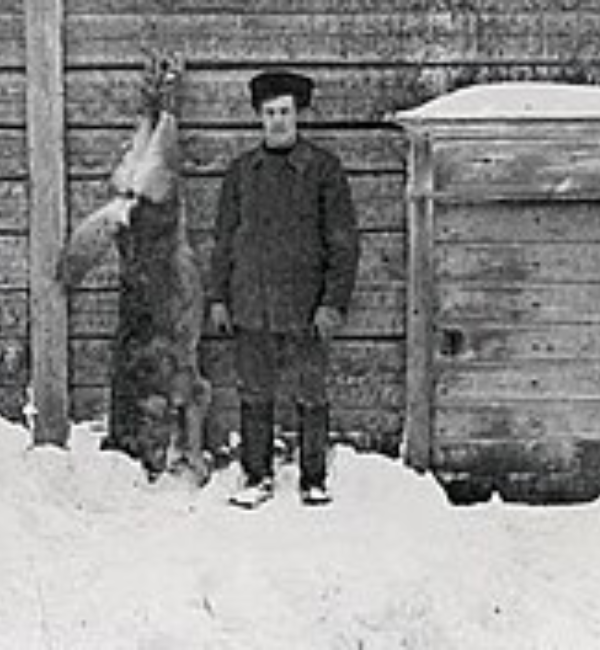
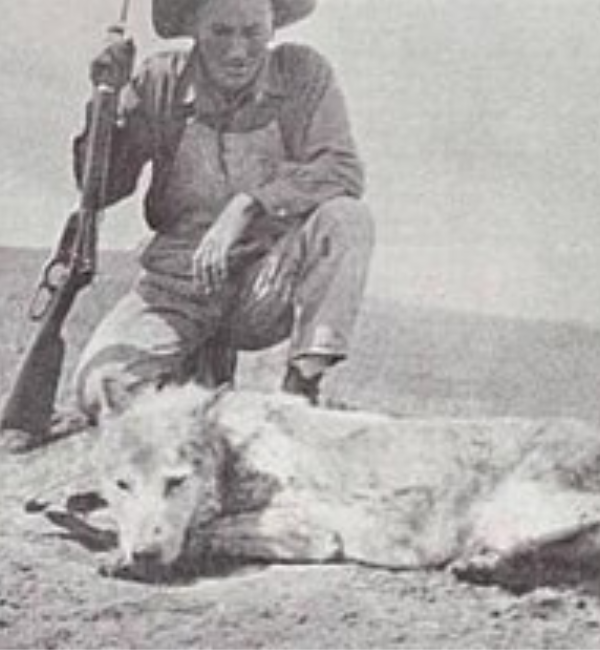
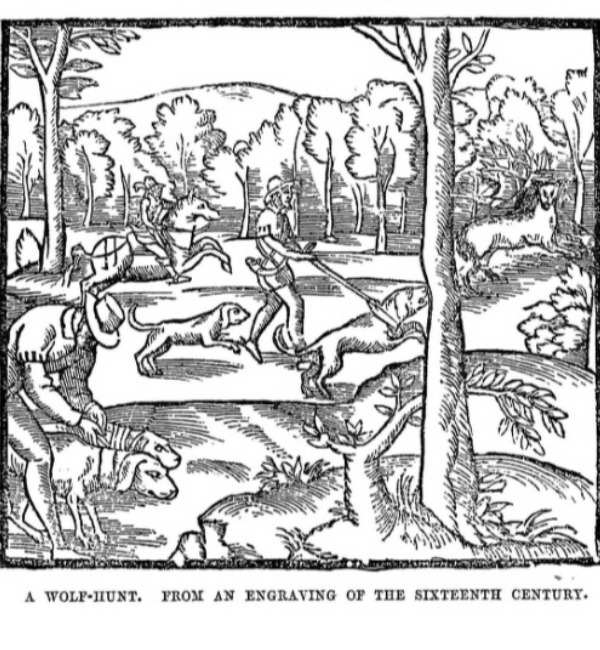
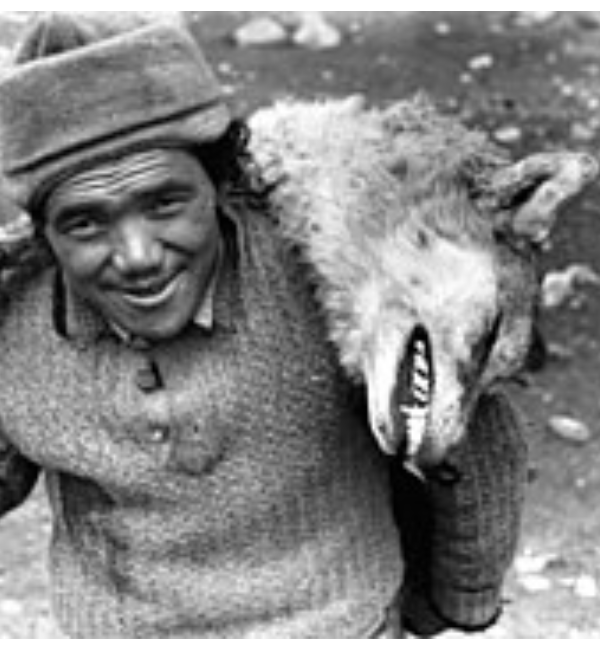
Curtis J Carley, Status Summary: The Red Wolf (Canis rufus) (Albuquerque, NM: U.S. Fish and Wildlife Service, 1979), pp. 1-13 and 19-31. Figures and references to figures have been deleted or a “[not included]” notation has been inserted. Lead image is from: https://en.wikipedia.org/wiki/Wolf_hunting as are the entire top row of images in the lower section except the third picture which is found in the above-cited Harting book on page 151. The bottom row is from: https://www.pexels.com/. The photographers are: Ambquinn, Colfelly, Christina9, and Leon Aschemann.
See: https://babel.hathitrust.org/cgi/pt?id=umn.31951d01233313f&seq=1